Quick answer: The best ski jackets for kids are waterproof (10,000 mm or higher), insulated for the day's temperature and paired with matching snow pants so snow can't get in at the waist. Look for a snow skirt, adjustable cuffs, a sleeve pass pocket and room to grow, then size the jacket with a base layer and fleece on.
A ski jacket works harder than a school coat. In one morning your child may sit on a cold chairlift, fall in wet snow and sweat through a lesson. The jacket has to keep water out, let moisture escape and still let them move.
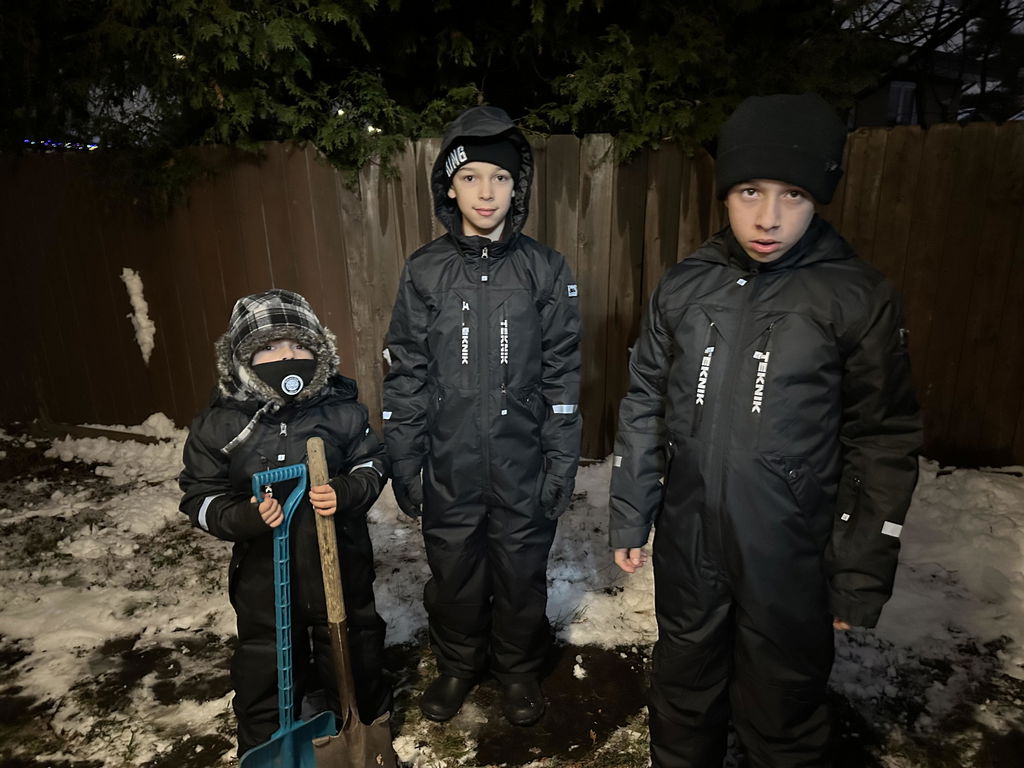
At Jenni Kidz, the ski jackets we carry come as part of jacket-and-pants sets. The Deux par Deux TEKNIK ski snowsuits are the brand's technical line for skiing and snowboarding, and our wider range of two-piece snowsuits covers younger kids and everyday snow days. If you already know you want Deux par Deux and are choosing a line, our DISCOVER vs PLAY vs TEKNIK comparison goes deeper on that choice.
Below: what the label numbers mean, which features matter, how to size with layers and which sets we carry that match.
This article is general information, not medical advice. If your child has skin that stays white, waxy or numb after cold exposure, get medical advice right away.
What Should You Look For in a Kids' Ski Jacket?
Start with waterproofing, warmth and fit, then check the details that keep snow out. A kids' ski jacket (or ski coat) is a system of small features, and the table below shows what each one does and how to check it on a product page.
| Feature | Why it matters on ski days | What to check |
|---|---|---|
| Waterproof shell | Falls, wet snow and lift seats soak through weak fabric | A waterproof rating in mm, plus sealed seams |
| Insulation | Lift rides and lessons include long still periods | Insulation type, grams by zone and the brand's temperature rating |
| Snow skirt | Stops snow from riding up under the jacket after a fall | "Snow skirt," "powder skirt" or "snow guard at the waist" |
| Cuffs | Snow gets in between mitt and sleeve | Adjustable tabs and inner stretch cuffs |
| Pass pocket | Lift gates scan passes on the go | A zippered pocket on the sleeve |
| Room to grow | Kids outgrow gear mid-season | Extendable sleeves and adjustable hems |
If a feature isn't listed for the exact jacket you're looking at, don't assume it's there because another style from the same brand has it.
How Waterproof Does a Kids' Ski Jacket Need to Be?
For regular ski days, a waterproof rating of 10,000 mm or more is a sound target, and higher helps in wet snow. evo, the outdoor retailer, recommends a minimum of 5,000 mm for ski and snowboard jackets and suggests 10,000 to 20,000 mm or better for avid riders, especially in wetter climates, in its guide to waterproof and breathability ratings.
What does a 10,000 mm or 15,000 mm rating mean?
The number describes how much water pressure the fabric can take before it leaks. evo explains that most tests place a tube about 1 inch square over the fabric and measure how tall a column of water, in millimeters, it can hold before water gets through. A higher number means more resistance to water being pushed through, such as when a child sits on a wet lift seat or kneels in slush.
evo also cautions that labs test and report differently, so treat the numbers as a guide rather than an exact score. The table below summarizes evo's guidance.
| Waterproof rating | What evo says it suits |
|---|---|
| Under 5,000 mm | Below evo's suggested minimum for ski and snowboard jackets |
| 5,000–10,000 mm | Long days out in a range of weather |
| 10,000–20,000 mm | Avid skiers and snowboarders, especially in wetter climates |
| 20,000 mm and up | Backcountry use, where breathability matters as much as waterproofing |
For reference, Deux par Deux's own snowsuit comparison chart lists 15,000 mm waterproofness for its TEKNIK line and 10,000 mm for its CHILL, DISCOVER and PLAY lines.
What do breathability numbers (g/m²/24h) tell you?
Breathability describes how much water vapor, such as sweat, can pass out through the fabric in a day. It's written in grams per square meter per 24 hours. evo notes that breathability tests vary so much that numbers are "almost impossible to compare," so read them skeptically and compare within one brand at most.
For lift-served riding with regular lodge breaks, evo says 5,000 to 8,000 grams will probably be fine. Kids who hike, race or sweat hard benefit from more. In practice, layers underneath matter just as much.
Why do sealed seams and water repellent finishes matter?
Every stitch is a tiny hole, so seams need to be sealed to stay waterproof. evo explains that "critically taped" garments have tape on high-exposure seams, while "fully taped" garments have every seam taped. Deux par Deux's chart lists taped seams at the armholes, shoulders, hood and crotch for TEKNIK.
The outer fabric also carries a water-repellent finish (often called DWR) that makes water bead and roll off. evo notes that falls, rubbing against a chairlift and normal use wear this finish down over time, which is why a jacket can start to look soaked on the surface.
How Warm Should a Kids' Ski Jacket Be?
A ski jacket should be warm enough for the coldest part of the day, which is usually the chairlift, while layers handle the rest. Kids can sweat on a run and then chill on the lift.
How do insulation weights and temperature ratings work?
Many brands list insulation in grams for each zone and give a temperature rating. Deux par Deux lists PrimaLoft® insulation for TEKNIK at 100 g in the hood, 170 g in the body and 133 g in the sleeves and legs, and rates the line to -30°C (-22°F). Treat any rating as the brand's guidance for its own garment, not a promise for every child in every wind. Our snowsuit temperature ratings guide explains how to read these numbers in more detail.
How cold is too cold for a ski day?
Wind and temperature together decide how fast exposed skin gets cold. Environment and Climate Change Canada's Wind Chill Index says that at a wind chill of -28 to -39, "any exposed skin can freeze in 10 to 30 minutes." The Canadian Paediatric Society suggests considering keeping children indoors when the temperature or wind chill is -27°C (-16°F) or lower, and its frostbite handout advises reducing outdoor time at -15°C (5°F) or colder.
The American Academy of Pediatrics gives a similar line on HealthyChildren.org: playing outside in temperatures or wind chills below -15°F should generally be avoided. On the hill, check the forecast for the summit and plan indoor breaks.

Which Ski Jacket Features Actually Matter on the Hill?
The features that matter most are the ones that keep snow out after a fall and make the day easier for a child to manage alone. Here's what each one does.
Does a kids' ski jacket need a snow skirt?
Yes, for ski days it's one of the most useful details. A snow skirt (also called a powder skirt) is an elastic band inside the jacket that closes around the waist of the snow pants, so snow doesn't shoot up the back after a tumble. Deux par Deux's chart lists an adjustable snow guard at the waist and ankles for DISCOVER, PLAY and TEKNIK.
What kind of cuffs work best with mittens?
Look for adjustable outer cuffs plus a stretchy inner cuff. The inner cuff hugs the wrist under the mitt, and the outer tab tightens over a gauntlet mitt. Deux par Deux lists Velcro® cuff tabs with stretchy spandex inner cuffs on TEKNIK.
Does the hood matter if my child wears a helmet?
The hood is for the lift line and the walk to the lodge. It is not head protection. The AAP says all skiers and snowboarders should wear helmets, and the Canadian Paediatric Society's skiing and snowboarding handout says everyone should wear a helmet "specifically designed for skiing and snowboarding." Before the first ski day, try the full kit on at home: helmet, goggles, neck warmer and jacket zipped up, and check that nothing pushes the helmet out of position. A detachable hood can be removed on days your child won't use it; Deux par Deux lists a detachable hood for DISCOVER, PLAY and TEKNIK.
Which small details make ski days easier?
- Sleeve pass pocket. A zippered pocket on the forearm lets the lift scanner read the pass without unzipping the jacket.
- Mitten clip or ring. Keeps mitts with the jacket at lunch. Deux par Deux lists a ring to clip mittens on TEKNIK.
- Reflective details. Deux par Deux lists reflective bands on all four of its kids' snowsuit lines.
- Chin guard and wind flap. A soft chin guard behind a windproof placket stops the zipper from rubbing on cold chairlift rides.
- Backpack-style straps inside. Kids can carry the jacket on their back in a warm lodge instead of dropping it.
Why do reinforcement and grow-with-me features matter?
Ski edges, lift seats and kneeling wear fabric quickly, so reinforced patches extend the life of the pants in particular. Deux par Deux's chart lists Cordura® reinforcement in critical areas on all four of its kids' lines, and the TEKNIK product pages specify the knees, seat and hems. Growth features matter because kids grow mid-season. On TEKNIK, the brand lists sleeves that extend 4 cm (1.5 in) and pant legs with a two-level snap adjustment.
Ski Jacket and Snow Pants or a One-Piece: Which Is Better for Ski Days?
For most kids aged 4 and up, a ski jacket with matching snow pants is the more flexible choice. It handles bathroom breaks, lodge lunches and warm spring afternoons more easily. A one-piece snowsuit leaves no waist gap, which suits younger kids and children who spend a lot of time sitting or rolling in snow.
| Question | Jacket + snow pants | One-piece snowsuit |
|---|---|---|
| Bathroom breaks | Easier; pants come down without taking off the jacket | Whole suit has to come off |
| Lodge lunch | Jacket comes off, pants stay on | Top half unzipped and tied at the waist, or left on |
| Snow at the waist | Needs a snow skirt and bib or suspender pants | No gap at the waist |
| Warm spring days | Jacket can be opened or swapped | Fewer options to cool down |
| Fit as kids grow | Top and bottom grow separately | Torso length can limit fit |
AboutKidsHealth from SickKids notes in its Dressing for the cold guide that bib-type snow pants are a good choice for very cold temperatures or for kids rolling around in the snow. That's why ski sets with suspender pants work well. For a full side-by-side of warmth and coverage, read our one-piece vs two-piece snowsuit guide. For a jacket your child also wears to school, see winter coat or snowsuit for school.
How Should a Kids' Ski Jacket Fit?
A kids' ski jacket should fit over a base layer and a fleece with room to raise both arms overhead, while the sleeves still reach the wrist when arms are stretched forward. The hem should cover the lower back when your child bends to buckle a boot.
How do you size a ski jacket with layers?
- Measure with layers in mind. Check height and chest against the brand's size chart, and plan for a base layer plus a fleece.
- Do the reach test. Ask your child to reach forward as if holding poles. Sleeves should still cover the wrist, and the jacket shouldn't pull tight across the back.
- Do the squat test. Squatting and kneeling should not expose the lower back.
- Check the mitt overlap. With mitts on, the cuff and the gauntlet should overlap.
- Zip it all the way up. The collar should close comfortably over a neck warmer.
Should you size up a ski jacket for kids?
Usually not. Jackets that are much too big let cold air in, flop over mitts and make it harder to move. The TEKNIK product pages on Jenni Kidz describe the suits as fitting generously and say sizing up is not recommended, and the brand lists extendable sleeves and adjustable hems to cover growth. Our snowsuit sizing guide walks through measuring step by step.
What Should Kids Wear Under a Ski Jacket?
Kids should wear a moisture-wicking base layer, a warm middle layer such as fleece and the waterproof jacket on top, not cotton. AboutKidsHealth recommends three layers: a thin base layer that moves moisture away from the skin (polyester and similar modern materials are best, and cotton is "a poor choice"), an insulating middle layer of wool or fleece and a water- and wind-protective outer layer.
The AAP adds that several thin layers help keep kids warm and dry, and the Canadian Paediatric Society's winter advice for parents notes that a child dressed too warm can sweat and feel colder when they stop. On a ski day, that "stop" is the chairlift. Our no-sweat layering formula covers base and mid layers by temperature.
Which accessories finish a ski outfit?
- Thermal base layer. Browse kids' thermal base layers. Deux par Deux lists its girls' coral camouflage two-piece thermal underwear as a brushed polyester set with a half-zip mock neck and stretchy moisture-wicking fabric.
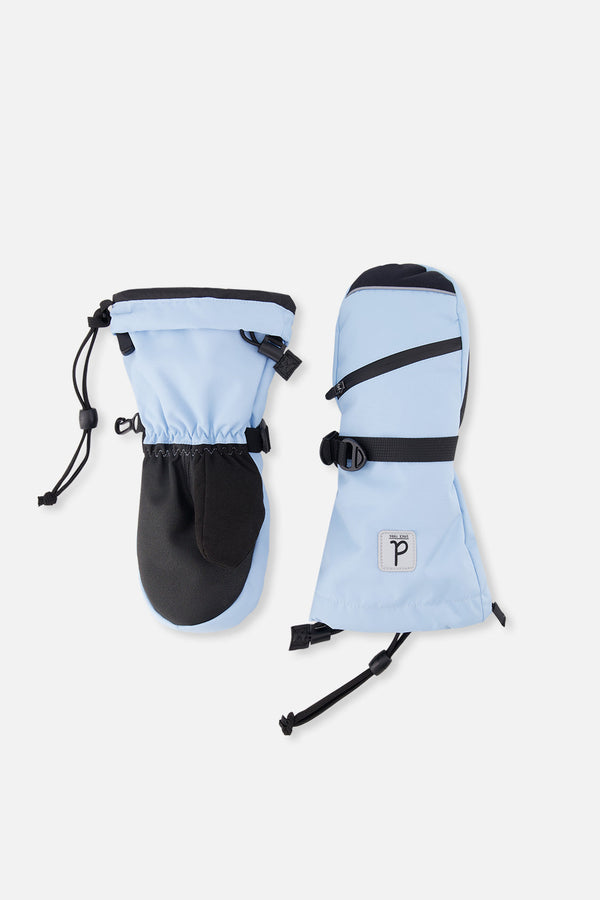
- Mittens. The CPS recommends mittens over gloves in very cold weather. Deux par Deux lists its TEKNIK coral camouflage mittens with a 15,000 mm waterproof shell, a gauntlet cuff with drawcord and a removable wrist leash. See all gloves and mittens.
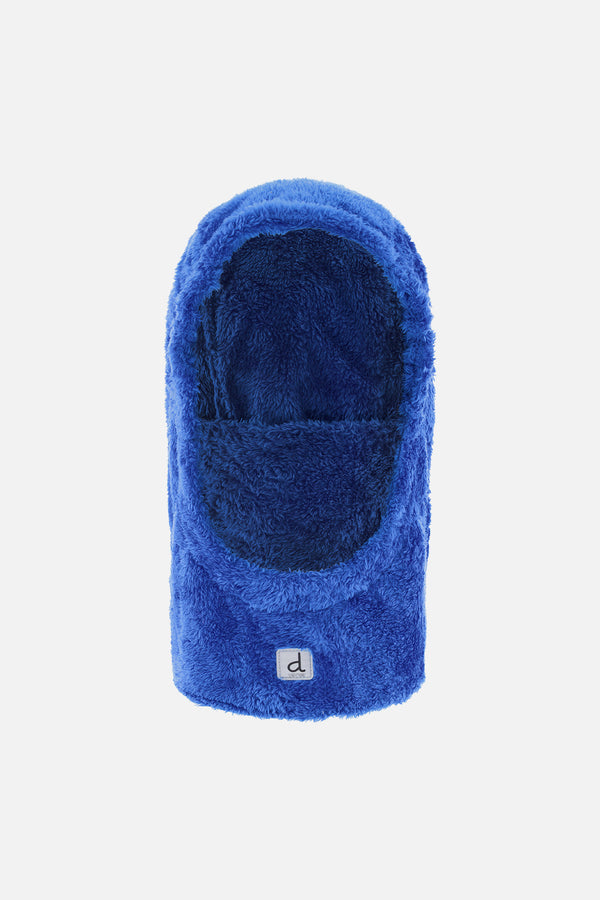
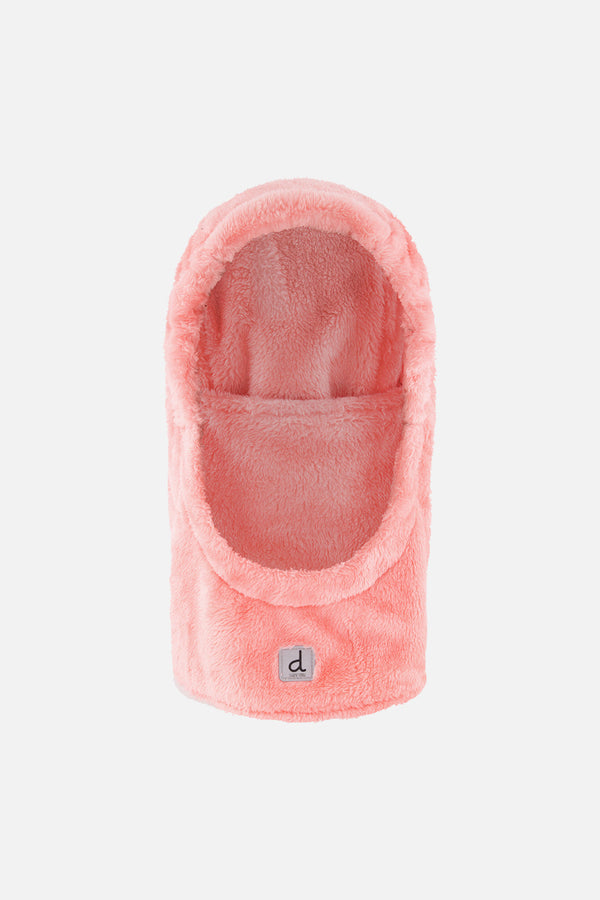
- Neck warmer or balaclava. The CPS advises a neck warmer instead of a scarf for younger children. The stretchy polar balaclava in navy is listed as polar fleece in sizes 2/4, 5/8 and 10/16. For more, read our balaclava vs neck warmer guide.
- Ski socks. One pair of ski socks, not cotton. Deux par Deux lists its boys' ski socks in navy as mid-calf merino wool blend socks with cushioning and flat toe seams.
- Goggles, sunscreen and helmet. The AAP recommends eye protection or goggles, and the CPS advises sunscreen on exposed skin even when it's cloudy.

Which Jenni Kidz Ski Sets Match These Features?
For ski days, the Deux par Deux TEKNIK two-piece is the closest match to a technical kids' ski jacket in our range: a jacket and snow pants sold together for ages 4 to 16. The brand's chart puts TEKNIK at 15,000 mm waterproofness with PrimaLoft® insulation, taped critical seams and an adjustable opening at the bottom of the pants for ski boots. Deux par Deux makes these sets in sizes 4 to 16; check each product page for today's sizes.
| Set | Colors | Details listed on the product page |
|---|---|---|
| Girls Two Piece TEKNIK Snowsuit Coral Camouflage | Coral, mint and lilac camo jacket and bib pants | Adjustable snow skirt, snap-close ankle gaiters, coral polar fleece neckwarmer |
| Girls Two Piece TEKNIK Snowsuit, Black With Mountain Print Pants | Black jacket, pink and blue mountain-print pants | Sleeve lift-pass pocket, snow skirt, chin guard behind a windproof placket |
| Girls Two Piece TEKNIK Snowsuit Bright Pink And Checkered | Wavy checkered jacket, neon pink pants | Sleeve ski-pass pocket, built-in backpack straps, Cordura® patches |
| Boys Two Piece TEKNIK Snowsuit Blue And Red Camouflage | Burgundy, black and blue jacket, camo pants | Adjustable snow skirt, removable suspenders, adjustable ski-boot cuffs |
| Boys Two Piece TEKNIK Snowsuit Royal Blue And Black | Black and royal blue jacket, black pants | Velcro® cuff tabs with inner stretch cuffs, sleeve ski-pass pocket |
| Boys Two Piece TEKNIK Snowsuit Bright Orange Grey And Taupe | Orange and grey jacket, taupe pants | Powder skirt, snap-close ankle gaiters, lift-pass pocket on the sleeve |
Each of these TEKNIK product pages lists a 15,000 mm waterproof shell, PrimaLoft® insulation, Cordura® at the knees, seat and hems, and sleeves that extend 4 cm, and Deux par Deux rates the TEKNIK line to -30°C (-22°F). Matching accessories make the set easy to complete: the coral camo set pairs with the coral camo mittens and thermal set above, and the boys' camo set has matching TEKNIK blue and red camouflage mittens.
What about younger kids or lighter ski days?
TEKNIK starts at size 4. For a younger child, or one who skis a few times a season, a PLAY two-piece is worth a look. The Girls Two Piece PLAY Snowsuit Mint Green comes in sizes 2 to 14 and lists a 10,000 mm polyurethane coating, a rating to -30°C (-22°F), a snow skirt, a zippered ski-pass sleeve pocket, reflective bands and an included polar fleece neckwarmer. You can compare more sets in boys' snowsuits and girls' snowsuits.
If your child mainly needs a warm everyday coat and only skis once or twice, a winter jacket from girls' coats and jackets or boys' coats and jackets with separate snow pants can work. Check each jacket's own listing for waterproofing and cuffs, since everyday coats aren't built to ski-specific standards. For a ski-school focus on mobility, see our guide to the best snowsuit for ski school and sledding.
How Do You Get a Kids' Ski Jacket Ready for Each Ski Day?
Dry everything overnight, check the zippers and pockets, and pack spares. AboutKidsHealth notes that moisture left in clothing means it won't keep you as warm the next time, so hang jackets and pants and put mitts and hats somewhere warm to dry.
- Pass and pockets: Load the lift pass into the sleeve pocket and close every zipper.
- Spares: The CPS suggests packing extra hats and mitts. A spare base layer top helps after a sweaty lesson.
- Morning check: Look at the forecast for the hill, including wind chill.
- On the hill: The CPS advises checking regularly for frostbite. Cheeks, ears, nose, fingers and toes are the most common spots.
For washing, follow the care label. The TEKNIK pages list machine washing in cold water with all zippers and Velcro® closed, tumble drying low, and no bleach, fabric softener or dry cleaning. Our guide to washing snowsuits and winter jackets covers the details.
Frequently Asked Questions
What waterproof rating should a kids' ski jacket have?
Aim for 10,000 mm or higher for regular ski days. evo suggests at least 5,000 mm for ski and snowboard jackets and 10,000 to 20,000 mm for avid skiers or wetter climates. Deux par Deux lists 15,000 mm for its TEKNIK line.
Is a ski jacket the same as a winter coat?
Not quite. A ski jacket usually adds a waterproof rating, sealed seams, a snow skirt, adjustable cuffs and a sleeve pass pocket. Many everyday winter coats are warm but don't list these features, so check each product page.
Should kids wear a ski jacket with snow pants or a one-piece snowsuit?
For most kids aged 4 and up, a jacket with matching snow pants is more flexible for bathroom breaks and lodge lunches. A one-piece leaves no waist gap, which suits younger kids and lots of snow play.
Should I buy a kids' ski jacket a size up?
Usually not. A jacket that is much too big lets cold air in and gets in the way of mitts. Jenni Kidz's TEKNIK product pages say the suits fit generously and that sizing up is not recommended.
What should my child wear under a ski jacket?
A moisture-wicking base layer, a fleece or wool middle layer and no cotton. AboutKidsHealth recommends polyester-type base layers and calls cotton a poor choice. Add a neck warmer, mittens and one pair of ski socks.
Does a hood replace a helmet for skiing?
No. The AAP says all skiers and snowboarders should wear helmets, and the Canadian Paediatric Society recommends a helmet designed specifically for skiing and snowboarding. Try the helmet, goggles and jacket on together before the first ski day.
How cold is too cold to ski with kids?
The Canadian Paediatric Society suggests considering keeping children indoors at -27°C (-16°F) or lower, including wind chill, and reducing outdoor time at -15°C (5°F) or colder. Plan regular indoor breaks on any cold day.
Bottom Line
A good kids' ski jacket is waterproof, warm enough for the chairlift, sealed against snow at the waist and wrists, and sized to fit over real layers without being oversized. Pair it with matching snow pants, a wicking base layer, a fleece and mittens, and the jacket's numbers and features can do their job. If you want those features in one set, start with a TEKNIK two-piece.
Sources
- Deux par Deux: Infant and Kids' Snowsuits from 3 months to 16 years (snowsuit comparison chart)
- evo: How Waterproof & Breathability Ratings Work
- American Academy of Pediatrics, HealthyChildren.org: Playing Outside in Winter: Tips to Keep Kids Warm & Safe
- Canadian Paediatric Society, Caring for Kids: Skiing and snowboarding safety (last updated January 2023)
- Canadian Paediatric Society, Caring for Kids: Winter safety: Advice for parents and kids (last updated February 2023)
- Canadian Paediatric Society, Caring for Kids: Frostbite (last updated February 2023)
- Environment and Climate Change Canada: Wind chill and the Wind Chill Index
- AboutKidsHealth (SickKids): Dressing for the cold