Quick answer: the best kids’ snowsuit brand in Canada is not automatically the brand with the highest price or the warmest-looking jacket. The better choice is the brand and exact style that match your child’s age, winter climate, activity level, fit and need for one-piece or two-piece construction. Start by comparing product-level warmth guidance, waterproofing or water-resistance claims, breathability when provided, snow-blocking details, mobility, durability and size range.
If you are ready to compare current inventory, start with the Kids Snowsuits collection. The collection is the primary shopping destination; this guide is designed to help you understand what to compare before choosing a brand or model.
Best Kids’ Snowsuit Brands in Canada: Start With the Child, Not the Logo
Canadian winters are not one single use case. A toddler riding in a stroller in a cold inland city, a preschooler playing outside at daycare, a school-age child moving between recess and classrooms, and a family spending weekends skiing or sledding can all need different things from winter outerwear. That is why a brand ranking without context is less useful than a buying framework.
At Jenni Kidz, two names shoppers often compare for winter outerwear are Deux par Deux and Hatley. Other brands can also be appropriate depending on the exact garment, but these two illustrate an important principle: compare the specifications and construction of the exact style rather than transferring one product’s performance to an entire brand.
Quick Brand Comparison: What Should You Look At?
| Comparison point | Why it matters | What to verify |
|---|---|---|
| Warmth guidance | Children experience cold differently and activity changes heat output. | Check the exact manufacturer guidance for that style when provided. |
| Water protection | Wet coastal snow and slush create different demands from dry cold. | Look for waterproof or water-resistant wording and any stated rating. |
| Breathability | Active children can build up heat and moisture while running or sledding. | Use the exact garment specification when available. |
| Construction | One-piece and two-piece formats change coverage and daily convenience. | Compare waist overlap, torso fit, bib height, closures and bathroom access. |
| Durability | Knees, seat, cuffs and hems receive heavy wear. | Check reinforcement, shell construction and care instructions. |
| Fit | A technically strong suit cannot work well if it restricts movement or drags. | Use current measurements and the exact brand size chart. |
Deux par Deux Snowsuits
Deux par Deux has a broad winter assortment at Jenni Kidz, including one-piece and two-piece snowsuits across baby, toddler and school-age sizing. The useful advantage for comparison is that many current product pages include specific technical information such as temperature guidance, waterproofing, breathability, reinforcement or grow features. These details make it easier to compare one style with another instead of shopping only by print or color.
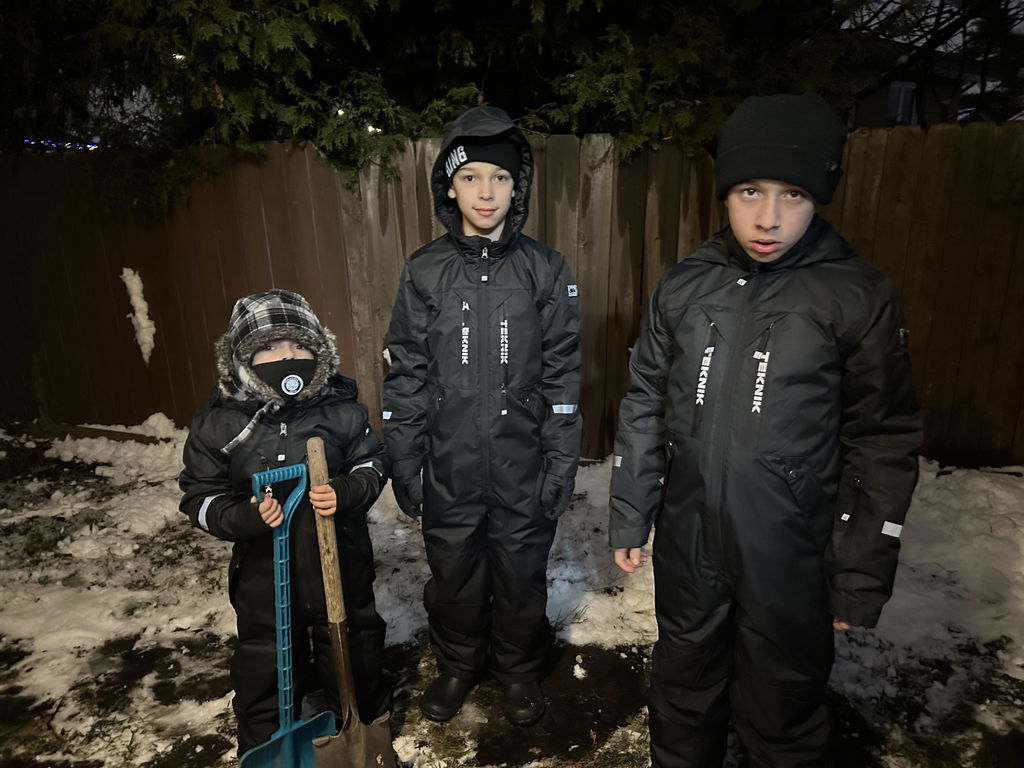
For example, some current PLAY and TEKNIK styles list cold-weather guidance and waterproof/breathability specifications. Those numbers should be read at the product level. Do not assume every PLAY, DISCOVER or TEKNIK style has identical specifications without checking the exact page.
Who should consider Deux par Deux?
- Families who want to compare several snowsuit formats within one brand.
- Parents who value product pages with detailed winter specifications.
- Children who spend substantial time outdoors for school, daycare, sledding or ski days.
- Shoppers who want one-piece and two-piece options across several ages.
- Families who want to compare reinforcement, cuffs, gaiters, hoods and growth features style by style.
For model-line differences, use the Deux par Deux DISCOVER vs PLAY vs TEKNIK guide.
Hatley Winter Outerwear
Hatley is another kidswear brand that appears in the Jenni Kidz winter assortment. Hatley styles can be useful for families who like coordinated children’s clothing and practical outerwear, but the same product-level rule applies: inspect the exact garment for insulation, lining, weather protection, closures, fit and care.
Do not infer that a Hatley jacket, puffer, toddler Snowday suit and another winter piece all have the same performance. Product construction can vary significantly even within one label. That is why a brand comparison should always end with a style comparison.
Deux par Deux vs Hatley: A Better Way to Decide
If you are choosing between Deux par Deux and Hatley, first identify your child’s dominant winter use. Then compare current products that serve the same use case. Comparing a technical two-piece snowsuit with a casual winter jacket is not a fair brand comparison because the garments are built for different jobs.
For a child who plays outside daily, prioritize weather protection, coverage, movement and durability. For a toddler who needs fast dressing, closure design and one-piece convenience may matter more. For a school-age child, independent dressing and the ability to remove a jacket separately can shift the decision toward a two-piece system.
How Cold Is the Winter Your Child Will Actually Experience?
Temperature matters, but location alone does not answer the question. Families should consider the actual conditions the child will experience: wind, wet snow, dry cold, duration outdoors, activity level and available layers. A child walking to school for fifteen minutes has a different exposure pattern from a child spending two hours on a sled hill.
When a manufacturer provides a temperature rating or cold-weather guidance, use it as a comparison tool rather than a universal guarantee. Individual comfort varies, and the same child may need different layering on a windy morning than on a sunny afternoon.
Cold, dry inland or Prairie conditions
In colder and drier weather, insulation and wind protection can become major decision factors. Check cuffs, collar, hood, closures and overall fit because warm air can be lost through openings even when the insulation itself is substantial.
Wet coastal winters
In coastal climates, rain, slush and wet snow increase the importance of shell performance and moisture management. A very warm garment is not necessarily the best choice if the child repeatedly gets wet. Compare the exact waterproof or water-resistant claim, seam design, gaiters and cuffs.
Variable shoulder-season weather
When temperatures move above and below freezing, flexibility can matter more than maximum insulation. Families may want adjustable layers or a lighter outerwear option for days when a full winter snowsuit would be excessive.

One-piece vs two-piece decision guide: compare continuous coverage, school/daycare convenience, independence and layering flexibility before choosing a format.
One-Piece vs Two-Piece: Brand Comes After Construction
A one-piece snowsuit connects the upper and lower body in one garment. A two-piece system uses a jacket plus snow pants or bib pants. This decision can matter more than brand preference because it affects dressing, bathroom access, torso coverage and flexibility.
Choose one-piece when continuous coverage matters
Babies, younger toddlers and children who roll, crawl or sit in snow can benefit from continuous waist coverage. One-piece construction also reduces the number of separate outerwear pieces to track.
Choose two-piece when flexibility matters
Two-piece systems can be convenient for school-age children, bathroom breaks and days when the jacket is used independently. Bib snow pants can still provide substantial torso coverage when they overlap correctly with the jacket.
Neither format is automatically warmer. Compare the One-Piece vs Two-Piece Snowsuit Guide for a full construction decision.
Waterproofing: Do Not Shop by the Word “Waterproof” Alone
Water protection is one of the most important technical comparisons for snow play, but shoppers should read the exact wording. Some products provide a numerical waterproof rating, while others use broader water-resistant language. Seam construction, zippers, cuffs, gaiters and garment openings also influence real-world protection.
A numerical rating is useful, but it does not replace fit and construction. Water can still enter through an open cuff or boot gap. Conversely, a well-designed system with strong overlap and appropriate closures may perform well for the intended use even when the headline number is not the only feature being marketed.
Breathability: Important for Active Kids
Children running at recess, climbing a sled hill or learning to ski can generate substantial heat. Breathability helps manage moisture, but it should be considered alongside layering. An extremely bulky mid-layer can reduce comfort even when the outer shell has a good breathability specification.
For active children, look at the whole system: base layer, optional mid-layer, outerwear, cuffs, boots and mittens. The goal is warmth without trapping unnecessary heat or restricting movement.
Fit Is a Performance Feature
Parents often treat fit as a separate sizing issue, but fit affects winter performance. A suit that is too large can bunch, drag, shift at the hood and interfere with hands or boots. A suit that is too small can restrict movement, compress layers and expose wrists or ankles during play.
Use the exact brand size chart and current measurements. Do not automatically size up because the garment is expensive or because you hope to get another winter from it. Controlled growth features are more useful than excessive empty space when a product includes them.
Use the Snowsuit Sizing Guide for Babies, Toddlers and Big Kids before checkout.
What Should a Child Be Able to Do in a Snowsuit?
- Raise both arms without strong pulling through the shoulders or torso.
- Squat deeply without the crotch or seat becoming tight.
- Walk without stepping on pant hems.
- Sit comfortably in a stroller or on a sled when appropriate.
- Bend elbows and use hands while wearing mittens.
- Turn the head with the hood in place.
- Climb stairs without fighting excess fabric.
If a snowsuit fails basic movement tests, changing brand may help, but changing size or garment cut may be the real solution.
Durability: Where Should You Look?
Active kids frequently wear winter outerwear at the knees, seat, lower legs, cuffs and zipper areas. Check whether the exact product lists reinforced zones or abrasion-resistant materials. Also look at zipper construction, adjustable cuffs, boot gaiters and how easy the garment is to clean according to its care label.
Durability is not only about the shell. A product that is difficult to wash or dry correctly may become less practical for daycare or school even if the material is technically strong.
Best Snowsuit Brand for Babies and Toddlers
For babies and toddlers, there is no universal winning brand. Prioritize easy dressing, comfortable torso and diaper-area fit, normal hip and knee movement, hood position and weather protection appropriate for the actual use.
Families can compare current Baby Girls Snowsuits and Baby Boys Snowsuits. These collections are a better starting point than a generic brand ranking because they narrow the assortment to the relevant age range.
Best Snowsuit Brand for Daycare
Daycare adds repeated dressing, drying and outdoor transitions. A practical daycare snowsuit should be easy for caregivers to manage and comfortable enough for active movement. Consider how quickly the child can be dressed, whether wet gear can dry between outings and whether closures are simple enough for the child’s developmental stage.
A brand that offers excellent technical performance may still be a poor fit if the exact style is difficult for that child to manage. Daily routine belongs in the buying decision.
Best Snowsuit Brand for School-Age Kids
School-age children often move between warm classrooms and outdoor recess. Two-piece systems can be convenient because the jacket is useful on its own and snow pants can be added for recess. One-piece systems can still work when the child manages them independently and values continuous coverage.
For gender-specific shopping paths, browse Girls Snowsuits or Boys Snowsuits.
Best Snowsuit Brand for Skiing and Sledding
For skiing and sledding, prioritize movement, snow sealing and weather protection. Check articulated construction when listed, cuff design, ankle gaiters, hood compatibility with other gear and how the suit behaves through a deep knee bend.
Sledding can involve repeated sitting and rolling in snow, while skiing involves different movement and may require equipment compatibility. Brand reputation cannot replace product-level review for these use cases.
How to Compare Price and Value
Price is easy to compare, but value requires context. Consider how many days the child will wear the snowsuit, whether the fit is correct now, whether growth features are useful, how easy the garment is to care for and whether the product specifications match the actual climate.
A cheaper garment that stays dry and comfortable for the intended use may be better value than a more expensive garment with features the child does not need. Conversely, a more technical garment may be worth the additional cost for a child who spends hours outdoors several days a week.
Should You Buy a Snowsuit on Sale for Next Year?
Buying ahead can save money, but growth is difficult to predict. If the future size is wrong, the sale price can become irrelevant. This is especially important with one-piece construction, where torso length, sleeve length and leg length all need to work together.
If buying ahead, review the size chart carefully and understand the return conditions. Do not assume a child will follow the average age label exactly.

Snowsuit feature checklist: inspect shell protection, insulation, hood, zipper, cuffs, reinforced areas, gaiters and boot openings on the exact product.
What About Hand-Me-Down Value?
Families with younger siblings may care about durability and neutral design because a snowsuit could be used again. Inspect high-wear areas before passing a garment down. Recheck waterproofing condition, zippers, cuffs, gaiters and fit for the next child rather than assuming it is ready because the outer fabric still looks good.
How to Read a Snowsuit Product Page Like a Buyer
- Confirm size range. Make sure the product is actually available in the child’s current size.
- Read warmth guidance. Use exact manufacturer information when present.
- Read water-protection wording. Note whether the page gives a rating or general claim.
- Check breathability. Especially relevant for active play when a specification is provided.
- Review insulation. Do not assume the same brand uses the same fill in every model.
- Check reinforcement. Look at knees, seat and hems for active kids.
- Check growth features. Extendable sleeves or hems can add useful wear when designed into the garment.
- Review openings. Cuffs, gaiters, hood and closures influence snow and wind protection.
- Read care instructions. Washing and drying requirements affect convenience.
- Review exact product photos. Look at front, back, hood, cuffs, pants and closures.
Common Mistakes When Comparing Snowsuit Brands
- Assuming every product from one brand has the same temperature rating.
- Choosing by print before checking fit and weather protection.
- Comparing a jacket with a full snowsuit and calling it a brand comparison.
- Buying two sizes too large for growth.
- Ignoring boot and mitten compatibility.
- Assuming one-piece automatically means warmer.
- Assuming two-piece automatically means easier for every child.
- Choosing the highest waterproof number without checking openings and fit.
- Ignoring care instructions until after the first wash.
Canadian Snowsuit Buying Checklist
- Identify the child’s main winter use: school, daycare, stroller, skiing, sledding or general play.
- Measure the child now.
- Choose one-piece or two-piece construction.
- Compare product-level warmth information.
- Compare water and wind protection.
- Check breathability when the product provides a specification.
- Review reinforcement and high-wear areas.
- Check cuffs, gaiters, hood and closures.
- Confirm the suit works with normal winter layers.
- Perform a movement test after delivery and before outdoor use.
- Read the care label.
- Choose the brand only after the exact garment passes these checks.
Frequently Asked Questions
What is the best kids’ snowsuit brand in Canada?
There is no single best brand for every child. Deux par Deux and Hatley are two brands shoppers can compare at Jenni Kidz, but the best choice depends on the exact model, fit, climate and intended use.
Is Deux par Deux better than Hatley?
That depends on which two garments you are comparing. Compare equivalent products by warmth guidance, water protection, fit, construction and care rather than making a brand-wide conclusion.
What should I prioritize for a Canadian winter?
Prioritize fit, insulation or warmth guidance, wind and water protection, movement and the child’s real activity. Wet coastal weather and cold dry weather can require different emphasis.
Should I choose the warmest-rated snowsuit?
Not automatically. The child’s activity, layering, weather and time outdoors all matter. Too much insulation can be uncomfortable for active children in milder conditions.
Is a one-piece snowsuit better for toddlers?
It can be a practical starting point because it provides continuous coverage, but potty training, daycare routines and the child’s independence may make a two-piece system more convenient.
Is a two-piece snowsuit better for school?
Often it is practical because the jacket can be used independently, but a child who manages a one-piece easily can still use that format. School routines and fit matter.
How much should I size up?
Do not size up automatically. Use current measurements, the exact brand chart and the normal layers the child will wear. The larger size is useful only if it still passes movement and coverage checks.
Do expensive snowsuits last longer?
Price alone cannot answer durability. Review reinforcement, shell construction, care, fit and how the child uses the garment.
Bottom Line
The best kids’ snowsuit brand in Canada is the one whose exact product fits your child, your climate and your winter routine. Compare brands only after you identify the construction and performance requirements that matter. Use product-level specifications, current measurements and realistic movement tests to make the final decision.
Start with the Kids Snowsuits collection, then narrow to Deux par Deux, Hatley, or the age- and gender-specific snowsuit collections when you know what your child needs.
Five Real-World Snowsuit Decision Scenarios
Scenario 1: Toddler at daycare five days a week
Prioritize easy dressing, reliable weather coverage, comfortable movement and a care routine that works with frequent use. A one-piece may simplify full-body coverage, while a two-piece can become useful as bathroom independence grows. The deciding factor should be the child’s routine and the exact garment fit.
Scenario 2: School-age child with short outdoor recess
A two-piece setup may be convenient because the jacket can stay in daily rotation while snow pants are added only for outdoor time. Check whether the child can manage zippers, suspenders and boot gaiters without adult help. Independence can matter more than choosing the most technical model.
Scenario 3: Family that skis several weekends each winter
Look closely at mobility, snow-blocking details, cuff and gaiter design, reinforcement and weather specifications. Confirm that the product works with the rest of the child’s gear and that the child can bend deeply through knees and hips without tension.
Scenario 4: Wet coastal snow and slush
Put more weight on water protection, seam construction, cuffs, gaiters and drying practicality. Warmth still matters, but staying dry can be the larger comfort issue on repeated wet-snow days.
Scenario 5: Cold, dry winter with long outdoor play
Compare insulation, wind protection and the complete layering system. A technically warm snowsuit still needs the right base and mid layers, correct fit and enough mobility for the child’s activity.
How to Make the Final Brand Decision in 10 Minutes
- Choose the child’s primary use case.
- Measure the child and identify the likely size.
- Select one-piece or two-piece construction.
- Open two or three exact products that fit those requirements.
- Compare warmth guidance, water protection, mobility features and care.
- Remove any option that is unavailable in the correct size.
- Choose between the remaining products based on fit, daily routine and value.
This process keeps the brand name in the correct place: it becomes one part of the decision, not a substitute for comparing the product your child will actually wear.