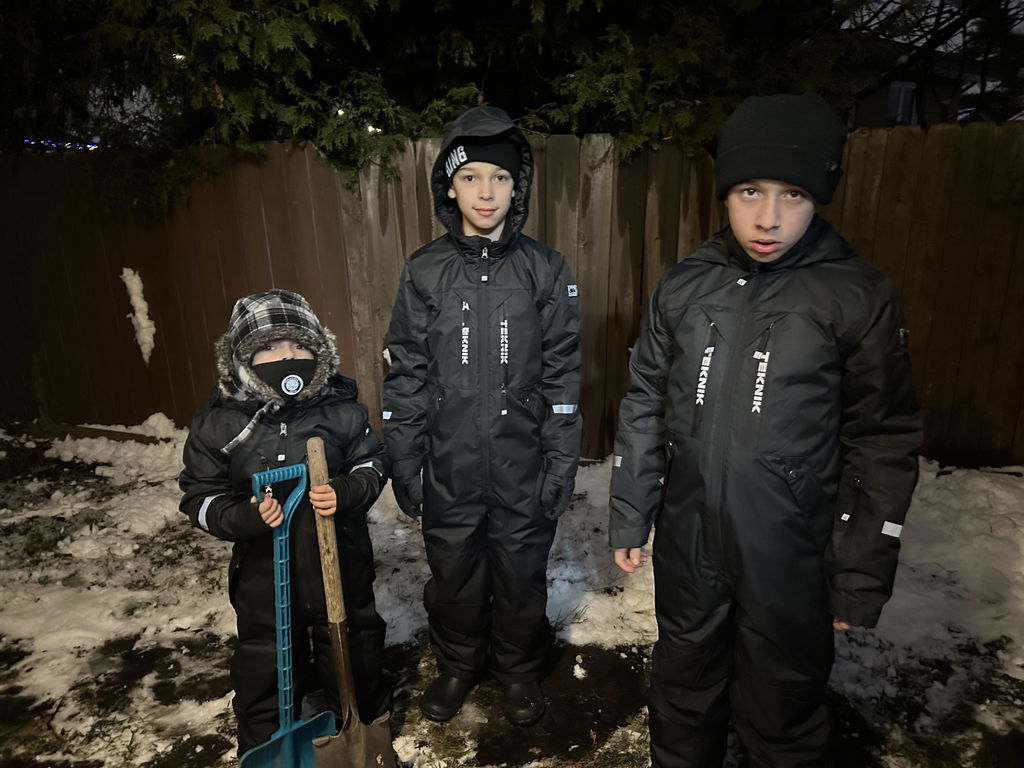
Wondering what to wear under a snowsuit for babies? For most outdoor winter outings, the goal is not to pile on as many clothes as possible. Start with a thin, comfortable base layer, add a light insulating layer when conditions call for it, then use the snowsuit as the weather-protective outer layer. Adjust for temperature, wind, activity level, and how warm your baby's specific snowsuit is.
Safety sources: For indoor sleep and overheating, see Health Canada’s baby sleep guidance. For car-seat use, review Transport Canada’s winter driving guidance and the instructions for your specific child restraint.
Quick answer: A practical starting point is a fitted long-sleeve bodysuit or thin base layer + a light fleece or wool mid-layer + the snowsuit. In milder weather or with a very warm insulated snowsuit, your baby may need less. Several thin layers are easier to adjust than one bulky layer.
Ready to build the outfit? Start with baby boys' snowsuits or baby girls' snowsuits, then choose layers that fit comfortably underneath without restricting movement.
What Should a Baby Wear Under a Snowsuit?
| Layer | Good starting point | What it does |
|---|---|---|
| Base layer | Long-sleeve bodysuit or thin fitted base layer | Keeps a comfortable layer next to skin without excess bulk |
| Mid-layer | Light fleece, wool layer, or warm fitted sleeper when appropriate | Adds adjustable insulation |
| Outer layer | Weather-appropriate snowsuit | Provides the main cold, snow, and wind protection |
| Extremities | Warm socks/booties and weather-appropriate mittens/hat outdoors | Helps protect hands, feet, and head outdoors |
The exact combination changes with the weather and the snowsuit. A heavily insulated suit on a mild winter day does not need the same layers as a lighter suit during a colder outdoor outing.
Layer 1: Keep the Base Layer Thin and Comfortable
The first layer should sit comfortably against your baby's body without bunching underneath the snowsuit. A long-sleeve bodysuit or fitted base layer is an easy starting point. For cold, active outdoor conditions, fabrics that manage moisture can be useful because damp clothing can make a child feel colder.
Avoid creating unnecessary bulk. The objective is enough insulation while preserving movement through the shoulders, hips, knees, hands, and feet.
If you're shopping specifically for winter layering pieces, compare baby boys' base layers and baby girls' base layers.
Layer 2: Add Insulation Only When the Weather Calls for It
The mid-layer is where parents can adjust warmth. A light fleece or wool layer can add insulation without turning the outfit into a bulky stack. Depending on the temperature and the warmth of the snowsuit, a fitted sleeper may also work for some outings.
Before going outside, check whether your baby can bend their arms and legs comfortably once every layer is on. If the snowsuit becomes tight across the shoulders or crotch, adding more clothing is not necessarily better.

The Snowsuit Is the Outer Layer
A common mistake in the older version of this guide was treating another jacket, hoodie, or vest as a routine “final layer” underneath the snowsuit. For most outfits, that adds unnecessary bulk. The baby snowsuit itself should normally function as the outer weather-protective layer.
Choose the layers underneath according to the insulation and fit of the actual snowsuit. If you are still choosing the suit itself, compare warmth, waterproofing, mobility, cuffs, hood design, and room for normal layering rather than automatically buying a larger size.
How Many Layers Does a Baby Need Under a Snowsuit?
There is no single layer count that works for every baby or every winter day. A useful rule of thumb from pediatric cold-weather guidance is that older babies and young children may need about one more layer than an adult would wear in the same conditions. Several thin layers make it easier to adjust warmth.
Use the weather and your baby's comfort as the final check. If clothing becomes damp, your baby feels unusually hot, or movement is restricted, adjust the layers rather than relying on a fixed formula.
How to Tell If Your Baby Is Too Warm
More insulation is not automatically safer. Check your baby periodically during winter outings, especially when moving between cold outdoor conditions and warm indoor spaces. Remove the snowsuit and other outerwear once indoors rather than leaving a bundled baby in winter gear. Health Canada specifically advises removing outerwear indoors to reduce overheating and suffocation risk during sleep.
For shopping, the best combination is a snowsuit with enough room for normal thin layers but not so oversized that your baby is swimming in the garment.
Important: Snowsuits and Car Seats Are Different
Do not use this outdoor layering setup unchanged in a car seat. Bulky coats and snowsuits can compress during a crash and leave extra space under the harness. The American Academy of Pediatrics recommends thin, snug layers under the harness instead, with warmth added over the buckled straps when needed.
Transport Canada likewise advises parents to follow their child-restraint manual because bulky winter coats and snowsuits may interfere with proper car-seat use.
If your outing involves both the car and outdoor play, plan two stages: thin car-seat-safe clothing for travel, then add the snowsuit after your baby is removed from the seat.
Baby Boys vs Baby Girls: The Layering Rule Is the Same
Warmth should be chosen by weather, insulation, fit, and activity—not gender. The useful difference when shopping is simply finding the sizes and styles available for your child. Browse baby boys' snowsuits or baby girls' snowsuits and then build the layers around the specific suit.

What About Winter Accessories?
For outdoor use, dry socks or booties and weather-appropriate hand and head protection can help complete the outfit. Check what is already built into the snowsuit—such as fold-over hand/foot covers or an insulated hood—before adding extra pieces.
For other cold-weather essentials, browse winter accessories. Avoid automatically adding every accessory; the goal is comfortable protection without unnecessary bulk.
A Simple Baby Snowsuit Layering Checklist
- Start with a thin, fitted base layer.
- Add a light insulating mid-layer when the weather requires it.
- Use the snowsuit as the outer weather-protective layer.
- Make sure arms and legs can move freely.
- Adjust layers when moving between outdoors and indoors.
- Do not put a bulky snowsuit under a car-seat harness.
- Remove outerwear once indoors, especially before sleep.
Shop Baby Winter Layers With Less Guesswork
The best winter outfit is not the one with the most layers. It is the combination that keeps your baby comfortably warm while still allowing movement and easy adjustment as conditions change.
Start with the outer layer first: shop baby boys' snowsuits or baby girls' snowsuits, then add only the base and mid-layers the day's weather actually requires.
Frequently Asked Questions
Can a baby wear pajamas under a snowsuit?
A fitted sleeper can work as part of a layering system for some outdoor outings if it fits comfortably and does not create excessive bulk. Consider the weather and the insulation of the snowsuit before adding more layers.
Should I put a sweater under a baby snowsuit?
A light insulating layer can be useful in colder conditions, but it does not need to be a bulky sweater. If the snowsuit already provides substantial insulation, fewer or thinner layers may be more comfortable.
Can my baby wear a snowsuit in the car seat?
Bulky snowsuits should not be worn underneath a car-seat harness because the padding can compress and create slack. Use thin layers under the harness and follow the car-seat manufacturer's instructions.
Can a baby sleep in a snowsuit?
Outerwear such as snowsuits should be removed indoors and is not appropriate infant sleepwear. Health Canada recommends simple, fitted sleepwear appropriate for the room temperature.
Related guide: Snowsuit Sizing Guide for Babies, Toddlers, and Big Kids.
Choosing the outer layer: If you still need to decide which snowsuit type to buy, use the Winter Snowsuit Guide for Babies and Toddlers before selecting base and mid-layers.