Quick answer: The best winter hat for a baby or toddler fits their head measurement, covers the ears and stays in place under a snowsuit hood. The Canadian Paediatric Society advises keeping ears covered in the cold. For windy days, choose ear flaps, a chin strap or a balaclava, and take the hat off once you're indoors.
A baby winter hat has to stay on a wriggling head, cover ears that get cold fast and sit under a hood without pushing into the eyes. This guide is for babies and toddlers from about 3 months to 3 years and covers hat types, sizing, fit, hoods, temperatures, common mistakes and care.
Shopping for a newborn, or wondering about hats indoors and during sleep? Our guide Does a Newborn Need to Wear a Hat? covers those questions in detail.
This guide is general information, not medical advice. It draws on the public health sources listed at the end. If your baby was born early, has a health condition or seems unwell, ask your doctor or nurse how to dress them for cold-weather outings.
What Makes a Good Winter Hat for a Baby or Toddler?
A good winter hat for a baby covers the ears, fits the head measurement and stays put without being tight. Pediatric groups in both countries list a hat as a basic piece of winter clothing. The American Academy of Pediatrics (AAP) says, "Always remember warm boots, gloves or mittens, and a hat." The Canadian Paediatric Society (CPS) says children should wear "a warm hat that covers the ears" because "ears can be easily frostbitten."
When you compare hats, check these five things:
- Ear coverage: ear flaps, a deep crown or a wraparound shape that sits over the earlobes.
- Size: matched to head measurement, not just age.
- Hold: chin ties, a button strap or a snug knit band, so the hat stays on when your child turns their head.
- Lining: the lining the brand lists, such as polar fleece or pile.
- Hood fit: a shape that sits under your child's snowsuit hood without pushing it forward.
Which Type of Winter Hat Should You Choose?
Choose the hat type by how cold and windy your outings are, and by how much your child pulls at their hat. A pull-on knit toque is enough for many cool days; ear flaps with a chin strap or ties suit wind and longer outings; a balaclava covers the head and neck in one piece. Here's how the common types compare.
| Hat type | What it is | Ear coverage | How it stays on | Good fit for |
|---|---|---|---|---|
| Pull-on knit toque | A knit hat with a ribbed or folded band | Good if the crown is deep enough to reach below the earlobes | Stretch of the knit | Cool, calm days; children who keep a hat on |
| Ear-flap toque with chin ties | A knit hat with side flaps and ties that fasten under the chin | Flaps cover the ears and part of the cheeks | Ties under the chin | Cold, windy walks; babies who tug at hats |
| Chapka (trapper hat) | A structured hat with pile-lined ear flaps and a chin strap | Deep flaps fold down over the ears and cheeks | Button or snap strap | Very cold or windy days; stroller walks |
| Peruvian knit with pompom | A patterned knit with earflaps and braided tassels | Earflaps over the ears | Earflaps and the stretch of the knit | Cold days when you want a classic look |
| Balaclava | A one-piece knit hood that covers the head and neck, leaving the face open | Full coverage of the ears and neck | Shape of the hood; nothing to tie | Wind, deep cold and toddlers who pull off hats |
| Lightweight jersey hat | A thin, slouchy pull-on hat | Partial, depending on how low it sits | Stretch of the fabric | Fall and spring, or under a hood on milder days |
When is a pull-on knit toque enough?
A plain toque works on cool, calm days and short outings, as long as the crown reaches below the earlobes. Its weak spot is wind: without flaps or a strap, a toque can ride up off the ears. If your baby tugs at a plain toque, an ear-flap style with ties (below) stays on better.
Why choose ear flaps with chin ties?
Ear flaps with chin ties keep the ears covered even when a baby turns their head or the wind picks up. Deux par Deux lists its Baby Winter Knit Hat With Ear Flaps And Strings in Noir with ear flaps, chin ties with toggle closures and a polyester-elastane lining, in sizes 3/6m, 9/12m, 18/24m and 2/3T. For a character look, the brand's Baby Leopard Winter Knit Hat in Pale Dusty Pink is listed with polar fleece inside and earflaps with ties that fasten under the chin, in sizes from 3/6m. The brand's Baby Winter Knit Hat With Ears in Violet adds cat ears and a ribbed band, with ties on both earflaps, in sizes 6/12m and 18/24m.
What is a chapka, and who is it for?
A chapka is a trapper-style hat with deep, lined ear flaps and a strap under the chin. It suits the coldest stroller walks. Deux par Deux lists its Baby Chapka in Off-White as a winter trapper hat with a button chin strap and ear flaps that "carry a soft pile lining," in sizes 3/6m through 2/3T. The same style comes in Blue-Gray, with cream pile listed on the earflaps and inside the crown. Because a chapka is more structured, try it with your child's snowsuit hood before a big outing.
What about Peruvian knit hats with pompoms?
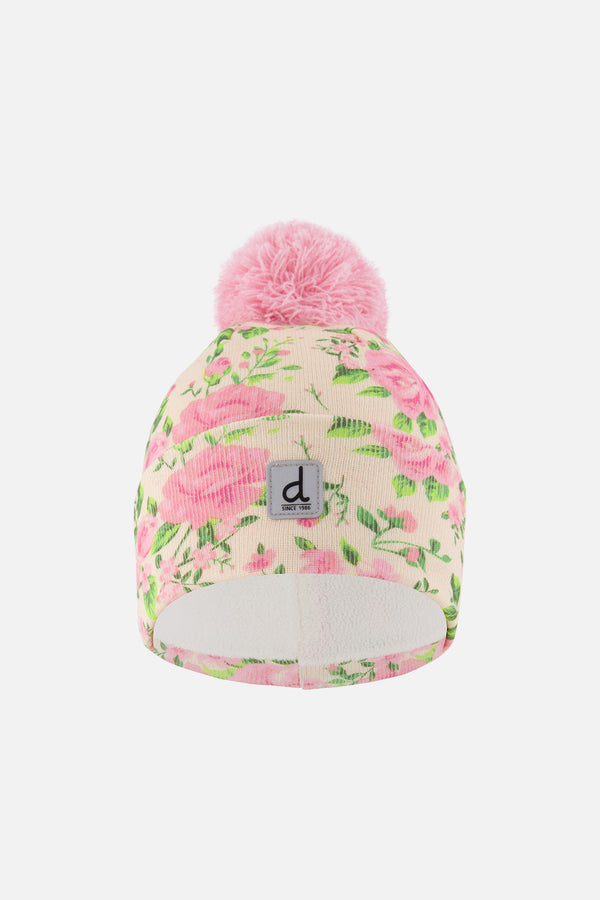
A Peruvian hat is a patterned knit with earflaps and braided tassels, often topped with a pompom. Deux par Deux lists its Baby Winter Peruvian Knit Hat With Pompom in Pink and Green Jacquard with earflaps, braided tassels, a pompom and a polyester-elastane lining, in sizes 6/12m and 18/24m. Check the fit at the ears, since the tassels are decorative rather than a chin strap.
When does a balaclava make more sense than a hat?
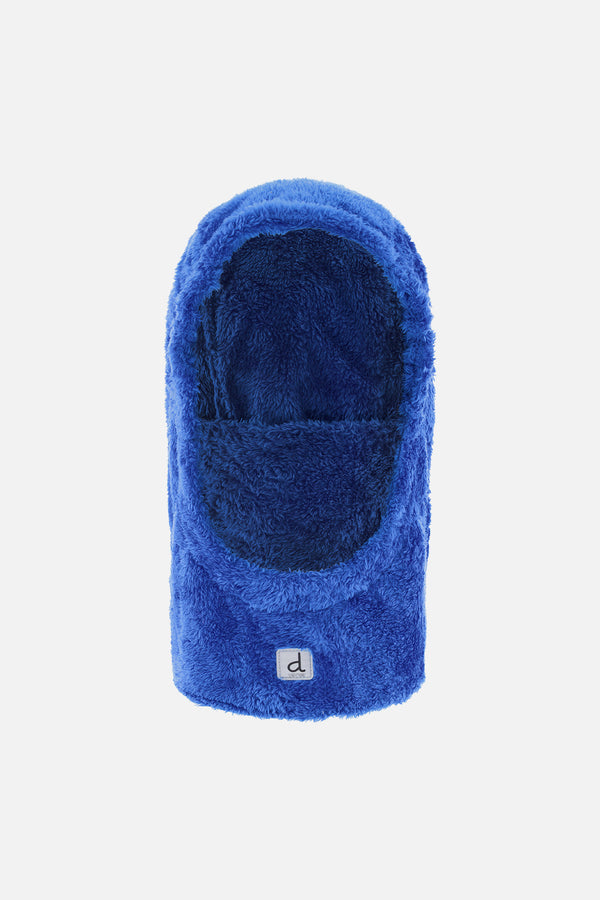
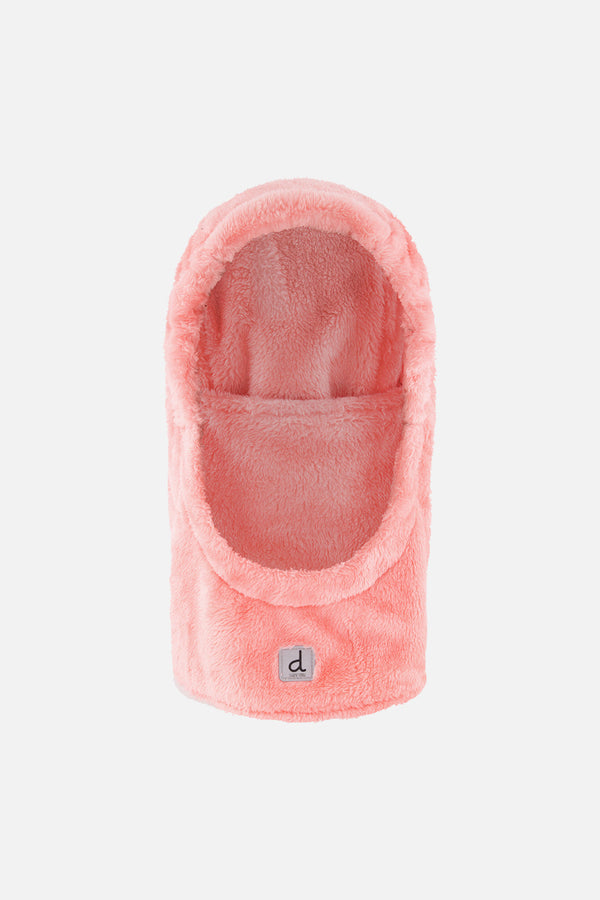
A balaclava makes sense when you need the head, ears and neck covered at once, or when your toddler pulls off every hat. It leaves the face open and has nothing to untie. Deux par Deux describes its Baby Knit Bear Balaclava in Off-White as a knit that "wraps all the way from the top of the head down over the neck," with a polar fleece lining, in one size, 6/24m. Our guide to balaclavas vs. neck warmers for kids compares the two in more depth.
Is a thin jersey hat ever enough?
A thin jersey hat works in fall and spring, on mild winter days, or under a snug hood when a thick knit would be too bulky. Deux par Deux lists its Baby Jersey Hat in Black as a slouchy, lined polyester jersey hat in size 6/24m. Below freezing, switch to a lined hat that covers the ears.
You'll find more shapes and colors in baby girls' winter accessories, baby boys' winter accessories and the full kids' hats and caps collection.

What Size Winter Hat Does a Baby Need?
Measure your baby's head and match the number to the brand's size chart; don't buy by age alone. A hat that is too big slides over the eyes, and one that is too small rides up off the ears.
How do you measure a baby's head for a hat?
- Wrap a soft tape measure (or a string you then lay on a ruler) around the widest part of the head: across the forehead just above the eyebrows, over the tops of the ears and around the back.
- Keep the tape flat and snug, but not tight. Measure twice and use the larger number.
- Compare the measurement with the size chart for the exact hat you're looking at.
What does a baby hat size chart look like?
Here is the hat chart Deux par Deux shows on its product pages at Jenni Kidz. It lists head circumference by age group, which is a useful starting point. Inch values are converted and rounded.
| Age group (Deux par Deux chart) | Head circumference (cm) | Head circumference (in, approx.) |
|---|---|---|
| Newborn | 33 to 35 | 13 to 13.8 |
| 3 to 6 months | 35 to 43 | 13.8 to 16.9 |
| 6 to 12 months | 43 to 46 | 16.9 to 18.1 |
| 12 to 24 months | 46 to 49 | 18.1 to 19.3 |
| 2 to 4 years | 49 to 51 | 19.3 to 20.1 |
Hat labels don't always line up neatly with chart rows. A hat sold as 9/12m or 2/3T (30/36M) sits between groups, so use your child's measurement to decide, and read the size notes on each product page. Other brands use their own charts, so check the chart for the hat you're buying.
Should you size up for next winter?
Size up only a little, and only if the hat has a way to stay put. A hat with ties or a chin strap can handle a bit of extra room; a pull-on toque that is too big will slip over the eyes. If your child sits at the top of a size range in early winter, the next size is usually the better choice.
How Should a Baby Winter Hat Fit?
A winter hat should sit snugly above the eyebrows, cover the ears fully and stay in place when your child turns their head. Run through this fit check when you try it on:
- Ears: the band or flaps cover the whole ear, including the earlobes. This follows the CPS winter advice for parents: "Always keep ears covered to prevent frostbite."
- Forehead: the edge sits just above the eyebrows. It shouldn't leave deep red marks after a few minutes.
- Eyes: nothing slides down over the eyes when your child looks up, down or sideways.
- Back of the neck: the hat reaches the hairline at the back, so there's no gap between hat and collar.
- Ties or strap: they fasten under the chin without pressing on the throat. You should be able to slide a finger between the strap and the chin.
Babies grow quickly, so check the fit again every month or so.
How Does a Winter Hat Work Under a Snowsuit Hood?
The hat goes on first and the snowsuit hood goes over it. The hat covers the ears, the hood blocks wind and snow, and the hood should close without pushing the hat into your child's eyes.
- Do a test fit at home. Put on the snowsuit, add the hat, then pull up the hood and zip to the top. Check that your child can turn their head and still see to the side.
- Watch out for pompoms. A big pompom can lift a snug hood off the forehead; choose a flatter hat for hood days.
- Tuck the flaps in. Ear flaps and ties should sit inside the hood and collar, not bunch up at the neck.
- Match bulk to the hood. A roomy hood can take a thick chapka; a close-fitting hood may only take a thinner knit or a balaclava.
Browse baby girls' snowsuits and baby boys' snowsuits to compare hood styles, and use our snowsuit sizing guide to choose a suit with room for a hat and layers. For what goes underneath, see what to wear under a snowsuit.
Which Hat Should a Baby Wear at Each Temperature?
Match the hat to the "feels like" temperature, including wind chill, then adjust for how long you'll be out and how much your child moves. The table below is a general guide we put together from the CPS, Environment and Climate Change Canada (ECCC) and the AAP. Only the thresholds in the notes come from those sources; the hat suggestions are ours.
| Temperature (feels like) | Hat to consider | Notes |
|---|---|---|
| 10 to 17°C (50 to 63°F) | A light hat if it's breezy, such as a thin jersey hat | Many babies won't need a warm hat yet. |
| 0 to 9°C (32 to 48°F) | A knit toque that covers the ears | Wind or wet weather can make it feel much colder. |
| −1 to −14°C (30 to 7°F) | A lined hat with ear flaps or a chin strap, plus a neck warmer | The CPS advises covering as much skin as possible in cold temperatures. |
| −15 to −26°C (5 to −15°F) | A lined ear-flap hat or chapka under the hood, or a balaclava, so only the face shows | The CPS suggests reducing time outside at −15°C (5°F) or colder. |
| −27°C (−16°F) or colder, including wind chill | Stay indoors | The CPS suggests keeping children indoors at this point, when exposed skin begins to freeze. |
How does wind chill change the hat choice?
Wind makes cold air feel colder on exposed skin, so dress for the wind chill, not the thermometer. ECCC's Wind Chill Index rates a wind chill of −10 to −27 as moderate risk, with a "risk of hypothermia and frostbite if outdoors for long periods of time." At −28 to −39 it warns that "any exposed skin can freeze in 10 to 30 minutes." On windy days, ear flaps, a chin strap or a balaclava stop the hat from lifting off the ears.
When is it too cold for a baby outside, even with a good hat?
A hat can't make extreme cold manageable for a baby. The CPS suggests you "Consider keeping them indoors whenever the temperature or the wind chill is reported to be -27°C (-16°F) or lower," and to reduce time outside at −15°C (5°F) or colder. The CPS also notes that "Babies and toddlers are more at risk of frostbite since they don't move as much and can't tell us when they are cold." The AAP's guide to playing outside in winter says playing outside in temperatures or wind chills below −15°F (about −26°C) "should be avoided." For a full outfit at each temperature, read what a baby should wear outside.
What else should go with the hat?
The hat is one piece of a layered outfit. The AAP says, "The rule of thumb for older babies and young children is to dress them in one more layer of clothing than an adult would wear in the same conditions." Add a neck warmer to close the gap at the collar, and mittens from gloves and mittens. Our layering guide for changing weather covers base and middle layers, and mittens vs. gloves for toddlers explains which to choose.

Are Chin Ties, Cords and Pompoms a Problem?
Chin ties and cords are useful for keeping a hat on, but they need a little attention. The CPS advises parents of younger children to "remove drawstrings from clothing that could catch on climbing or play equipment," and to use a neck warmer instead of a scarf. With that in mind:
- Tie chin cords in a short bow under the chin and tuck the ends inside the collar.
- For a toddler who climbs on play structures, a button strap or a balaclava leaves less to catch.
- Check that pompoms and toggles are firmly attached each time you wash the hat.
- Take the hat off before any nap. The CPS advises taking off "items with ties or hoods, and hats before putting your baby to sleep to prevent strangulation."
What Are the Most Common Baby Winter Hat Mistakes?
Most mistakes come from buying by age instead of measurement, or from forgetting how the hat works with the rest of the outfit. Watch for these:
- Buying by age label only. Measure the head and check the chart for that specific hat.
- Choosing a hat that leaves the earlobes out. Look for flaps or a crown deep enough to cover the whole ear.
- Skipping the hood test. A thick hat or large pompom can push the hood into your child's eyes.
- Dressing for the thermometer, not the wind chill. Check the forecast's "feels like" value before you head out.
- Overdressing. The CPS notes that a child dressed too warmly "could sweat and feel colder when they stop playing."
- Owning only one hat. Hats get wet in the snow. A spare means you aren't putting a damp hat back on.
How Do You Wash and Dry a Baby Winter Hat?
Follow the care label on the hat, since knits and structured hats are cleaned differently. On the hats above, Deux par Deux lists different instructions by style:
- Knit toques and Peruvian hats: "Machine wash in cold water on a delicate cycle, do not tumble dry, bleach or iron."
- Chapka: "Machine wash cold, tumble dry low, no bleach, no fabric softener, no dry cleaning, close the fasteners before washing."
For knits that shouldn't go in the dryer, press out water with a towel and dry the hat flat. Fasten ties and straps before washing. Our guide to caring for winter clothing covers snowsuits and jackets too.
What Are the Signs of Frostbite on a Baby's Ears or Face?
Red, swollen skin is usually the first sign. The CPS says frostbitten skin "will first become red and swollen," can then "look grey," and once frozen "will have no feeling and will be shiny and white." According to the CPS, "The most common body parts to get frostbite are the cheeks, ears, nose, fingers, and toes."
If you see these signs, bring your child indoors. The CPS says, "Do not massage or rub frostbitten skin," and to "Seek medical advice immediately if your child's skin is white, waxy or feels numb."
Why Should the Winter Hat Come Off Indoors and Before Naps?
Take the hat off when you come indoors and before every sleep. The Public Health Agency of Canada says, "Babies do not need hats when they're indoors," and "A hat can make them too hot." It also advises, "Remove your baby's snowsuit, raincoat, jacket or other type of outerwear once indoors." The UK baby charity The Lullaby Trust agrees: "Babies do not need to wear hats indoors."
If your baby falls asleep on the way home, take off the hat and outer layers before you lay them down. The CPS sleep guidance for babies advises removing hats and items with ties before sleep. For the full picture on hats indoors and during sleep, see our newborn hat guide.
Frequently Asked Questions
What size winter hat does my baby need?
Measure around the widest part of your baby's head, just above the eyebrows and ears, and compare it with the hat's size chart. On the Deux par Deux chart, 6 to 12 months is 43 to 46 cm and 12 to 24 months is 46 to 49 cm. Buy by measurement, not age alone.
Should a baby's winter hat cover the ears?
Yes. The Canadian Paediatric Society advises always keeping ears covered in cold weather, because ears can be easily frostbitten. Choose a hat with ear flaps or a crown deep enough to reach below the earlobes.
Is a hat with ear flaps better than a regular toque for a toddler?
For cold or windy days, usually yes. Ear flaps with ties or a chin strap keep the ears covered when your toddler moves, while a pull-on toque can ride up. A plain toque is fine for cool, calm days and quick errands.
Can a baby wear a winter hat under a snowsuit hood?
Yes. The hat goes on first and the hood goes over it. Test the combination at home: the hood should close without pushing the hat into your baby's eyes. A large pompom or very thick hat may not fit under a snug hood.
What kind of winter hat works on windy days?
Choose ear flaps with ties or a chin strap, a chapka with a button strap, or a balaclava, so wind can't lift the hat off the ears. Dress for the wind chill, not the thermometer: Environment and Climate Change Canada rates a wind chill of −10 to −27 as moderate risk.
How do you wash a baby's knit winter hat?
Follow the care label. Deux par Deux lists its knit toques and Peruvian hats as machine wash in cold water on a delicate cycle, with no tumble drying, bleach or ironing, while its chapka can be tumble dried low. Fasten ties and straps first, then dry knits flat.
How do I stop my toddler from pulling off their winter hat?
Choose a style that is harder to remove, such as a hat with a chin strap or ties, or a balaclava. Check that it isn't too tight or too loose, put it on right before going out and zip the snowsuit hood over it.
Sources
- Canadian Paediatric Society, Caring for Kids: Winter safety: Advice for parents and kids (last updated February 2023)
- Canadian Paediatric Society, Caring for Kids: Frostbite (last updated February 2023)
- Canadian Paediatric Society, Caring for Kids: Safe sleep for babies (last updated October 2021)
- Public Health Agency of Canada: Dressing your baby for sleep (modified April 2025)
- Environment and Climate Change Canada: Wind chill and the Wind Chill Index (modified December 2025)
- American Academy of Pediatrics, HealthyChildren.org: Cold Weather Safety for Children: Preventing Frostbite & Hypothermia (last updated January 2023)
- American Academy of Pediatrics, HealthyChildren.org: Playing Outside in Winter: Tips to Keep Kids Warm & Safe (last updated January 2026)
- The Lullaby Trust: Your baby's room temperature
- Deux par Deux hat size chart (head circumference), shown on Deux par Deux hat product pages at Jenni Kidz (viewed November 10, 2026)