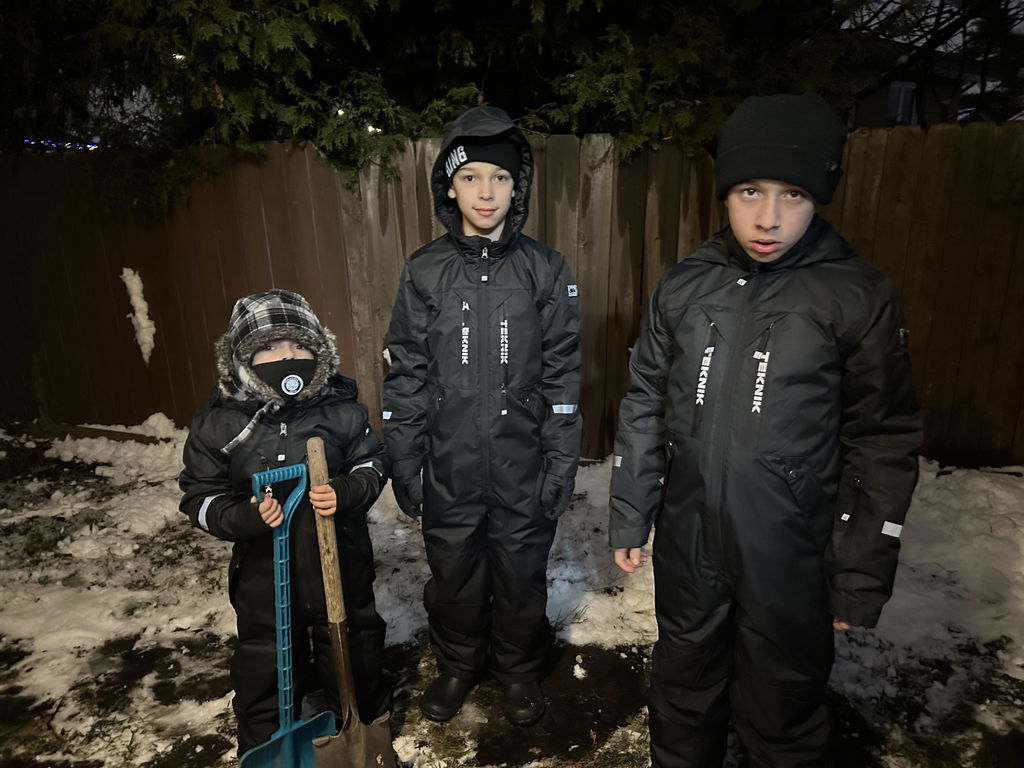
Choosing the right kids' snowsuit comes down to six things: warmth, waterproofing, wind protection, fit, mobility and durability. The best choice is not simply the thickest suit—it is the one that matches your child's weather, activity level and daily routine while leaving comfortable room for normal winter layers.
Start by browsing kids' snowsuits, then use this guide to narrow the options by climate, fit and how your child actually spends winter outdoors.
Quick Snowsuit Buying Checklist
- Choose insulation appropriate for your local winter.
- Prioritize waterproof protection for wet snow and slush.
- Look for wind-blocking cuffs, closures and hood coverage.
- Leave enough room for a base and mid layer without excess bulk.
- Make sure your child can squat, bend, climb and raise their arms.
- For frequent outdoor play, look for durable high-wear areas.

1. Match Warmth to the Weather
A snowsuit should keep a child comfortable without forcing you to over-layer. Temperature ratings can be useful when a manufacturer provides them, but compare the full design too: insulation, lining, wind protection, hood, cuffs and how much time your child will spend outside.
Children who spend long periods at recess, sledding or walking may need different protection from a child who mostly moves between the car and indoors. For cold-weather options, explore Deux par Deux kids' winter clothing alongside other winter styles carried by Jenni Kidz.
2. Waterproofing Matters in Wet Snow
Water-resistant and waterproof are not interchangeable. If your child regularly kneels, sits or plays in wet snow, stronger moisture protection becomes much more important. Look at the manufacturer's stated waterproof construction or rating when available rather than assuming a puffy suit is waterproof.
3. Check Wind Protection
Cold wind can make an otherwise warm outfit uncomfortable. Useful details can include a protective collar, well-fitting hood, elastic or adjustable cuffs and closures that reduce exposed gaps. The goal is coverage without restricting movement.
4. Get the Fit Right
A snowsuit needs enough room for normal winter layers, but buying dramatically oversized can make movement harder and create gaps where cold air or snow enters. Sleeves should cover the wrists, pant legs should work with winter boots, and the torso should not pull when the child bends or squats.

5. Test Mobility Before You Commit
Have your child squat, sit, walk, raise both arms and bend at the knees. A good winter suit should allow normal play without pulling sharply across the shoulders, crotch or knees. For school-age children, independence matters too: zippers and closures should be manageable during recess transitions.
6. Think About Durability and Cost per Wear
A lower-priced suit can be sensible for occasional mild-weather use. For children who play outside daily, stronger fabric and reinforced high-wear areas may deliver better value over a full season or through hand-me-down use. Compare expected use, not price alone.
One-Piece or Two-Piece?
A one-piece design can reduce gaps at the waist and is often convenient for younger children and deep snow. A two-piece set offers flexibility, easier indoor transitions and the ability to wear the jacket separately. Read our one-piece vs two-piece snowsuit guide for a detailed comparison.
Choose by Child and Use Case
If you already know who you are shopping for, browse girls' snowsuits or boys' snowsuits. For younger children, prioritize simple dressing, comfortable movement and reliable coverage; for school-age kids, independence, durability and recess practicality become increasingly important.
Frequently Asked Questions
Should I size up in a kids' snowsuit?
Do not automatically size up. Use the brand's size guidance and test the suit with the layers your child normally wears. The correct fit should provide layering room without excessive bulk.
How do I know if a snowsuit is too small?
Watch for pulling at the shoulders or crotch, sleeves or legs riding up, restricted squatting and difficulty layering comfortably.
How do I know if it is too big?
Excessively long sleeves or pant legs, very wide shoulders and a bulky torso can interfere with movement and make it harder to keep snow out.
What matters most for school recess?
Warmth, moisture protection, mobility, easy dressing and durability are especially important when children repeatedly go outside throughout the school week.
Bottom Line
The right snowsuit should fit the child, the climate and the way it will actually be used. Compare warmth, waterproofing, wind protection, fit, mobility and durability first, then choose the style and price point that best matches your family's winter routine.
Ready to compare options? Shop the Jenni Kidz snowsuit collection and use the six-point checklist above to narrow your choice.
Match the Snowsuit to the Winter Your Child Actually Has
A strong buying decision starts with the child’s real routine, not with a generic search for the warmest coat. A preschooler moving between a car and daycare has a different exposure pattern from a school-age child spending daily recess outside. A child who sleds every weekend creates different wear and moisture demands again. List the most common activities, typical time outdoors, local precipitation and whether the child will dress independently. That short brief makes technical specifications much easier to interpret.
School and daycare
For school and daycare, dressing speed and independence matter. Look for closures the child can manage, cuffs that work with mittens, pant openings or gaiters that work with boots, and enough mobility for recess. A technically impressive suit that is frustrating to put on can create daily friction.
Active weekend play
Sledding, snow forts and climbing add repeated kneeling, sitting and contact with snow. Mobility, moisture protection and durable knees, seat, lower legs and cuffs become more important. Test squatting and reaching rather than judging fit while the child stands still.
Travel and occasional snow
For occasional use, prioritize the destination and the actual trip. Premium technical features can be valuable, but paying for specifications the child will never use does not improve value. Buy for the planned conditions rather than a hypothetical extreme.
Warmth: Use Ratings as Context, Not a Guarantee
Temperature ratings can help when a manufacturer provides them, but brands may use different methods and assumptions. Activity, wind, moisture, time outside, base layers and individual comfort all influence how warm a garment feels. Compare a stated rating with insulation, lining, shell, hood, cuffs and intended use instead of treating one number as a promise.
If a product does not state a temperature rating, do not infer one from thickness or appearance. Product-specific specifications should remain the source for exact technical claims. Active children may also need less insulation than expected because running and climbing generate heat, while less-active situations such as waiting outdoors can feel colder.
Waterproofing, Wet Snow and Slush
Moisture protection becomes especially important when children sit or kneel in snow or experience freeze-thaw conditions. Waterproof and water-resistant are not interchangeable. Check the exact product description for stated waterproof ratings, coatings, membranes or seam information when available.
A rating does not describe the entire garment. Water can enter through openings, and prolonged contact with wet snow can challenge a garment differently from light snowfall. Cuffs, closures, gaiters and seams all contribute to real-world performance.
Why seams matter
Fabric panels must be joined together, creating potential moisture entry points. If a product specifies taped or sealed seams, check whether the claim applies to critical seams or the full garment. Do not assume every seam is sealed unless the manufacturer says so.
Wet coastal versus cold dry conditions
Heavy wet snow raises the importance of shell performance and moisture management. Colder dry conditions can shift more attention toward insulation and wind protection. Families comparing regions can use our Prairie vs Coastal Winter Snowsuit guide.
Breathability and Layering
Outerwear must handle precipitation from outside and heat generated inside. Breathability can help active children remain comfortable, but quote technical ratings only when the brand provides them. The practical goal is a system that can be adjusted as activity and temperature change.
A common mistake is compensating for uncertain outerwear performance with several thick layers. Excess insulation can increase sweating and restrict movement. Start with appropriate outerwear and use removable layers to fine-tune comfort. Our kids’ layering guide explains the base, mid and outer-layer system.
One-Piece vs Two-Piece: Choose by Routine
A one-piece provides continuous coverage through the torso and waist, which can be convenient for younger children and deep snow. A two-piece allows the jacket to be worn separately and can make indoor transitions or bathroom routines easier for some children. Neither construction is automatically warmer in every situation; compare the exact garment and the child’s routine.
Use the detailed One-Piece vs Two-Piece Snowsuit guide when this is the main decision.
Fit: Test the Whole Body, Not Just Sleeve Length
Correct fit is functional. A suit that is too tight can restrict movement and necessary layers. A dramatically oversized suit can create bulk and make cuffs, gaiters or hems sit incorrectly.
Shoulders and arms
With realistic layers underneath, ask the child to raise both arms, reach forward and bend the elbows. The shoulders should not pull sharply, while sleeves should provide useful wrist coverage without swallowing the hands.
Torso and crotch
For one-piece suits, torso length is critical. Have the child squat and sit. Strong pulling through the shoulders or crotch can reveal a body-length problem even when sleeves and legs look acceptable.
Legs and boots
Pant legs should work with winter boots and any integrated gaiter. Heavy bunching or dragging can be impractical, while legs that ride up can create gaps.
Layering room
Test with the base and mid layer the child will genuinely wear. Do not use an unusually thick stack of clothing simply to justify a larger size. The completed system should still allow walking, squatting, climbing and reaching.
Durability, Details and Cost per Wear
Durability matters most where children create repeated friction: knees, seat, cuffs and lower legs. Reinforcement can be valuable for daily school play, while occasional stroller or travel use creates a different wear pattern. Cost per wear is therefore more useful than price alone. A higher-priced suit worn daily may deliver better value than a cheaper option that does not match the child’s use, while premium technical features may be unnecessary for occasional mild-weather wear.
Hoods, cuffs and gaiters
Small construction details affect daily usability. Check whether the hood provides coverage without blocking vision, whether cuffs work with mittens, and whether snow gaiters fit over the intended boots. Zippers and closures should be manageable for the child’s age. Detachable components and adjustment systems vary by product, so use the exact product description.
Choosing by Age and Independence
Babies
Ease of dressing, comfortable positioning and indoor-outdoor transitions often matter more for babies than school-style independence. For infant winter travel, read Infant Bunting vs One-Piece Snowsuit. For car travel, follow the child-restraint manufacturer’s instructions rather than treating winter outerwear advice as car-seat guidance.
Toddlers
Toddlers switch between walking, climbing, sitting and being carried. Prioritize mobility and straightforward dressing. A toddler should squat and climb without sharp pulling through the torso or knees.
School-age kids
School routines add independence, speed and durability. Children may have only a short time to dress for recess, so they should be able to manage key closures and move comfortably once outside. See the Preschool & Elementary Snowsuit Guide.
Common Snowsuit Buying Mistakes
Buying only by age
Age labels are convenient but not precise. Compare current measurements with the brand size chart.
Automatically sizing up
Extra size does not automatically create better layering room. Excess bulk can reduce mobility and move functional features away from where they belong.
Choosing by warmth alone
A warm suit that does not match wet snow, wind or movement can still be the wrong choice.
Ignoring independence
A child who cannot manage the garment at school may not benefit fully from its technical features.
Assuming technical claims are directly comparable
Brands can describe waterproofing, insulation and temperature performance differently. Use exact specifications and avoid comparing isolated numbers without context.
Forgetting boots and mittens
Outerwear works as a system. Check how cuffs, gaiters, boots and mittens overlap during movement.
Snowsuit Decision Matrix
| Main use | Prioritize | Question |
|---|---|---|
| School recess | Independence, durability, weather protection | Can the child dress quickly and move freely? |
| Daycare snow play | Easy dressing, coverage, mobility | Does it work over normal layers? |
| Wet coastal winter | Moisture protection, seams, adjustable layering | What water-protection details are stated? |
| Cold dry winter | Insulation, wind protection, coverage | How long is the child outside? |
| Sledding | Mobility, moisture protection, durable wear zones | Can the child squat, climb and sit? |
| Travel | Destination fit, versatility, value | Which features will actually be used? |
Before-Checkout Checklist
- Measure the child now.
- Open the exact brand size chart.
- Identify the primary use case.
- Check stated warmth information when available.
- Check waterproof or water-resistance claims.
- Review seams, cuffs, hood and gaiters.
- Choose one-piece or two-piece by routine.
- Confirm realistic layering room.
- Consider dressing independence.
- Check boots and mittens compatibility.
- Review care instructions.
- Compare price with expected frequency of wear.
Shop More Efficiently
Once the decision criteria are clear, use the Kids’ Snowsuits collection as the main shopping page. Narrow by size and style first. You can also browse Girls’ Snowsuits, Boys’ Snowsuits and the Deux par Deux collection. Verify exact product features because specifications vary by line and season.
More Snowsuit FAQs
Is the warmest snowsuit always best?
No. Match warmth to conditions, exposure and activity. Too much insulation can be uncomfortable during active play.
Should a snowsuit fit loosely?
It needs functional room for appropriate layers and movement, but it should not be dramatically oversized.
How do I balance waterproofing and warmth?
Wet snow raises the importance of moisture protection; colder dry conditions can raise the importance of insulation and wind protection. Most families need a balance.
Can one snowsuit work for school and weekends?
Often yes if the child can manage it independently and it provides the protection and durability needed for weekend play.
Is premium always better?
No. Compare technical features with frequency of use. Value comes from matching the product to the child’s real winter.
How to Compare Two Snowsuits Side by Side
When two options both look suitable, compare them in a fixed order instead of switching between dozens of features. First confirm that both are available in the child’s current size. Second compare the weather protection that matters for your climate. Third compare fit and mobility. Fourth compare daily-use details such as closures, hood, cuffs, gaiters and care. Finally compare price and expected wear. This prevents a decorative feature from outweighing a more important functional difference.
For example, a family shopping for daily wet-snow recess should usually resolve fit and moisture protection before deciding between prints. A family buying for occasional cold-weather travel may put packability and versatility higher. The same product can be a strong choice for one routine and a weak choice for another.
How to Read a Snowsuit Product Page
Start with the product title and description, but move quickly to the specifications. Look for stated insulation or temperature guidance, water protection, fabric construction, lining, closures, hood, cuffs, gaiters, reinforcement and care. Then check the size chart. If a technical claim is absent, do not assume it. If a product page uses a broad phrase such as “winter ready,” look for the concrete specifications underneath it.
Photos are useful for understanding silhouette, coverage and design details, but they cannot prove warmth or waterproof performance. Treat visual appearance and technical specifications as different kinds of information.
Planning for Hand-Me-Down Use
Families hoping to pass outerwear to a younger sibling should still buy for the current child first. Oversizing today to extend future use can reduce current comfort and mobility. Instead, prioritize durable construction, follow care instructions and store the garment clean and dry after the season. Before reuse, inspect high-wear areas, closures, elastic, seams and any weather-protective components.
Care Can Affect Long-Term Performance
Follow the exact garment care label. Different shell fabrics, insulation and finishes can require different washing or drying methods. Do not assume every snowsuit should be treated the same way. Clean outerwear when needed, address visible damage and make sure it is fully dry before long-term storage. Our snowsuit and winter jacket care guide provides a broader maintenance framework.
Final Decision Framework
Before buying, be able to complete one sentence: “This snowsuit is the right choice because it fits my child now, matches our main winter conditions, works for the activities we actually do, and has the daily-use features we need.” If the decision depends mainly on a print, a large future size or an unsupported assumption about warmth, go back to the checklist.
The strongest purchase is not the suit with the longest feature list. It is the one whose fit, weather protection, mobility, durability and usability align with the child’s real winter. Once those requirements are clear, compare the current Kids’ Snowsuits and move from broad browsing to a short list of products that genuinely fit the job.
Quick Parent Test Before Ordering
Take one final minute before checkout. Confirm the size against current measurements, identify the normal layers that will go underneath, and picture the child completing the most common winter routine from start to finish. Can they get dressed, put on boots and mittens, walk, squat, climb, sit and come back indoors without the system becoming unnecessarily complicated? Then confirm that the product page actually states the technical features you are relying on. This short test catches many mismatches between an attractive product and a practical purchase.
If two products still appear equally suitable, choose using the factors that affect everyday use most: current fit, climate match, independence, care and expected frequency of wear. Color and print can then be the enjoyable final decision rather than the factor that hides a functional compromise.
Remember that children’s needs change during a season. Recheck fit after growth spurts, especially before a trip or a period of frequent outdoor use. A suit that worked well early in winter should still allow the intended layers and normal movement later in the season.
Fit always comes first.