Quick answer: No. Kids should not wear a puffy snowsuit or winter coat under a car seat harness. The AAP and Transport Canada explain that bulky padding can compress in a crash and leave the straps loose. Dress your child in thin, close-fitting layers, buckle and tighten the harness, then add a coat or blanket over the straps.
Every winter, parents across Canada and the northern US face the same driveway question: the snowsuit is warm, the car is cold, so why not just buckle up and go? Taking everything off feels like a lot of work at 7:45 a.m.
This guide explains what child passenger authorities in both countries say about winter clothing in car seats and booster seats, why bulky outerwear causes slack, how to check the harness in seconds, and what your child can wear in the car instead, plus a cold-morning routine and a checklist for the door.
This guide is general information, not a substitute for your car seat manual. Always follow the instructions for your specific car seat and vehicle, and ask a certified child passenger safety technician or a local car seat clinic if you're unsure about fit.
What Do Child Passenger Experts Say About Snowsuits in Car Seats?
The main sources in Canada and the US point the same way: keep bulky outerwear out from under the harness, with one Transport Canada nuance noted below.
- American Academy of Pediatrics (AAP): The AAP's winter car seat tips on HealthyChildren.org state that "bulky clothing, including winter coats and snowsuits, should not be worn underneath the harness of a car seat."
- NHTSA (US): The National Highway Traffic Safety Administration's cold-weather car seat tips warn that too much bulk can create extra room in the harness, causing a loose fit.
- Parachute (Canada): Canada's injury prevention charity notes on its child car safety page that "car seat manufacturers warn against dressing children in bulky snowsuits in a car seat or booster seat."
- Transport Canada: Its rear-facing seat instructions say to check that the harness is snug every time you place your child in the seat, especially when clothing changes with the seasons.
One nuance: Transport Canada's older notice on third-party aftermarket products (released in 2004) says that if bulky winter clothing is used, the harness must be tight enough to compress the material, and tells parents to check with the car seat manufacturer for alternative ways to dress children in winter. The AAP, NHTSA and Parachute go further and recommend thin layers under the harness. Following the thin-layer approach satisfies both.
Why Does a Puffy Snowsuit Make the Harness Too Loose?
Puffy outerwear is mostly trapped air. That air keeps kids warm on the sledding hill, and it's also what causes trouble in a car seat.
The AAP explains: "In a car crash, fluffy padding in a coat immediately flattens out from the force, leaving extra space under the harness." Straps tightened over a snow suit feel snug because they press on padding, not on your child. In a sudden stop, the padding compresses and the gap appears all at once. The AAP's car seat information for families adds that this can "leave the straps too loose to restrain your child."
Transport Canada points to a second issue: many snowsuits are made of very slippery material, which can affect the harness if the chest clip isn't used properly.
Does this only apply to babies?
No. The AAP says its winter tips are appropriate for all ages, and Parachute's warning covers booster seats too. The fit check changes by stage, but the principle holds from newborn to big kid.
How Do You Do the Pinch Test on a Car Seat Harness?
The pinch test is the quickest way to check harness fit. Transport Canada describes it: "Attempt to pinch the webbing of the harness with the thumb and forefinger. If you are unable to pinch the harness, then it is sufficiently tight." NHTSA's car seat installation tips put it this way: "The harness is snug enough when extra material cannot be pinched at the shoulder."
Pinch test step by step
- Buckle. Attach the buckle and give it a tug, as Transport Canada advises.
- Check strap height. Transport Canada says straps should be at or just below the shoulders in a rear-facing seat, and at or just above the shoulders in a forward-facing seat.
- Tighten the harness until the straps are snug on your child's shoulders.
- Pinch at the collarbone. Try to pinch a fold of webbing between your thumb and forefinger. If you can, tighten more and test again.
- Position the chest clip. NHTSA says: "Make sure the chest clip is at armpit level." Transport Canada gives the same instruction.
- Repeat every ride. Clothing changes from day to day, so the fit does too.
Why the pinch test can fool you with a snowsuit on
Over a thick snowsuit, the straps may pass the pinch test while still resting on padding that will flatten in a crash. That's why the experts recommend removing bulky outerwear first, then testing on thin layers. The AAP notes that even when a child looks snugly bundled up, multiple layers can make it hard to tighten the harness enough.
What Should Kids Wear in a Car Seat in Winter?
Think of a fall outfit plus a hat and mittens. Parachute suggests that in cold weather children wear "clothing appropriate for spring or autumn in the car seat, such as an undershirt, hat and fleece layer." The AAP lays out a layering order that works for most ages:
- Close-fitting base: tights, leggings or a long-sleeved bodysuit.
- Middle layer: pants and a warmer top, such as a sweater or thermal-knit shirt.
- Thin outer layer: a thin fleece jacket.
- Extras: long underwear in very cold weather, plus hats, mittens and socks or booties.
NHTSA agrees: "Choose lightweight fleece layers instead of puffy materials to ensure a snug-fitting harness."
Base layers, fleece and accessories we carry
These are everyday clothing pieces, not car seat products, and we make no claims about how they work in a car seat. Whatever your child wears, do the pinch test and follow your seat manual.
- Base layer: Deux par Deux lists the Two Piece Thermal Underwear Merino Blend Black as a crew-neck top and elastic-waist pants in a polyester and merino wool knit, sizes 2/3 to 12/14. The Thermal Underwear Leggings Light Pink come in sizes 2 to 14. See more long johns in kids' base layers.
- Fleece mid-layer: Deux par Deux describes the Mid-Season Plush Pop-Over Polar Jacket Blue Mountain Print as a plush fleece pullover with stretch, sizes 2 to 14. For sweaters, browse girls' sweaters and hoodies or boys' sweaters and hoodies.
- Hat: the Winter Peruvian Knit Hat With Pompom Dark Blue is a fleece-lined knit toque with ear flaps, sizes 2/4 to 10/14.
- Baby mittens: the Infant Knit Mittens With String Off-White come in sizes 3/6m and 9/12m with a polar fleece lining, according to Deux par Deux.
Why hats, mittens and socks matter in the car
The AAP says hats, mittens and socks or booties "help keep kids warm without interfering with car seat straps." It also suggests keeping an extra pair or two of mittens handy, since wet mittens make a child colder. You'll find knit hats, balaclavas and mitts in winter accessories and kids' gloves and mittens.

How Do You Keep a Baby Warm in an Infant Car Seat?
Babies can't tell you they're cold, so a little planning helps.
- One more layer, then remove the outerwear. The AAP says infants should generally wear one more layer than adults. If you need a coat, your baby probably needs a coat and blanket, but the AAP says to remove both inside the car before buckling, then drape the blanket or coat over the straps.
- Keep the carrier indoors. The AAP recommends storing the infant carrier inside the house so the seat stays at room temperature and your baby loses less body heat in the car.
- Cover the harness, not the face. The AAP says to leave your baby's face uncovered to avoid trapped air and suffocation, and to keep the top layer removable so your baby doesn't get too hot once the car warms up.
For the walk to the car, many parents use a blanket or a coat over thin layers rather than a one-piece snowsuit they'll have to remove. For walks and stroller outings, our guide to what babies wear under a snowsuit covers outdoor layering, and the bunting vs. one-piece snowsuit comparison explains which outerwear suits newborns and older babies.
Bringing a newborn home in winter? Parachute notes that newborns lack the neck strength to hold up their heads and recommends checking on them often. Our newborn hospital packing list covers the going-home outfit.
What About Toddlers in Convertible Car Seats?
Toddlers are the most likely to fight the coat-off routine. These approaches line up with the guidance:
- Dress for the car, gear up on arrival. Thermal long johns, pants and a fleece at home; snowsuit or snow pants at your destination. Parachute recommends the same approach for bulky sports gear.
- Wear the coat backwards. The AAP and NHTSA both describe putting the coat on backwards over the buckled harness: arms in the sleeves, coat covering the front of the body.
- Try a coat that opens wide. The AAP mentions poncho-style coats or jackets that zip down the sides so the back can flip forward over the harness.
- Keep a blanket in the back seat so you never have to remember one.
Rear-facing or forward-facing, the steps are the same: thin layers, buckle, tighten, pinch test, chest clip at armpit level, warmth on top.
Can Kids Wear Winter Coats in a Booster Seat?
Booster seats use the vehicle's adult lap and shoulder belt, so the fit check is different, but bulk still matters. The AAP says the lap belt should lie low and snug across your child's upper thighs and the shoulder belt should cross the middle of the chest and shoulder, off the neck. Transport Canada's booster seat instructions add: "If your child is wearing bulky winter clothing, try to thread the lap belt underneath the jacket so that the lap belt is tight on the hips."
- Open the coat before buckling so the lap belt sits on the hips, not over a puffy front.
- Choose a thinner jacket for the drive and save the heavy parka or snowsuit for school or the hill.
- Check the shoulder belt. The AAP says a belt tucked under the arm or behind the back leaves the upper body unprotected and adds slack.
- Same idea for hockey and ski gear. Parachute says bulky sports equipment can interfere with fit, so travel in a base layer and gear up at the rink.
Is It Okay to Put a Blanket or Coat Over the Harness?
Yes. It's the main way the experts recommend adding warmth. NHTSA says: "For added warmth, cover your child with a blanket, or put a coat on backwards over the properly fitted harness." Parachute says that once your child is buckled in, you can place a blanket over them. Three details make it work:
- Buckle and pinch-test first. The cover goes on after the harness is tight.
- Nothing under the child. The AAP says nothing bulky should go underneath your child's body or between their body and the harness straps.
- Face uncovered, layer removable. Take the top layer off once the car warms up.
Are Car Seat Covers, Inserts and Bunting Bags Okay?
These products are often sold right next to car seats, which is why so many parents are surprised by the guidance.
The AAP is direct: "if the item did not come with the car seat, it has not been crash tested and may interfere with the protection provided in a crash." It advises against sleeping bag inserts or other stroller accessories in the car seat, and says to use a car seat cover only if it has no layer under the baby.
Parachute lists bunting bags, harness strap covers, head support pads, seat belt adjusters and attachable trays or mirrors as add-ons not to use unless your car seat manufacturer says they're allowed. Transport Canada's aftermarket notice explains why: no regulations or standards cover third-party aftermarket products, and padding behind the child or a padded car seat bag can add slack or re-route the harness. Its advice is to consult the car seat manufacturer before using any aftermarket product.
Bunting bags and footmuffs still have a place in winter for strollers and walks outdoors.
What's the Fastest Winter Car Routine on Cold Mornings?
The AAP suggests getting an early start on winter mornings, since there's more to assemble and winter roads often call for slower driving. Once it's a habit, this routine adds only a minute or two:
- Night before: lay out base layer, mid-layer, hat, mittens and the outdoor snowsuit. Bring the infant carrier inside.
- At home: dress your child in base layer, pants, sweater or fleece, socks, hat and mittens.
- Walk to the car: add the winter coat, or carry your baby under a blanket.
- At the car: coat off, buckle, tighten, pinch test, chest clip to armpit level, then the coat backwards or a blanket on top.
- On arrival: remove the top layer, then add the snowsuit or snow pants for outdoor play.
Many families keep the outdoor snowsuit, boots and spare mittens at daycare or in a backpack, so only the car layers make the trip. For the outdoor half, see our no-sweat layering formula for toddlers and kids and our layering guide for changing weather.

What Are the Most Common Winter Car Seat Mistakes?
| Mistake | Why it matters | What to do instead |
|---|---|---|
| Buckling over a puffy snowsuit or parka | Padding flattens in a crash and leaves extra space under the harness (AAP) | Remove outerwear, buckle on thin layers, add the coat over the straps |
| Skipping the pinch test | Layers can make it hard to tighten the harness enough (AAP) | Pinch at the collarbone every ride (Transport Canada) |
| Chest clip low on the belly | Slippery snowsuit fabric plus a misplaced clip affects the harness (Transport Canada) | Slide the chest clip to armpit level |
| Adding a padded insert or bag that didn't come with the seat | Not crash tested with your seat; can add slack (AAP, Transport Canada) | Check your manual and the car seat manufacturer first |
| Lap belt over a puffy coat in a booster | The belt can't sit low and snug on the hips | Thread the lap belt under the open jacket (Transport Canada) |
| Leaving the warm top layer on | Kids can get too hot once the car warms up (AAP) | Use a removable layer and take it off |
What Should You Keep in the Car for Winter Trips?
The AAP recommends an emergency bag with extra blankets, dry clothing, hats and gloves, and non-perishable snacks, in case of an on-road emergency or a child who gets wet on a winter outing. NHTSA also lists a phone charger, food and water. A spare pair of mittens or mitts from gloves and mittens in the glovebox saves a lot of cold-hand meltdowns.
Parachute and NHTSA both stress one more winter rule: never leave a child alone in a vehicle. NHTSA notes that young children can't regulate their body temperature like adults can.
Do Kids Still Need a Snowsuit for Outdoor Play?
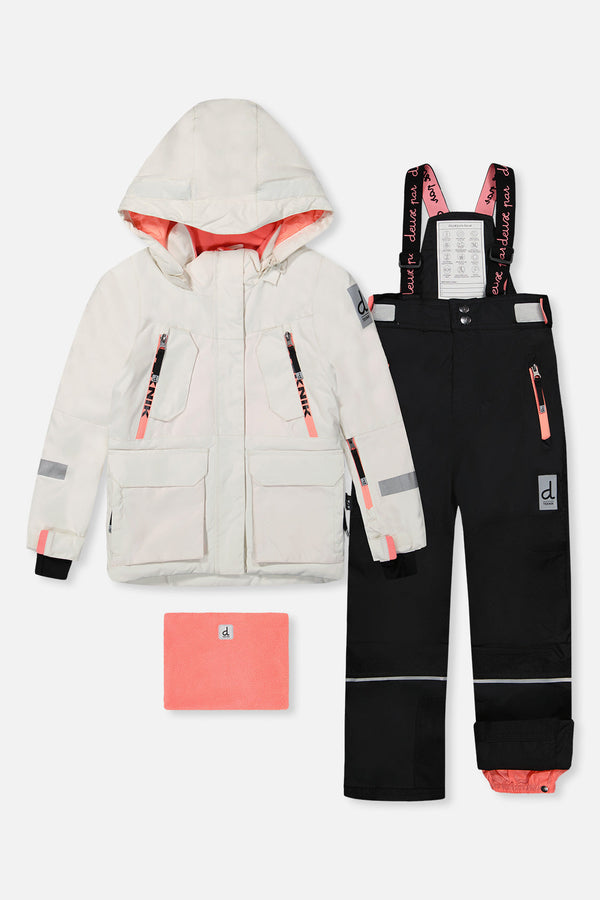
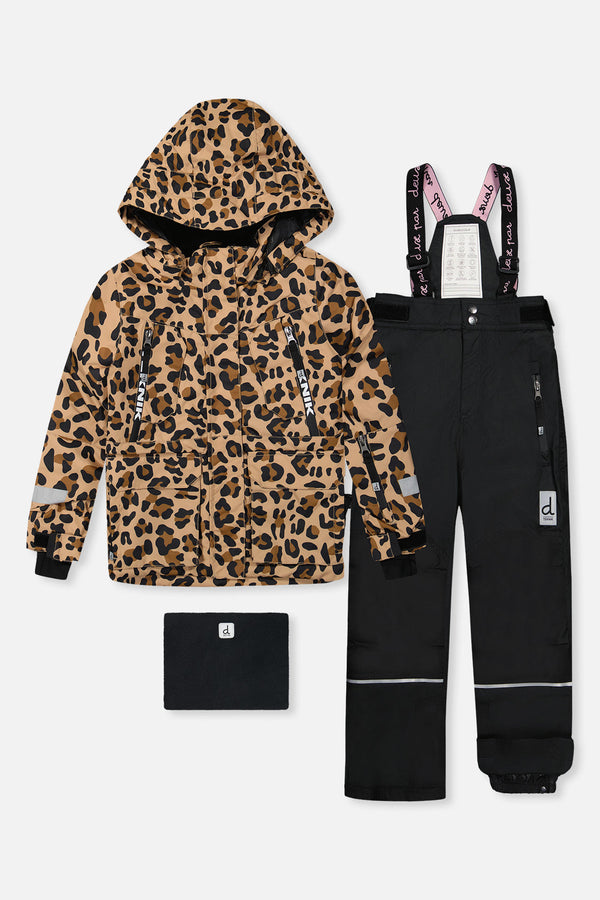
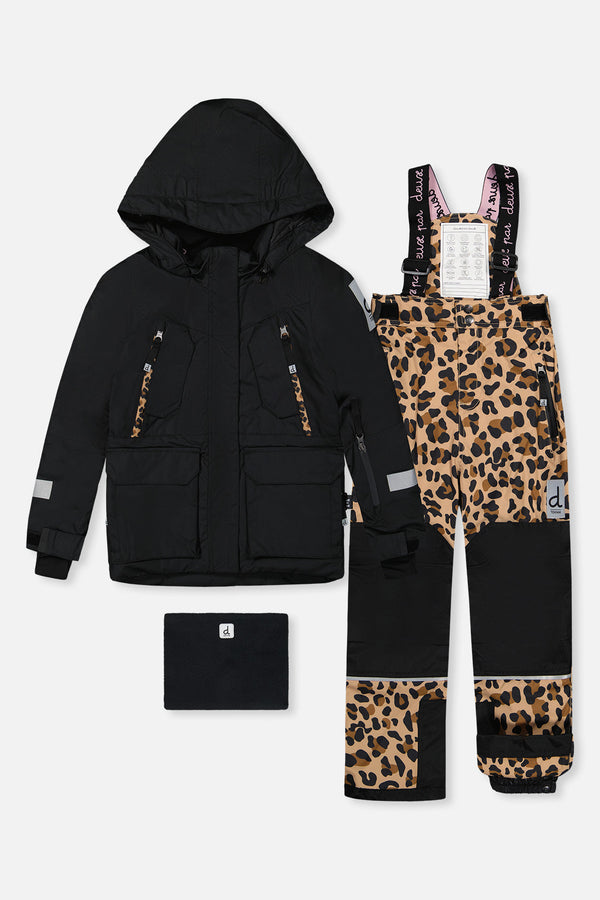
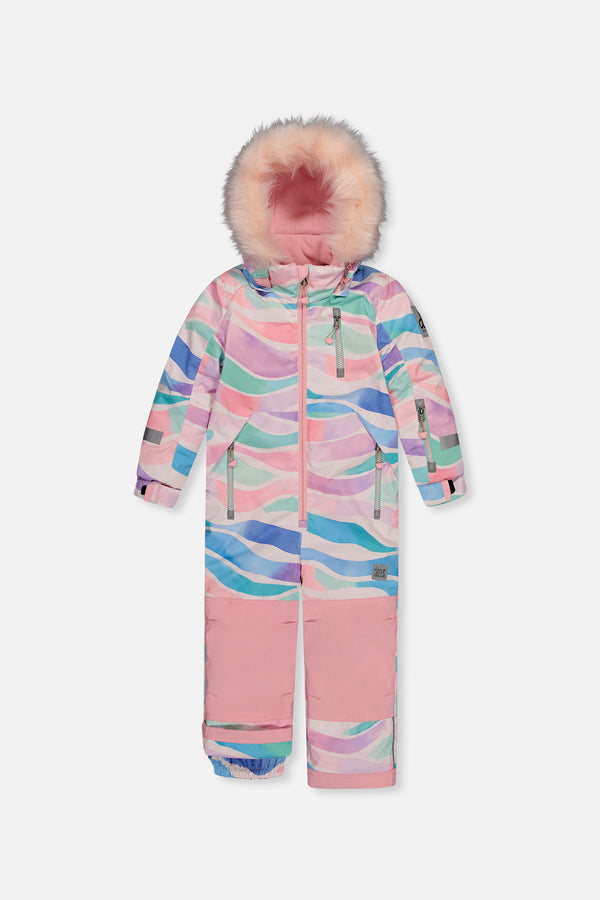
Yes. This guidance is about where kids wear snowsuits, not whether they wear them. A snowsuit is outdoor gear for sledding, recess and walks; the car is a separate job for thin layers. Browse kids' snowsuits, or for babies, baby girls' snowsuits and baby boys' snowsuits. Our snowsuit sizing guide explains how to leave room for base layers.
A one-piece with a full-length zipper comes off quickly at the car. With a two-piece set, older kids can wear the jacket backwards over the harness and pack the snow pants.
Where Can You Get Your Car Seat Checked?
- In Canada: Transport Canada notes there may be a child car seat clinic in your community. Its child car seat hub links to recalls and installation steps for each stage.
- In the US: the AAP recommends a certified child passenger safety technician (CPST). NHTSA's car seats and booster seats page says certified technicians will inspect your car seat free of charge in most cases.
Bring the car seat manual and the clothes your child usually wears in winter, so the technician can check fit over those layers.
Winter Car Seat Checklist
- Read your manual's section on clothing, covers and accessories.
- Dress in thin layers: base layer, pants, sweater or thin fleece, hat, mittens, socks.
- Take off the snowsuit or puffy coat before buckling.
- Check strap height for rear-facing or forward-facing.
- Tighten and pinch-test at the collarbone.
- Slide the chest clip to armpit level.
- Add a blanket or backwards coat over the buckled harness, face uncovered.
- Booster riders: open the coat, lap belt low on the hips.
- Skip add-ons that didn't come with your seat unless the manufacturer allows them.
- Keep a winter bag with blankets, spare mittens and snacks in the car.
Frequently Asked Questions
How tight should car seat straps be in winter?
Tight enough that you can't pinch a fold of webbing at the collarbone. Transport Canada says that if you are unable to pinch the harness, it is sufficiently tight. Check every ride.
Is a thin fleece jacket okay under a car seat harness?
A thin fleece is what NHTSA and the AAP suggest instead of puffy materials. Buckle, tighten and do the pinch test, and check your seat manual for any clothing guidance.
Can my child wear a hat and mittens in the car seat?
Yes. The AAP says hats, mittens and socks or booties help keep kids warm without interfering with car seat straps. Keep a spare pair of mittens in the car.
Is it okay to put a winter coat on backwards over the harness?
Yes. The AAP and NHTSA both describe putting the coat on backwards over the buckled, tightened harness. Take it off if the car gets warm.
Does my child need to take off a winter coat in a booster seat?
Bulky coats make belt fit harder. Transport Canada advises threading the lap belt underneath the jacket so it's tight on the hips. A thinner jacket for the drive makes this easier.
Are aftermarket car seat covers and strap pads okay to use?
Only if your car seat manufacturer allows them. The AAP says items that did not come with the car seat have not been crash tested with it, and Transport Canada recommends asking the manufacturer first.
How do I keep my baby warm on the walk to the car?
Keep the infant carrier indoors, dress your baby in thin layers with a hat, and use a blanket or coat for the walk. In the car, buckle and tighten first, then tuck the blanket over the harness, keeping the face uncovered.
Where can I get help checking my child's car seat?
In Canada, Transport Canada says there may be a child car seat clinic in your community. In the US, NHTSA says certified technicians will inspect your car seat free of charge in most cases.
The Takeaway
Car rides and snowsuits each have a job, just not at the same time. Dress kids in thin layers for the car, tighten the harness until you can't pinch any slack, put the chest clip at armpit level, and add warmth on top of the straps. Save the snowsuit for the snow, and let your car seat manual have the final word.
Sources
- American Academy of Pediatrics, HealthyChildren.org: Winter Car Seat Safety Tips: Keeping Kids Safe & Warm (last updated 2/28/2025)
- American Academy of Pediatrics, HealthyChildren.org: Car Seats: Information for Families
- Transport Canada: Stage 1: Rear-Facing Seats
- Transport Canada: Stage 2: Forward-Facing Seats
- Transport Canada: Stage 3: Booster Seats
- Transport Canada: Third-Party Aftermarket Products for Children's Restraint Systems (TP 2436)
- Transport Canada: Child Car Seat Safety
- NHTSA: Keep Your Little Ones Warm and Safe in Their Car Seats
- NHTSA: Car Seat Installation Tips
- NHTSA: Car Seats and Booster Seats
- Parachute: Child Car Safety