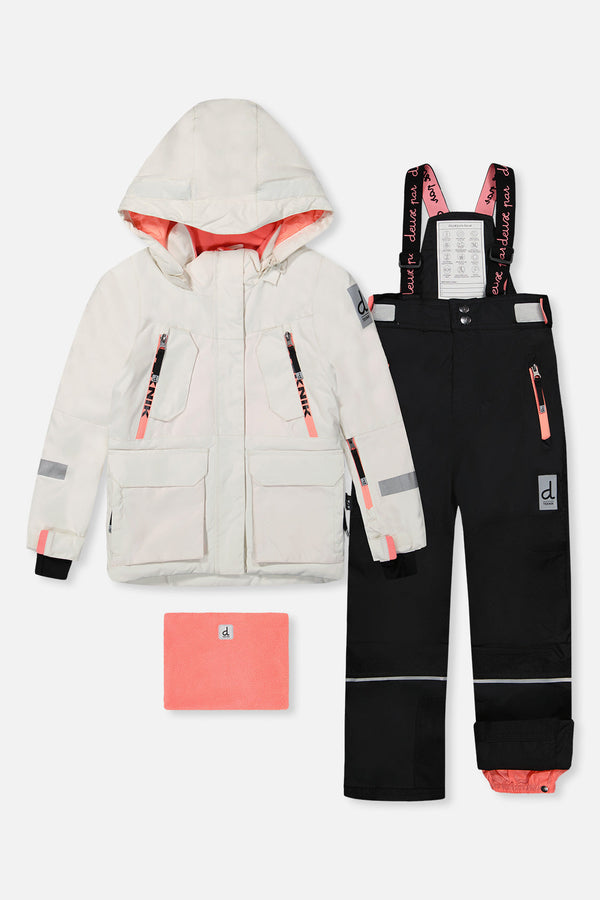
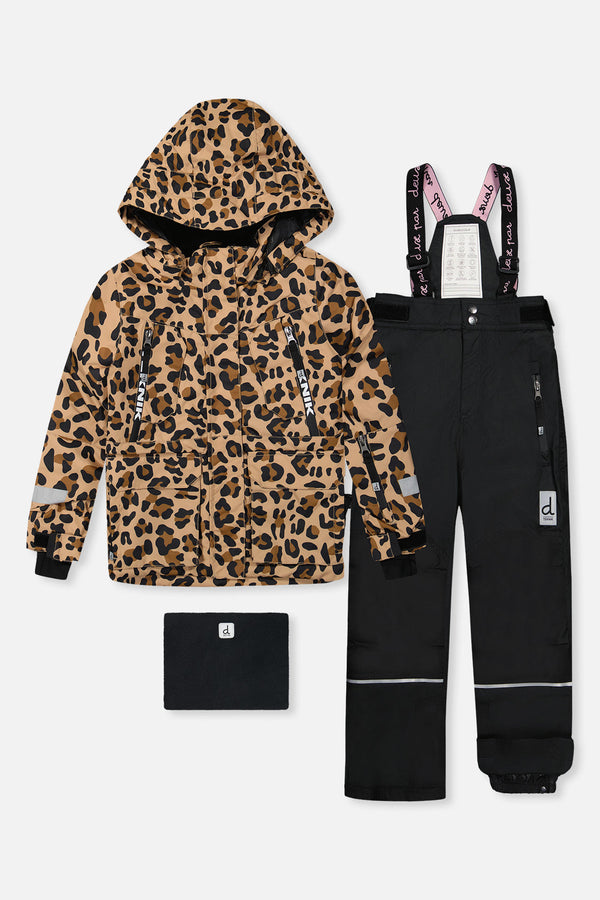
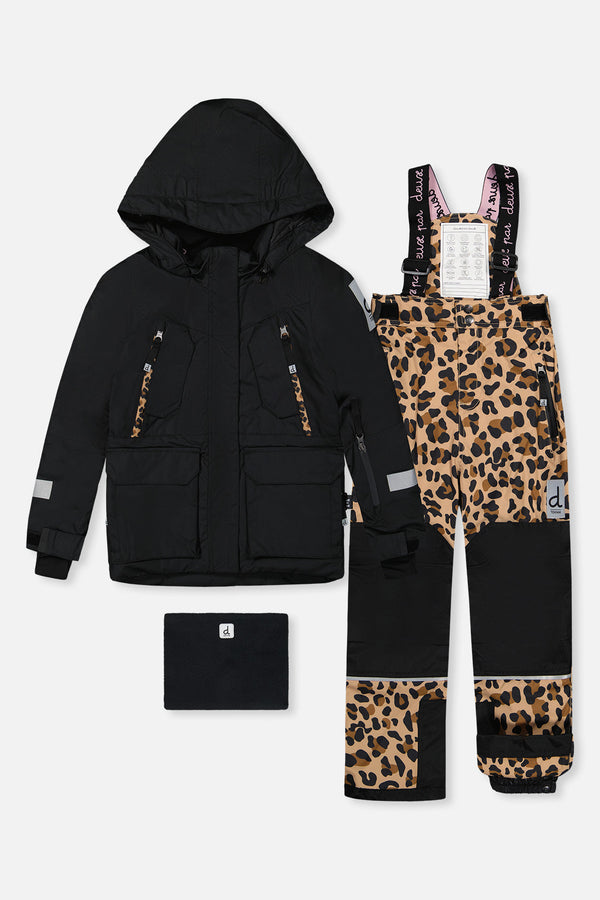
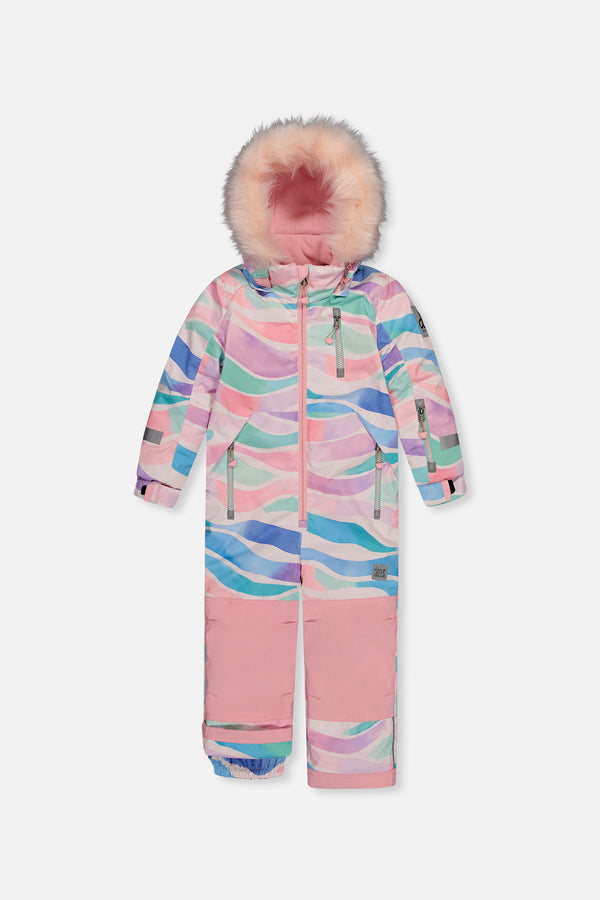
Quick answer: To wash a kids’ snowsuit or winter jacket, follow its care label. For the Deux par Deux snowsuits and winter coats we checked, that means removing any faux-fur trim, closing every zipper and Velcro® tab, machine washing cold and tumble drying low, with no bleach, fabric softener or dry cleaning.
A snowsuit comes home wet, salty or muddy most winter afternoons, and it has to be ready again by morning. The good news: every snowsuit and winter jacket we checked for this guide is labeled for a home washing machine, and most can go in the dryer too. The catch is that one line on the label, like “tumble dry low” versus “line dry,” changes what you should do.
This guide uses the care instructions listed on real snowsuit and winter jacket product pages at Jenni Kidz, plus official care-symbol guidance from Canada and the U.S.
For everyday baby clothes like sleepers and bodysuits, see our separate guide to washing tips that make baby clothes last longer. This article sticks to winter gear.
What Do Kids’ Snowsuit Care Labels Actually Say?
Every kids’ snowsuit and winter jacket we checked can be machine washed at home, but the drying and ironing lines differ by brand and style. Here is what the product pages list.
| Product (brand) | Wash | Dry | Also listed |
|---|---|---|---|
| PLAY one-piece snowsuit, gray and blue dinosaur print (Deux par Deux) | Remove the faux fur, then machine wash cold with all zippers and Velcro® closed | Tumble dry low | No bleach, fabric softener or dry cleaning; keep away from heat sources |
| TEKNIK two-piece snowsuit, turquoise and camo (Deux par Deux) | Machine wash cold with all zippers and Velcro® closed | Tumble dry low | No bleach, fabric softener or dry cleaning; keep away from heat sources |
| Long winter puffer coat, black (Deux par Deux) | Machine wash cold; remove the faux fur and close all zippers and hook-and-loop fasteners first | Tumble dry low | Do not bleach; no fabric softener; keep away from heat sources; do not dry clean |
| Baby reversible puffer jacket, Dino Green (Mayoral) | Machine wash at 30°C (86°F) | Tumble dry low | Do not bleach; do not iron; do not dry clean |
| Baby double-breasted coat, red (Mayoral) | Machine wash at 30°C (86°F) | Line dry | Do not bleach; iron on low heat; do not dry clean |
Two patterns stand out. First, every Deux par Deux snowsuit and winter coat above lists the same core routine: cold wash, closures done up, low-heat tumble dry, and no bleach, fabric softener or dry cleaning. Second, the same brand can give different drying instructions for different styles. Mayoral lists “tumble dry low” for its quilted reversible puffer but “line dry” for its pleated double-breasted coat. So the label on the item in your hands beats any general rule.
In the U.S., the Federal Trade Commission’s Care Labeling Rule guidance requires that “the label must say whether the product should be washed by hand or machine” and “whether the product should be dried by machine or another method.”
How Do You Read the Care Symbols on a Snowsuit Label?
Care symbols follow a fixed order: washing, bleaching, drying, ironing, then professional cleaning. The Government of Canada’s Guide to Apparel and Textile Care Symbols explains that “five basic symbols identify care treatments for washing, bleaching, drying, ironing and professional cleaning,” and that temperature is shown in degrees Celsius or by dots.
The FTC notes that symbols are optional in the U.S. “as long as care instructions are on the label,” so you may see words, symbols or both. These are the ones you are most likely to find on a kids’ snowsuit or winter coat:
| Symbol | What it means |
|---|---|
| Washtub with 1 dot | Machine wash in water not exceeding 30°C (cool) |
| Washtub with 1 dot and 1 bar | Machine wash at 30°C or less on a permanent press setting |
| Washtub with a hand | Wash gently by hand, water not exceeding 40°C (or 30°C on some labels) |
| Crossed-out triangle | Do not bleach |
| Square with a circle and 1 dot (one or two bars underneath) | Tumble dry at low heat (not exceeding 55°C) on a permanent press or delicate cycle |
| Square with a filled circle | Tumble dry with no heat (air dry in the dryer) |
| Square with a curved line at the top | Line dry or hang to dry after removing excess water |
| Square with a straight line across the middle | Dry flat on a suitable surface after removing excess water |
| Crossed-out iron | Do not iron or press |
| Crossed-out circle | Do not dry-clean |
According to the same Government of Canada guide, the dots inside a tumble-dry symbol set the maximum heat: low is not exceeding 55°C, medium not exceeding 65°C and high not exceeding 75°C. Bars under a symbol “help show the severity of the treatment,” meaning more bars call for a gentler cycle. The same chart labels 30°C as “cool,” which is the closest match to the “machine wash cold” line on Deux par Deux labels and the “30°C” line on Mayoral labels.
Can You Put a Snowsuit in the Washing Machine?
Yes, if the label says machine wash, and it does on every Deux par Deux and Mayoral snowsuit and winter jacket in the table above. Use cold water, close every closure, take off removable trim, and skip bleach and fabric softener. If a label shows the hand-wash symbol or “do not wash,” follow that instead.
How do you machine wash a snowsuit, step by step?
- Empty every pocket. The American Cleaning Institute’s Laundry Basics starts with “check pockets for items before washing.” Sleeve pockets hide crayons, rocks and granola bars.
- Remove the faux fur and extras. Deux par Deux lists “remove the faux fur” before washing its PLAY snowsuits and long puffer coat. The product pages give no separate care line for the fleece neckwarmer, so we wash it separately or with a similar load.
- Close every zipper and Velcro® tab. It is written into the Deux par Deux care line for each item above; open Velcro® grabs other fabric and collects lint.
- Brush off dried mud and salt so less grit goes into the machine.
- Pre-treat stains now. The American Cleaning Institute’s advice is simple: “Treat the spot immediately!” Start with cuffs, knees and the seat.
- Use cold water and a measured dose of detergent. Follow the detergent package; the American Cleaning Institute notes that “more isn’t necessarily better.” Leave out bleach and fabric softener, both of which Deux par Deux lists as “no” on its snowsuits.
- Give it room. “Don’t overload the washer—clothes need room to move,” says the American Cleaning Institute. One snowsuit, or one jacket and pair of snow pants, plus a couple of towels is a sensible load.
- Check stains before drying. If a mark is still there, wash again instead of drying. The American Cleaning Institute warns that “drying can permanently set the stains.”
What detergent should you use on a snow suit?
A regular or mild laundry detergent, measured according to the package. None of the product pages above name a special wash; what they do list is what to leave out: bleach and fabric softener. Before using any specialty “tech wash,” check that it doesn’t contradict the label.
Can you hand wash a snowsuit instead?
Yes, and you must when the label shows the hand-wash symbol, which the Government of Canada guide defines as washing gently by hand in water not exceeding 40°C (or 30°C). For a machine-washable snowsuit it is optional. A soaked one-piece is heavy, so press the water out rather than wringing it.

Can a Snowsuit Go in the Dryer?
Yes, on low heat, when the label says “tumble dry low.” Deux par Deux lists tumble dry low for its PLAY and TEKNIK snowsuits and its long puffer coat, and Mayoral lists it for its reversible baby puffer. A coat labeled “line dry,” like the Mayoral double-breasted coat, should hang to dry instead.
Low heat on a dryer symbol means a maximum of 55°C, according to the Government of Canada care-symbol guide. A few habits make low-heat drying work better:
- Don’t raise the heat to save time. If the suit is still damp after one low cycle, run another low cycle.
- Check the thick spots. Cuffs, the seat, the collar and the ankle gaiters on snow pants hold water longest. Squeeze them before you call the suit dry.
- Dry trims separately. Let the faux fur air dry before you reattach it unless its own label says otherwise.
- Keep it away from heaters. “Keep away from heat sources” is part of the Deux par Deux care line, so skip the radiator, heat vent, fireplace and space heater as quick drying spots.
How Do You Dry a Snowsuit Overnight for School?
Hang it fully open in a warm, airy room, away from heat sources, as soon as it comes off. Most wet snowsuits only need drying, not washing. The routine below is built for daycare and recess, when the same suit has to go back out the next morning.
What should you do when a wet snowsuit comes home?
- At the door: shake or brush off snow before it melts into the fabric. Knock out the ankle gaiters and cuffs.
- Unpack it: take out mittens, liners and the neckwarmer, and empty the pockets. Wet mitts stuffed in a pocket keep the whole sleeve damp.
- Open everything: unzip the main zipper all the way, open the pockets and Velcro® cuffs, and pull the ankle gaiters out so air reaches the inside.
- Hang it by the shoulders: use a sturdy hanger or a hook so the legs hang straight. For a two-piece, hang the jacket and snow pants separately; with bib snow pants, hang them from the suspenders.
- Pick the right spot: a warm room with some airflow, not on or next to a heater, since the brand care line says to keep the suit away from heat sources.
- Morning check: feel the cuffs, seat and gaiters. If they are still damp and the label allows it, a short tumble on low finishes the job.
Soaked mittens often slow down the morning. Our guide to mittens vs. gloves for toddlers and kids covers which styles are easier to dry, and a spare pair from kids’ gloves and mittens keeps recess running when one pair isn’t dry yet.
How often should you wash a snowsuit?
Wash it when it is visibly dirty, smells, or has salt or mud built up on the legs, and once at the end of the season before storage. A suit that came home wet from clean snow only needs drying. For daycare kids who play in slush every day, spot-clean the knees and cuffs between washes and do a full wash when the legs stay grimy after spot-cleaning. There is no official schedule, so let the suit’s condition decide.
How Do You Get Road Salt Stains Off a Snowsuit?
Use water. Salt dissolves in water, not in dry-cleaning solvents. Let the suit dry, brush off the white crust, then blot the marks with a cloth dampened in cool water and wash the suit according to its label.
The Drycleaning & Laundry Institute explains in Removing Salt Stains that “salt is not soluble in drycleaning, and can only be removed by water,” and that salt marks “usually occur on areas that are close to the ground.” On a child’s snowsuit, that means the lower legs, ankle gaiters and seat. DLI adds that on wool, salt can temporarily change dye colors, which return once the salt is removed.
- Brush first: once the suit is dry, brush off loose salt with a soft brush.
- Blot, don’t scrub: blot the white line with a cloth dampened in cool water, working from the outside edge in.
- Wash if it comes back: rings that reappear after drying call for a full wash on the label’s cycle.
- Skip the dry cleaner: every item in our table lists no dry cleaning, and solvent won’t dissolve salt anyway.
How Do You Clean Mud, Food and Other Stains on Winter Gear?
Treat them before the wash and check them before the dryer. Let mud dry and brush it off before you treat what is left. For food, marker and grass, our stain removal hacks for kids’ clothing walk through each type. On a snowsuit, two extra rules apply: stick to products that don’t contradict the label (no bleach on any of the suits above), and don’t dry the suit until the stain is gone, since drying can set it.
Does Washing Affect a Snowsuit’s Water Repellency?
The care steps on the label are written for the whole garment, shell included, so following them is the simplest way to look after the outer fabric. Deux par Deux lists a polyurethane coating and a water-repellent finish on its PLAY snowsuit shells, and the product pages give no separate re-proofing step.
If water starts soaking into the fabric instead of beading, note that no re-proofing spray or wash-in product appears in the care instructions above, and we can’t promise one would restore the original performance. Ask the brand first. For what coating ratings like “10,000 mm” and breathability numbers mean, see our guide to snowsuit warmth ratings and waterproof-breathable basics.
How Do You Store Snowsuits for Next Winter?
Wash the snowsuit according to its label, dry it completely, and store it loosely in a cool, dry closet or a breathable bag, away from heat sources. Keep removable parts like the faux fur and neckwarmer with the suit so they don’t go missing.
- Wash it first. Salt, mud and food marks are easier to remove now than after six months in a bin.
- Dry it completely. Give the seat, cuffs and gaiters an extra day if needed. Damp gear in a sealed bin can smell musty by fall.
- Close the zippers and Velcro® so the hook side collects less lint.
- Bag the small parts together. Put the faux fur trim, detachable hood and neckwarmer in a labeled pouch and hang or pack it with the suit.
- Give it space. Hang it, or fold it loosely on a shelf, instead of crushing it under heavy boxes.
- Write the size on the bin so you know who it might fit next year.
Before winter starts again, try the suit on with the layers your child actually wears. Our snowsuit sizing guide explains how to check fit, and what to wear under a snowsuit covers the layers.

Should You Repair or Replace a Snowsuit?
Repair it when it still fits and the problem is small and local, like a stuck zipper, a clogged Velcro® tab or a small tear. Replace it when it no longer fits with the layers your child needs, or when damage keeps letting snow in.
| Problem | Try first | Time to replace when… |
|---|---|---|
| Sleeves or legs too short | Many Deux par Deux suits list grow-with-me features: sleeves that extend 4 cm (1.5 in) and hems that let down up to 7.6 cm (3 in) on PLAY and TEKNIK styles | Both are already let out and the suit still pulls at the shoulders or crotch |
| Zipper sticks | Brush grit and salt out of the teeth and work the slider gently | Teeth are missing or the slider no longer closes the zipper |
| Velcro® won’t grip | Pick lint and hair out of the hook side with a fine comb | The tab is torn off or the hook side is worn smooth |
| Small tear in the shell | A patch or professional outerwear repair | Tears are spreading or sit on a seam that takes strain |
| Worn knees or seat | Check the reinforcements; Deux par Deux lists Cordura® at the knees, seat and hems on its PLAY suits | The reinforcement itself is worn through |
| Stretched ankle gaiters or cuffs | A tailor can sometimes replace elastic | Snow gets into boots and sleeves on every outing |
What Should You Check Before Using a Hand-Me-Down Snowsuit?
Check the fit with layers, the care label, every closure, the high-wear spots and the hood.
- Care label: still attached and readable, so you know how to wash it.
- Fit: try it on over the layers your child will actually wear and size the new child independently.
- Closures: main zipper, pocket zippers, snaps and Velcro® cuffs all open and close.
- High-wear spots: knees, seat, cuffs, hems and ankle gaiters.
- Parts: detachable hood, faux fur trim and suspenders, if the suit came with them.
- Hood and neck cords: A Health Canada recall notice for children’s upper outerwear states that drawstrings at the hood and neck area pose a strangulation hazard and tells consumers to remove the drawstring. The U.S. Consumer Product Safety Commission’s drawstring guidelines likewise tell parents to take drawstrings off the hoods and necks of children’s jackets and sweatshirts.
Which Jenni Kidz Snowsuits and Winter Jackets List These Care Instructions?
If you want a snow suit or winter coat that can go through a home washer and dryer, check the care line in the product details before you buy. These styles list it clearly:
- Deux par Deux PLAY one-piece snowsuit in gray and blue dinosaur print: sizes 2 to 14, with removable faux-fur trim and a fleece neckwarmer.
- Deux par Deux PLAY two-piece snowsuit in multicolor line print: a jacket and mint snow pants with suspenders, sizes 2 to 14.
- Deux par Deux TEKNIK two-piece snowsuit in turquoise with camo snow pants: a jacket and camo snow pants, sizes 4 to 16.
- Deux par Deux long winter puffer coat in black: sizes 2 to 14, with a sherpa yoke and removable faux-fur trim.
- Mayoral baby reversible puffer jacket in Dino Green: sizes 6M to 4Y, labeled machine wash at 30°C and tumble dry low.
To compare more styles, browse kids’ snowsuits, boys’ snowsuits and girls’ snowsuits, or the winter coats in girls’ coats and jackets and boys’ coats and jackets. The full Deux par Deux collection and Mayoral coats and jackets show each brand’s range. For school-age kids heading out at recess, our preschool and elementary snowsuit guide helps you choose.
Frequently Asked Questions
What does “machine wash cold” mean on a snowsuit label?
The Government of Canada care-symbol guide labels 30°C as “cool,” and a washtub with one dot means water not exceeding 30°C. That is the closest match to the “machine wash cold” line on Deux par Deux labels and the 30°C (86°F) line on Mayoral labels.
Can a snowsuit go in the dryer?
Yes, on low heat, when the label says tumble dry low, as it does on the Deux par Deux snowsuits and winter coats we checked. Low heat on a care symbol means no more than 55°C. If the label says line dry, hang the garment to dry instead.
Can you use fabric softener on a snowsuit?
Not on the Deux par Deux snowsuits and winter coats we checked. Their care instructions list no fabric softener, along with no bleach and no dry cleaning. If you own another brand, check its label before adding softener.
How do you dry a snowsuit quickly overnight?
Shake off the snow, empty the pockets, open every zipper and cuff, pull out the ankle gaiters, and hang the suit by the shoulders in a warm room with some airflow. Keep it away from radiators and heaters. In the morning, a short low tumble finishes damp spots if the label allows it.
How do you get salt stains out of a kids’ winter jacket?
Use water. Salt dissolves in water but not in dry-cleaning solvent, according to the Drycleaning & Laundry Institute. Let the jacket dry, brush off the crust, blot the marks with a cloth dampened in cool water, then wash the jacket according to its label if the marks return.
Can you dry clean a snowsuit?
Not the snowsuits and winter jackets we checked. Deux par Deux and Mayoral both list do not dry clean on them, so wash them at home following the label instead.
How should you store snowsuits over the summer?
Wash the snowsuit according to its label, make sure the seat, cuffs and gaiters are completely dry, close the zippers and Velcro, and keep the faux fur and neckwarmer with it. Store it loosely in a cool, dry place away from heat sources, and note the size on the bin.
Sources
- Government of Canada, Office of Consumer Affairs: Guide to Apparel and Textile Care Symbols (date modified 2024-06-12)
- Federal Trade Commission: Clothes Captioning: Complying with the Care Labeling Rule
- American Cleaning Institute: Laundry Basics
- Drycleaning & Laundry Institute: Removing Salt Stains
- Health Canada, Recalls and Safety Alerts: Various children’s upper outerwear with drawstrings recalled due to strangulation hazard (December 20, 2019)
- U.S. Consumer Product Safety Commission: Child’s Death Spurs Effort To Release Guidelines For Drawstrings On Children’s Jackets And Sweatshirts (news release, November 16, 1995)
- Care instructions for each product: the Product Details on the linked Jenni Kidz product pages (Deux par Deux and Mayoral), checked November 10, 2026