Quick answer: Toddler styling tips that work start with function: clothes that stretch for climbing, pull down fast for potty training, and layer for changing weather. Add one print per outfit, shoes that fit with a finger-width of toe room, and two outfit choices your toddler can pick from. Skip hood and neck drawstrings.
Toddlers between about 12 months and 3 years old are a styling puzzle of their own. They walk, squat, climb and spill all day, they may be starting potty training, and they increasingly want a say in what they wear. A good toddler outfit has to survive all of that and still look put together in daycare photos.
Below are 10 practical toddler styling tips, each with the reason behind it and a quick way to use it tomorrow morning. Where pediatric or government guidance applies, we quote the source. If you want deeper color rules and outfit formulas for kids of every age, our guide to mixing and matching kids' clothes covers that in detail.
This article is general information, not medical or product-safety advice. It draws on the public health and government sources listed at the end. If you have questions about your child's development, feet or skin, ask your doctor or nurse.
What Makes Dressing a Toddler Different From Dressing a Baby?
Dressing a toddler is different because toddlers move constantly, are learning to use the potty and want to help dress themselves. Baby clothes are built around diaper changes and sleep. Toddler clothes need to handle running, squatting, quick trips to the bathroom and small hands pulling at waistbands.
The CDC's developmental milestones show how fast this changes. By 18 months, the CDC lists that a child "Helps you dress him by pushing arm through sleeve or lifting up foot" (CDC Milestones in Action: By 18 Months). By 3 years, the milestone is "Puts on some clothes by himself, like loose pants or a jacket" (CDC Milestones in Action: By 3 Years). Potty training often starts in between: Nemours KidsHealth says, "Most children begin to show these signs when they're between 18 and 24 months old," while noting that some children are ready later.
| Age (approx.) | What's changing | What to look for in clothes |
|---|---|---|
| 12–18 months | Early walking, helping by pushing an arm through a sleeve | Stretchy pants, wide neck openings, shoulder snaps on tops |
| 18–24 months | Climbing, strong opinions, first signs of potty readiness for many kids | Pull-on elastic-waist bottoms, two-piece sets instead of one-pieces |
| 2–3 years | Potty training, dressing practice, picking favorites | Loose pants and jackets they can manage, easy shoes, simple choices |
1. How Do You Pick Toddler Clothes That Keep Up With Climbing and Running?
Pick toddler clothes with stretch, soft waistbands and enough room to squat, and test them by asking your child to crouch and reach up. If a waistband digs in or a top rides up when they lift their arms, the outfit will end up tugged at, pulled off or left in the drawer.
Why it matters: a comfortable toddler keeps the outfit on. Stiff fabric, tight cuffs and fussy layers start most "I don't want to wear it" battles.
How to do it:
- Check the fibre content on the label for a small share of elastane or spandex in leggings and tees, which adds stretch.
- Choose ribbed or covered elastic waistbands over rigid buttoned waists for everyday play.
- Do a 10-second fit check before you cut the tags: squat, arms up, a few steps.
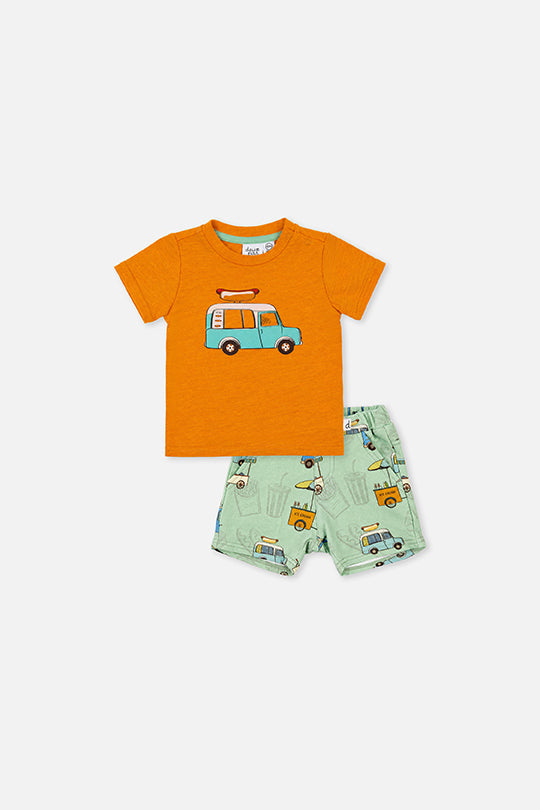
For an everyday bottom in sizes 2 to 4, the Deux par Deux Rib Leggings Dark Blue are listed as 55% rayon, 40% polyester and 5% elastane with a "cozy elastic waistband," and the navy color pairs with almost any top. For younger toddlers in 12 to 24 months, Deux par Deux describes the Baby Cotton T-Shirt & Fleece Pant Set Beige Dinosaur Print as a tee with shoulder snaps and fleece pants with an elastic waist and a ribbed band.
2. What Should a Toddler Wear During Potty Training and Daycare?
During potty training, dress your toddler in pull-on pants and two-piece outfits they can get down quickly on their own. Skip overalls, belts and snap-crotch bodysuits on training days, and pack spare outfits for daycare.
Why it matters: Nemours KidsHealth advises parents to "Avoid clothes that are hard to take off, such as overalls and shirts that snap in the crotch," and explains that "Kids who are potty training need to be able to undress themselves." Every extra snap or buckle is time a toddler may not have.
How to do it:
- Move one-piece bodysuits to weekends and use separate tops and bottoms on training days.
- Choose elastic-waist pants and leggings your child can push down and pull up.
- Label every piece that goes to daycare with your child's name.
- Keep at least one full spare outfit, including socks and underwear, in the daycare bag, and swap it for the season.
When your toddler moves to underwear, an elastic waistband makes the switch easier. Deux par Deux lists its Boxer Pack Of 3 Fun Prints and Boyshort Panty Pack Of 3 Feminine Prints in size 2/3 and up, each with an elastic waistband and a jersey of 95% organic cotton and 5% elastane. More options are in boys' underwear and girls' underwear.
3. How Does Capsule Wardrobe Math Work for a Toddler?
Capsule math for a toddler works by multiplying tops by bottoms: 5 tops and 4 bottoms that all match give you 20 outfits. Add 2 layers that go with everything, and each of those 20 outfits can be worn three ways (no layer, layer A or layer B), for 60 looks from 11 pieces.
Why it matters: toddlers often need more than one outfit a day after meals, paint, mud or potty accidents. A small set of pieces that all work together means any clean top goes with any clean bottom, even on a laundry-day morning.
| Pieces | Example for a toddler | Outfits it adds |
|---|---|---|
| 5 tops | 3 solid tees, 1 striped top, 1 printed top | 5 × 4 bottoms = 20 outfits |
| 4 bottoms | 2 navy or gray leggings or joggers, 1 printed pant, 1 dressier pant or skirt with shorts underneath | Included above |
| 2 layers | 1 cardigan or zip sweatshirt, 1 fleece or knit sweater | 20 × 3 ways = 60 looks |
How to do it: choose your bottoms first in one or two solid colors, then buy tops that go with all of them. Coordinated sets count twice: a set like the Deux par Deux Baby Tunic And Leggings Set Pale Dusty Pink (sizes 12m to 24m) gives you a ready outfit, and the navy leggings also work alone with other tops. The tunic is listed as 95% organic cotton and 5% elastane jersey, and the leggings as 100% cotton flannel. For more ready-made pairs, see baby girls' sets and baby boys' sets.

4. How Do You Pair Colors and Prints on a Toddler Without Clashing?
Pair one print with solids, and pull the solid color from the print. A toddler in a busy printed top and plain navy pants looks styled. A toddler in three unrelated prints looks rushed, even if each piece is cute on its own.
Why it matters: one clear "hero" piece per outfit lets a favorite print shine and keeps photos from looking chaotic.
How to do it:
- Find the anchor color. Look at the print and pick the darkest or most repeated color, then use it for the bottoms.
- Repeat it once more. Socks, a hat or a cardigan in the same color tie the outfit together.
Two examples from Deux par Deux show the idea. The Baby Top & Pants Set Blue And Green Checks pairs a blue and green checked button-front bodysuit with navy suspender pants, so the navy pants anchor the checks. In the tunic set from Tip 3, the navy gingham heart on the pink tunic is echoed by navy leggings. The checks set is a dressier holiday outfit, so keep it for family events rather than potty-training days.
5. What Shoes Should a Toddler Wear?
Toddlers need shoes once they walk outdoors, and the shoes should have nonskid soles and about a finger-width of room past the big toe. The American Academy of Pediatrics (AAP) says, "once children start walking outdoors, they need shoes for protection," and that "In the early months, babies' feet develop best if they're not confined in shoes."
Why it matters: shoes are where toddler style and comfort clash most often. The AAP's Shoes for Active Toddlers page is clear that "It's better to have no shoes at all than shoes that are too tight."
How to do it (AAP guidance):
- "Look for comfortable shoes with nonskid soles, such as sneakers, that will help keep your toddler steady on slippery floors."
- "Buy well-made shoes, but don't spend a lot of money." The AAP adds that "the first pair of shoes won't last more than 2 or 3 months."
- "You should check the fit about once a month; the top of your child's big toe should be about finger-width distance from the inside edge of the shoe."
For styling, neutral shoes in black, navy or white go with every outfit. Health Canada also notes that "flashing or light-up clothing or shoes may be powered by button batteries," so if your toddler loves light-up sneakers, check the battery compartment regularly.
For snowy days, look for boots your toddler can help put on. Deux par Deux lists its Quilted Winter Boots With Polar Fleece Lining Noir with elastic laces and an adjustable drawcord, a fixed fleece lining and a lightweight outsole with grippy tread, in toddler sizes 6 to 10 and up. Browse other pairs in boy shoes and girl shoes.
6. Which Clothing Details Should You Skip on Toddler Clothes?
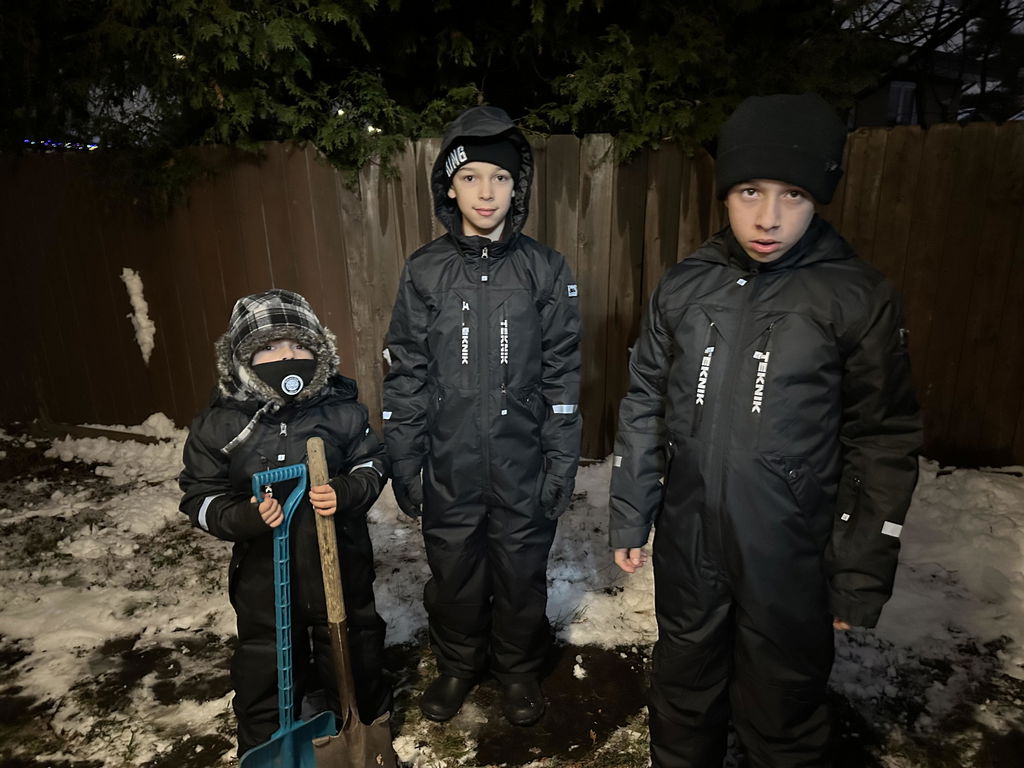
Skip hood and neck drawstrings, loose decorative parts and strings on mittens or scarves. These details can look cute, but government agencies in both Canada and the US warn about them on children's clothing.
Drawstrings: Health Canada recall notices explain that "Drawstrings on children's upper outerwear can become caught on playground equipment, fences, or other objects and result in strangulation, or in the case of a vehicle, the child being dragged" (Health Canada recall notice). Health Canada's advice on buying children's clothing tells parents to check that hoodies, jackets and snowsuits "don't have drawstrings in the hood or neck area" and adds, "The safest option is to choose children's clothing without drawstrings or cords." In the US, the Consumer Product Safety Commission (CPSC) treats "hood and neck drawstrings on children's upper outerwear in sizes 2T to 12 or the equivalent" as a "substantial product hazard," and says waist and bottom drawstrings must be "free of toggles, knots, and other attachments at the free ends of drawstrings."
Small parts: Health Canada notes that "small parts can sometimes come loose from clothing or shoes and become a choking or aspiration risk to young children," and advises parents to "check clothing regularly for loose or missing parts."
Strings on accessories: Health Canada suggests leaving "scarves and mittens with strings" out of your cart and says, "Look for a neck warmer instead to keep your child warm in winter." A tube-style option such as the Deux par Deux Baby Ribbed Knit Neckwarmer Navy Blue, listed in one size for 6 to 24 months, adds a neat pop of navy to a winter outfit.
Daywear is not sleepwear: a cozy outfit can be tempting to leave on for a nap, but Health Canada explains that "Children's sleepwear has different flammability requirements than children's daywear." Change into pajamas or sleepwear for sleep.
7. How Do You Layer a Toddler Outfit for Changing Weather?
Layer a toddler in a few thin pieces that come off one at a time: a base top, a sweater or cardigan, and a jacket or snowsuit when it's cold. The AAP's winter play guidance says, "Wearing several thin layers will help keep kids warm and dry," and "Make sure children change out of any wet clothes right away."
Why it matters for style: layers are the easiest way to change how an outfit looks without buying another one.
How to do it:
- Choose layers that open at the front, such as cardigans and zip sweatshirts, so you can take them off without pulling over a toddler's head at the playground.
- Pick outer layers in a solid color so they go with every print underneath.
- Look for hoods that come off. Health Canada suggests jackets and snowsuits with "easily detachable hoods, like those with Velcro."
- Take the outer layers off once you're indoors, and pack a dry set of socks and mittens for wet days.
We keep this tip short on purpose. For temperature ranges, what to wear under a snowsuit and how to spot a child who is too cold or too warm, read our layering guide for changing weather and our snowsuit outfit ideas.
8. How Do You Let a Toddler Choose an Outfit Without a Morning Battle?
Let a toddler choose between two outfits you have already approved, and do it the night before when everyone is calm. The toddler gets a real choice, and you get an outfit that suits the weather and the day.
Why it matters: the National Association for the Education of Young Children (NAEYC) advises parents to "Offer your child choices" and says, "Rather than setting up a power struggle between you and your child, empower her to make her own choices" (NAEYC: Growing Independence). A child who picked the dinosaur shirt is more likely to put it on.
How to do it:
- Pull two complete outfits that both work for the forecast and the day's plans.
- Lay them side by side and ask, "Dinosaurs or stripes today?"
- If your toddler wants to add a third item, like a favorite hat or a superhero cape at home, say yes when it's harmless.
- Rotate a "favorite" piece into the capsule so it can be chosen often without stretching the laundry.
Expect some bold combinations; a toddler who picks pink leggings with a dinosaur tee is practicing decision-making.

9. How Can You Help a Toddler Start Dressing Themselves?
Help a toddler start dressing themselves by choosing loose, easy pieces, breaking dressing into small steps and allowing extra time. The CDC's 3-year milestone, "Puts on some clothes by himself, like loose pants or a jacket," is a good guide to which pieces to practice first.
Why it matters: independence makes drop-off and potty breaks easier. The NAEYC suggests parents "add extra time for things like putting on shoes" and give children the chance to do it themselves, for example: "Do you want to put your socks on by yourself?"
How to do it:
- Start with taking off. Pulling off socks, a hat and loose pants usually comes before putting them on.
- Choose easy openings. Elastic waists, wide neck openings, shoulder snaps on younger toddlers' tops and big zipper pulls are easier for small hands than small buttons.
- Lay clothes out in order. Put underwear, pants, top and socks on the floor in the order they go on, facing the right way.
- Praise the effort. A shirt on backward still counts.
For 12 to 24 months, Deux par Deux notes that the neckline of its dinosaur tee "closes with shoulder snaps for easy dressing," which helps when your toddler is still pushing an arm through the sleeve while you do the rest. As they get closer to 3, pull-on pants in sizes 2 to 4 from boys' clothes and girls' clothes are good practice pieces.
10. Why Should You Read the Care Label Before Buying Toddler Clothes?
Read the care label before you buy, because toddler clothes are washed often and a hand-wash or hang-dry piece spends more time in the laundry pile than in the rotation.
Why it matters: in Canada, the Competition Bureau explains that "Care labelling, in the form of either written words or symbols, is a voluntary program in Canada," but if care information is included it "cannot be false or misleading" (Competition Bureau Canada). In the US, the Federal Trade Commission's Care Labeling Rule "requires manufacturers and importers to attach care instructions to garments" (FTC).
| Deux par Deux piece | Care listed on the product page | Good for |
|---|---|---|
| Baby Cotton T-Shirt & Fleece Pant Set | Machine wash cold, do not bleach, tumble dry low | Everyday daycare outfit |
| Rib Leggings Dark Blue | Machine wash cold on delicate cycle, do not tumble dry, do not iron | Everyday, but hang to dry |
| Baby Ribbed Knit Neckwarmer | Machine wash cold on a delicate cycle, do not tumble dry | Winter accessory, wash less often |
How to do it: sort your toddler's capsule into "tumble dry" and "hang dry" piles, and keep most daycare outfits in the first group. Wash hang-dry pieces on the delicate cycle and hang them right away. For stains from food, grass and markers, our stain removal guide for kids' clothing and washing tips to make baby clothes last longer go step by step.
How Do the 10 Toddler Styling Tips Fit Together?
The 10 tips fit together as one routine: buy pieces that move, wash easily and match each other, then let your toddler choose between two of them.
| Tip | Quick action |
|---|---|
| 1. Movement | Squat-and-reach test before cutting tags |
| 2. Potty and daycare | Pull-on bottoms, no overalls on training days, spare outfit in the bag |
| 3. Capsule math | 5 tops × 4 bottoms × 3 layer options = 60 looks |
| 4. Colors and prints | One print, solid bottoms in the print's anchor color |
| 5. Shoes | Nonskid soles, finger-width toe room, check fit monthly |
| 6. Details to skip | No hood or neck drawstrings, check for loose parts, neck warmer over scarf |
| 7. Layers | Thin, front-opening layers in solid colors |
| 8. Choices | Two approved outfits, picked the night before |
| 9. Self-dressing | Loose pants and jackets first, extra time, praise the effort |
| 10. Care labels | Keep most daycare outfits machine wash and tumble dry |
Ready to build your toddler's rotation? Start with baby girls' clothes (0–36 months) or baby boys' clothes (0–36 months), or browse the full Deux par Deux collection for coordinated sets, leggings and layers.
Frequently Asked Questions
What should a toddler wear to daycare?
Dress a toddler for daycare in comfortable, washable two-piece outfits: a top, pull-on pants or leggings, socks and shoes with nonskid soles. Add a front-opening layer for cooler rooms, label every piece, and keep a full spare outfit in the bag for spills and potty accidents.
Are overalls a good idea during potty training?
Usually not on training days. Nemours KidsHealth advises avoiding clothes that are hard to take off, such as overalls and shirts that snap in the crotch, because kids who are potty training need to be able to undress themselves. Save overalls for days when an adult is close by to help.
How often should I check my toddler's shoe size?
About once a month. The American Academy of Pediatrics says the top of your child's big toe should be about a finger-width from the inside edge of the shoe, and that a toddler's first pair of shoes may not last more than 2 or 3 months because feet grow so quickly.
Can toddlers wear hoodies with drawstrings?
Choose hoodies and jackets without hood or neck drawstrings. Health Canada advises checking that hoodies, jackets and snowsuits do not have drawstrings in the hood or neck area, and the US CPSC considers hood and neck drawstrings on children's upper outerwear in sizes 2T to 12 a substantial product hazard.
Are light-up shoes OK for toddlers?
Many toddlers love them, but check them often. Health Canada notes that flashing or light-up clothing or shoes may be powered by button batteries, and that these tiny batteries can be very harmful if swallowed. Make sure the battery compartment stays closed, and check it regularly.
How many outfits does a toddler need for a week?
Count the outfits your toddler goes through in a typical week, including daycare spares and mid-day changes, then add two. A small capsule of 5 tops, 4 bottoms and 2 layers that all match creates 60 combinations, so you rarely run short on laundry day.
How do I get my toddler to stop refusing to get dressed?
Offer two outfits you have already approved and let your toddler pick, ideally the night before. The NAEYC recommends offering children choices instead of setting up a power struggle. Comfortable, stretchy clothes with soft waistbands also reduce the tugging and complaints that start many morning battles.
Sources
- American Academy of Pediatrics, HealthyChildren.org: Shoes for Active Toddlers (last updated June 2015)
- American Academy of Pediatrics, HealthyChildren.org: Playing Outside in Winter: Tips to Keep Kids Warm & Safe (last updated January 2026)
- CDC, Learn the Signs. Act Early.: Milestones in Action: By 18 Months (updated March 2025)
- CDC, Learn the Signs. Act Early.: Milestones in Action: By 3 Years (updated March 2025)
- Nemours KidsHealth: Potty Training (reviewed March 2019)
- NAEYC: Growing Independence: Tips for Parents of Toddlers and Twos
- Health Canada: Buying clothing and accessories online (modified October 2026)
- Health Canada: Various children's upper outerwear with drawstrings recalled due to strangulation hazard (December 2019)
- U.S. Consumer Product Safety Commission: Drawstrings in Children's Upper Outerwear
- Competition Bureau Canada: Textile labelling requirements (modified June 2022)
- Federal Trade Commission: Clothes Captioning: Complying with the Care Labeling Rule
- Product details, sizes and care instructions: Deux par Deux product pages at Jenni Kidz (viewed November 11, 2026)