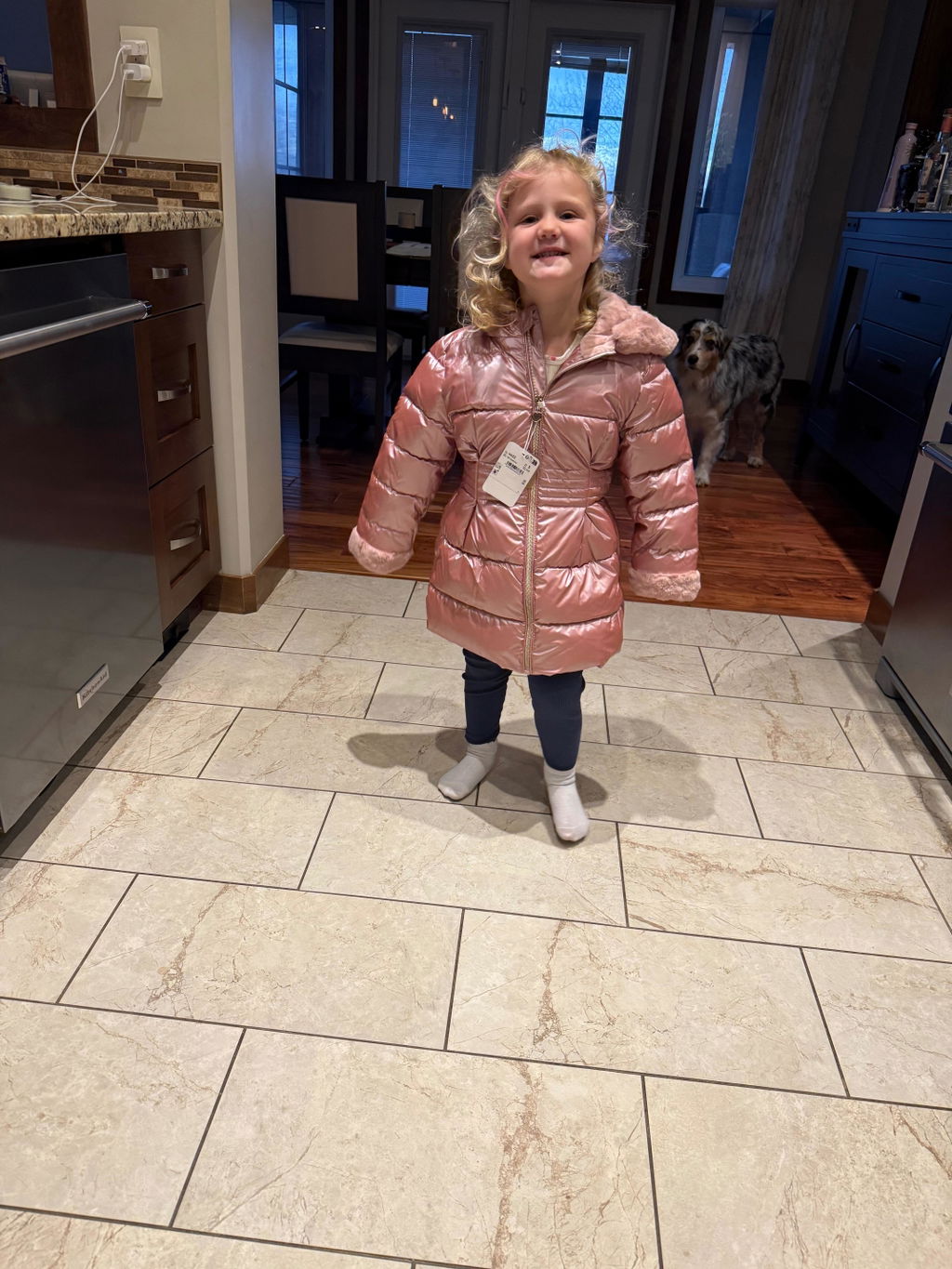
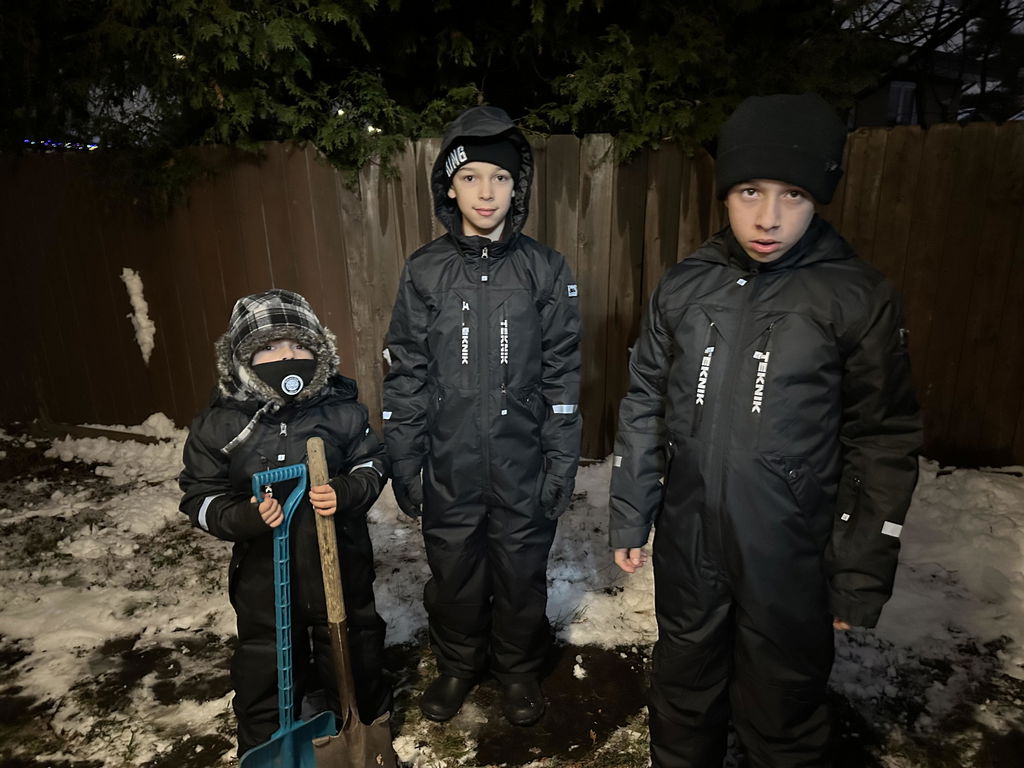
Quick answer: To choose a snowsuit for a child aged 4 to 14, match it to your winter and your child's routine. Check the brand's stated temperature and waterproof ratings, buy the size that fits now with room for one base layer and one mid layer, test movement before removing tags, and pick closures, cuffs and gaiters your child can manage alone.
This guide is written for preschoolers, school-age kids and tweens, roughly ages 4 to 14, who dress themselves for recess, run, slide and sled, and outgrow a snow suit fast. Shopping for a baby or toddler instead? Start with our winter snowsuit guide for babies and toddlers, because fit, sizing and dressing work differently at that age.
Already comparing brands? See the best kids' snowsuit brands in Canada, brand by brand, or shop by child: girls' snowsuits · boys' snowsuits.
What should you check first when choosing a kids' snowsuit?
Check six things in this order: warmth, water protection, wind coverage, fit, mobility and durability. The thickest suit is rarely the right answer. The right one matches the weather your child actually plays in, the time they spend outside and how independently they need to dress.
Start with a short brief before you open a single product page. Write down the main use (daily recess, weekend sledding, ski lessons, occasional snow days), how long your child is usually outdoors, whether your winters run wet and slushy or cold and dry, and your child's current height and size. That brief turns a long list of specs into a few questions you can answer quickly.
| Feature | What to look for | Where to find it |
|---|---|---|
| Warmth | A stated temperature rating that fits your coldest regular outdoor days | Product details or hang tag |
| Water protection | A waterproof rating in mm and whether seams are sealed | Product details |
| Wind coverage | Hood, chin guard, cuffs, snow skirt and gaiters that close gaps | Product photos and details |
| Fit | Today's size with room for normal layers, not next year's size | Brand size chart and fit note |
| Mobility | Your child can squat, climb, sit and raise both arms | A try-on at home |
| Durability | Reinforced knees, seat and hems for kids who play hard | Product details |
Should a child aged 4 to 14 wear a one-piece or a two-piece snowsuit?
Most school-age kids do well in a two-piece, because the jacket can be worn alone and bathroom breaks and quick recess changes are easier. A one-piece still makes sense for younger kids in deep snow, since there is no gap at the waist. For the full side-by-side, read one-piece vs two-piece snowsuits.
How do you read a snowsuit's warmth, waterproof and breathability specs?
Read them as the brand's own guidance for that exact garment, then adjust for wind, wet snow and activity. A temperature rating tells you what the brand designed the suit for. A waterproof rating in mm tells you how well the shell fabric resists water. A breathability rating in g/m²/24h tells you how well it lets moisture from sweat escape.
Specs differ from line to line, even inside one brand. On our shelves, Deux par Deux lists its PLAY two-piece snowsuits as rated to -30°C (-22°F) with a 10,000 mm waterproof shell and 5,000 g/m²/24h breathability, while it lists its lightweight CHILL two-piece as insulated to -5°C (23°F). Blizz lists a -40°C rating from its hang tag and a 5,000 mm coating on its five-piece sets. Those are different jobs, not better or worse suits.
Wind matters as much as the thermometer. Environment and Climate Change Canada's wind chill guidance says that at a wind chill of -28 to -39, any exposed skin can freeze in 10 to 30 minutes, and in sustained winds over 50 km/h, frostbite can happen faster. That is why hood, collar and cuff coverage count on windy recess days. Our snowsuit warmth ratings and waterproof basics guide explains each number in more detail.
- If the brand gives no rating, do not guess one from how puffy the suit looks.
- If your winters are wet, give the waterproof rating and sealed seams more weight.
- If your winters are cold and dry, give the temperature rating and wind coverage more weight.
How much room should a growing child's snowsuit have?
Enough for a base layer and a mid layer plus normal movement, and no more. Buy the size that fits your child today, then use the suit's grow features to stretch it through the season. A suit that is two sizes too big leaves gaps at the wrists and ankles and makes it harder to move.
Start with current measurements, especially height, and compare them with the brand's own size chart rather than the age on the label. Then read the fit note. Deux par Deux says its PLAY suits fit generously and that sizing up is not recommended, and the same note appears on its CHILL and DISCOVER sets. Some suits build growth room in instead: Deux par Deux lists sleeves that extend 4 cm (1.5 in) and two-level hems that add 7.6 cm (3 in) on its PLAY snowsuits.
Check these three spots on the try-on:
- Sleeves: they cover the wrists when your child reaches forward, and the cuffs sit over or inside mittens without bunching.
- Inseam and hems: pant legs cover the top of the boots with gaiters over them, without dragging under the heel.
- Torso: nothing pulls across the shoulders or crotch when your child squats and sits.
Our snowsuit size guide for big kids walks through measuring and reading a size chart step by step.

Which snowsuit features matter most for school, sledding and ski days?
It depends on what your child does most. For daily recess, dressing independence and water protection lead. For sledding, mobility and reinforced knees and seat matter more. For ski lessons, coverage at the waist, cuffs and ankles, plus small details such as a ski-pass pocket, come into play.
| Main use | Prioritize | Ask yourself |
|---|---|---|
| School recess | Easy closures, water protection, durability | Can my child dress alone in a few minutes? |
| Sledding and snow forts | Mobility, waterproof shell, reinforced knees and seat | Can they kneel and sit in wet snow and stay dry? |
| Ski school and hill days | Snow skirt, gaiters, hood and cuff coverage | Does snow stay out after a fall? |
| Mild, wet days | Waterproof rating and sealed seams over heavy insulation | Will they overheat in a -30°C suit? |
| Long, cold, windy days | Temperature rating, hood, collar and chin guard | Is exposed skin covered? |
For recess-specific advice, read the preschool and elementary snowsuit guide. For older kids heading to the hill, our kids' ski jacket buying guide covers what to look for in ski outerwear.
What should kids wear under a snowsuit?
A thin base layer and, on colder days, one mid layer. The Canadian Paediatric Society's Caring for Kids winter advice for parents recommends layers that can be put on and taken off easily, and warns that a child dressed too warm could sweat and feel colder when they stop playing. The American Academy of Pediatrics, on HealthyChildren.org, says that several thin layers help keep kids warm and dry.
In practice, that means a long-sleeve base layer and leggings or long johns, plus a fleece or sweater only when the day calls for it. Skip jeans and cotton hoodies under the snowsuit on active days, since they hold on to sweat. Nemours KidsHealth advises using more layers the colder it is outside, so keep a spare mid layer in the backpack rather than adding it every morning by default.
For a full head-to-toe formula, see what to wear under a snowsuit, and browse kids' base layers for thin first layers.
Common snowsuit mistakes (and easy fixes)
Most snowsuit problems do not come from choosing the wrong brand. They come from a mismatch between the suit and the child's size, layers, weather or routine. Here are the mistakes we see most often and how to fix each one.
Mistake 1: Buying a size or two bigger "to grow into"
Fix: Buy the size that fits now and rely on built-in grow features. Too much room means long sleeves that swallow mittens, pant legs that drag, extra bulk and gaps where cold air and snow get in. If your child is between sizes, check the brand's fit note first, since some lines already run generous.
Mistake 2: Adding thick layers to make up for an uncertain suit
Fix: Start with a base layer, add a mid layer only when conditions call for it, and adjust from there. Stacking sweaters under an insulated suit restricts movement and leads to sweating, and as the Canadian Paediatric Society notes, a child who sweats can feel colder once they stop playing.
Mistake 3: Overheating on mild days
Fix: Match the suit's rating to your usual weather. A suit rated to -30°C is made for deep cold; on a wet day near freezing, a lighter shell with good water protection may be more comfortable. Deux par Deux rates its lightweight CHILL set to -5°C (23°F) and its PLAY suits to -30°C (-22°F), which shows how much the job differs between lines.
Mistake 4: Shopping by temperature rating alone
Fix: Use the rating as a starting point, then factor in wind, wet snow, time outside and activity. A child running around at recess makes a lot of body heat, while a child waiting at a bus stop or riding a chairlift does not.
Mistake 5: Ignoring wet snow and slush
Fix: Warm is not the same as waterproof. Compare the stated waterproof rating, whether seams are sealed, and how the cuffs, snow skirt and gaiters close. For freeze-thaw days in late fall and early spring, read rain suits vs snowsuits for slush season.
Mistake 6: Leaving drafts at the neck, wrists and ankles
Fix: Close the gaps. Look for a chin guard and a snug hood, elastic cuffs with tabs, a snow skirt at the waist and gaiters that fit over boots. The Canadian Paediatric Society recommends a neck warmer instead of a scarf, and many kids' sets include one; Deux par Deux packs a polar fleece neckwarmer with its PLAY snowsuits.
Mistake 7: Forgetting boots and mittens
Fix: Try the suit on with the boots and mittens your child will actually wear. The Canadian Paediatric Society suggests mittens rather than gloves so fingers can bunch together for warmth, and waterproof boots roomy enough for an extra pair of socks. Check that cuffs overlap mittens and gaiters cover boot tops while your child moves. Spare pairs live in kids' gloves and mittens.
Mistake 8: Choosing warmth but forgetting mobility
Fix: Run a movement test. Kids bend, climb, sit and run; a suit that pulls across the shoulders, knees or seat becomes the one they refuse to wear. Articulated knees and sleeves, which Deux par Deux lists on its PLAY one-piece, help with this.
Mistake 9: Assuming every suit from one brand has the same specs
Fix: Compare exact products, not brand reputations. One brand can sell lines rated -5°C and -30°C in the same season, with different shells, insulation and size ranges.
Mistake 10: Forgetting the school routine
Fix: Picture a busy recess transition. Can your child work the main zipper, close the cuffs, handle suspenders for bathroom breaks and get dressed without waiting for an adult? A two-piece often helps school-age kids here. Our boys' snowsuit buying guide and girls' snowsuit buying guide go deeper on daily routines.
Mistake 11: Buying next year's size on clearance
Fix: Buy for the season you are in. Predicting growth a year ahead is a gamble, and a suit that does not fit during the months you need it is not a deal.
Mistake 12: Removing tags before the movement test
Fix: Keep tags on until your child has tried the suit at home with normal layers, boots and mittens, and has passed the try-on checklist below.

How do you do a snowsuit try-on at home?
Do it with real layers and real accessories, before any tags come off. It takes about five minutes and catches most fit problems.
- Dress for a normal day. Put on the base layer and mid layer your child will usually wear, not an extra-thick stack.
- Add boots and mittens. Use the pair your child wears to school.
- Zip up alone. Ask your child to close the main zipper, cuffs and hood without help.
- Reach. Arms straight up, then forward. Sleeves should still cover the wrists.
- Squat and sit. Nothing should pull hard across the shoulders, crotch or knees.
- Climb and kneel. Try a step or the couch. Pant legs should stay over the boots.
- Check the gaps. Look at the neck, wrists, waist and ankles for openings.
- Walk around for a few minutes. Hems should not drag, and the suit should not feel heavy or stiff.
- Read the label. Confirm the rating, waterproof spec and care instructions match what you need.
Which snowsuit brands and lines fit which kid?
Match the line to the job, then the size range to your child. For a full brand-by-brand comparison of what we carry, read Best Kids' Snowsuit Brands in Canada: Brand-by-Brand Guide. Here is a quick summary based on each brand's own product details:
- Deux par Deux PLAY: rated to -30°C, 10,000 mm waterproof, two-piece and one-piece, sizes 2 to 14. A fit for daily recess and cold weekends.
- Deux par Deux CHILL: lightweight two-piece insulated to -5°C, 10,000 mm waterproof and fully seam-sealed, sizes 2 to 14. A fit for wet days that hover around freezing.
- Deux par Deux DISCOVER: two-piece rated to -30°C in sizes 2 to 8, for younger kids. Past size 8, the PLAY line runs to size 14.
- Blizz: five-piece sets (jacket, bib pants, hat, neck warmer and mitts or gloves) in sizes 4Y to 16Y, with a -40°C hang-tag rating.
- Nano: two-piece suits in sizes 4Y to 14Y; Nano rates its Gabriel suit to -30°C.
Kids' snowsuits to compare
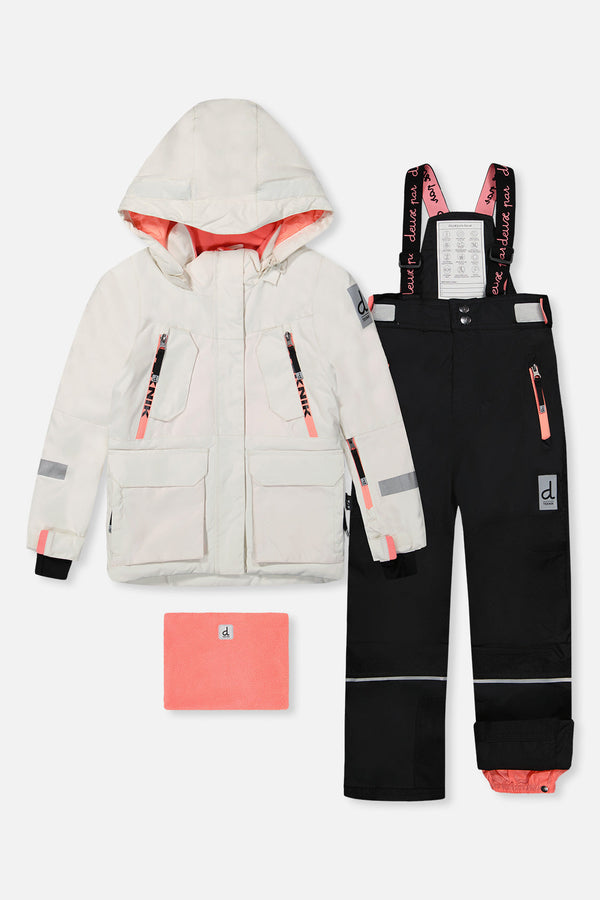
Deux par Deux PLAY two-piece snowsuit, green and navy colorblock with blue camo pants: Deux par Deux lists sizes 2 to 14, a -30°C (-22°F) rating, a 10,000 mm waterproof shell, sleeves that extend 4 cm, two-level hems that add 7.6 cm, and Cordura® at the knees, seat and hems. A polar fleece neckwarmer is included.
Deux par Deux PLAY two-piece snowsuit, pink vintage floral with teal bib pants: the same PLAY rating and grow-with-me features, plus a snow skirt, snow gaiters with rubberized elastic, elastic cuffs with Velcro® tabs and a zippered ski-pass sleeve pocket, according to Deux par Deux.
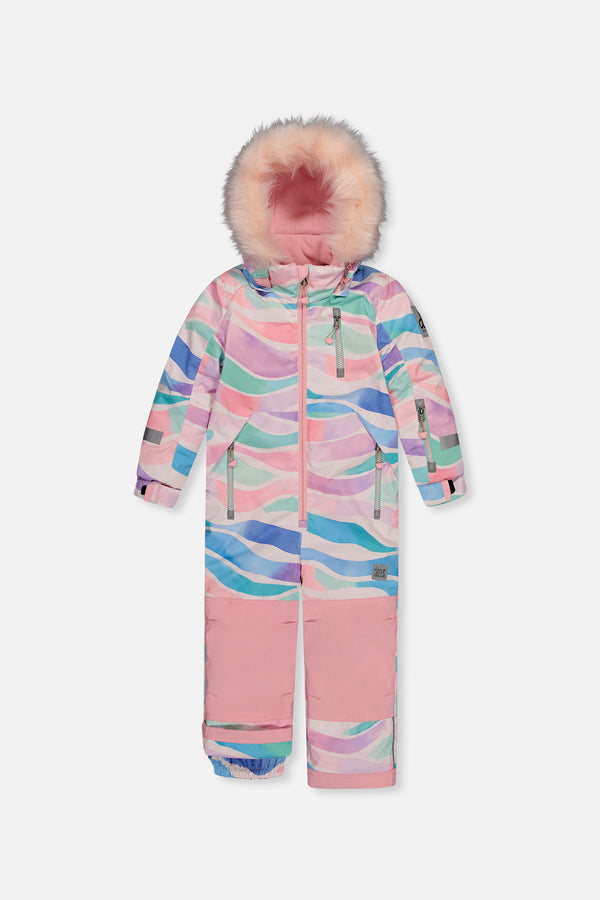
Deux par Deux PLAY one-piece snowsuit, sage green and grey: for kids who still prefer a one-piece. Deux par Deux lists sizes 2 to 14, a -30°C rating, articulated knees and sleeves, an adjustable interior waist and a removable hood.
Deux par Deux CHILL lightweight two-piece snowsuit, purple floral: insulated to -5°C (23°F), 10,000 mm waterproof with sealed seams, and Cordura® on the legs and seat, per Deux par Deux. Built for wet, milder days rather than deep cold.
See every style in stock in girls' snowsuits and boys' snowsuits, or the full Deux par Deux collection.
How do you care for a kids' snowsuit?
Follow the care label on that exact suit, because care differs by brand. Deux par Deux asks you to close all zippers and hook-and-loop tabs, wash cold and tumble dry low with no fabric softener, while Blizz lists hand wash cold and lay flat to dry. For washing, drying and end-of-season storage, see our snowsuit and winter jacket care guide.
Frequently asked questions
Should I size up in a kids' snowsuit?
Usually not. Buy the size that fits now with room for a base layer and a mid layer, and use grow features such as extendable sleeves and hems. Some brands, including Deux par Deux, say their suits fit generously and recommend not sizing up.
What temperature rating does my child need?
Choose a rating that covers your coldest regular outdoor days, then adjust for wind and activity. A -30°C suit is made for deep cold, while a lighter suit rated around -5°C can be more comfortable on wet days near freezing.
Is a one-piece or two-piece better for school-age kids?
A two-piece is usually easier for school-age kids, because the jacket can be worn alone and bathroom breaks are simpler. A one-piece removes the gap at the waist, which helps in deep snow.
How do I stop my child from overheating in a snowsuit?
Use thin, removable layers instead of thick ones and match the suit's rating to the weather. The Canadian Paediatric Society warns that a child dressed too warm could sweat and feel colder when they stop playing.
How do I keep snow out at the wrists and ankles?
Look for elastic cuffs with tabs that overlap mittens, gaiters that fit over boots and a snow skirt at the waist. Then test the fit with your child's own boots and mittens.
What should my child wear under a snowsuit?
A thin base layer, plus a fleece or sweater on colder days. The AAP says several thin layers help keep kids warm and dry, so skip jeans and cotton hoodies on active days.
How do I know if a snowsuit is too small?
Watch for pulling at the shoulders or crotch, sleeves that ride up past the wrists, pant legs that ride above the boots, trouble squatting, and no room for a mid layer.
The bottom line
The right snowsuit for a 4- to 14-year-old fits today, matches your real winter and works for your child's routine. Check the stated rating and waterproof spec, buy for current size with room for normal layers, close the gaps at the neck, wrists and ankles, and run the try-on checklist before tags come off. Then compare current styles in girls' snowsuits and boys' snowsuits.
Sources
- Canadian Paediatric Society, Caring for Kids: Winter advice for parents and kids
- Environment and Climate Change Canada: Wind chill and the Wind Chill Index
- American Academy of Pediatrics, HealthyChildren.org: Playing outside in winter
- Nemours KidsHealth: Cold, ice and snow tips for parents
- Product specifications: Deux par Deux, Blizz and Nano product details as listed on jennikidz.ca, November 2026.