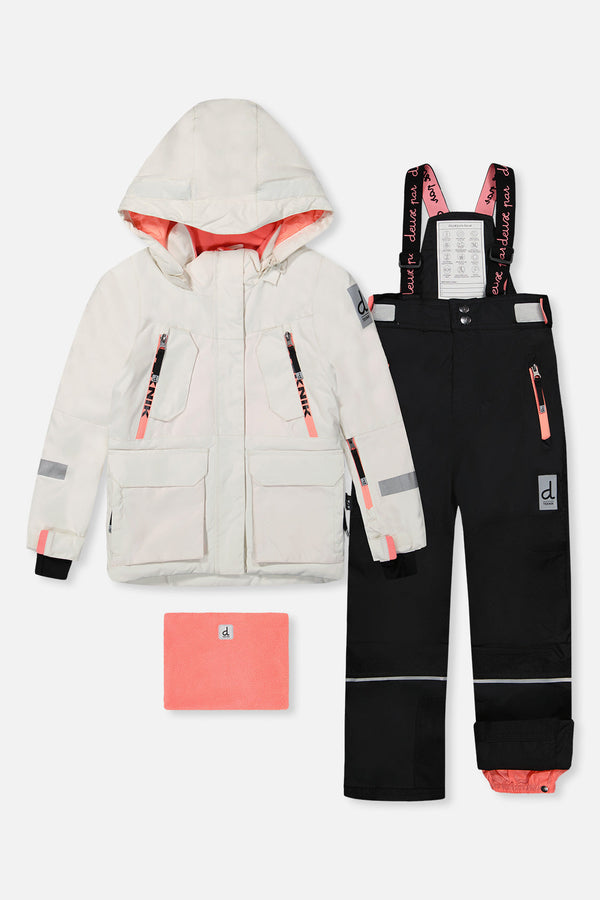
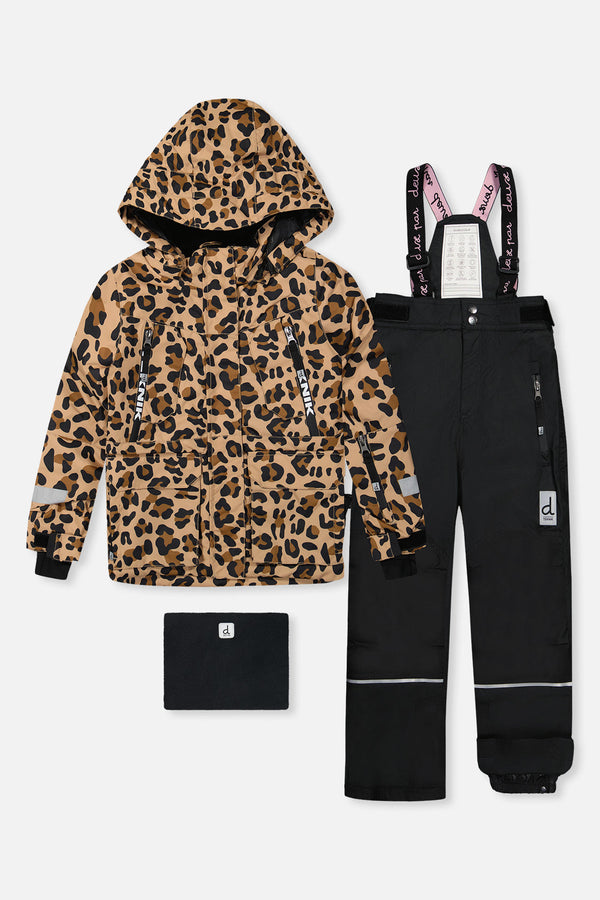
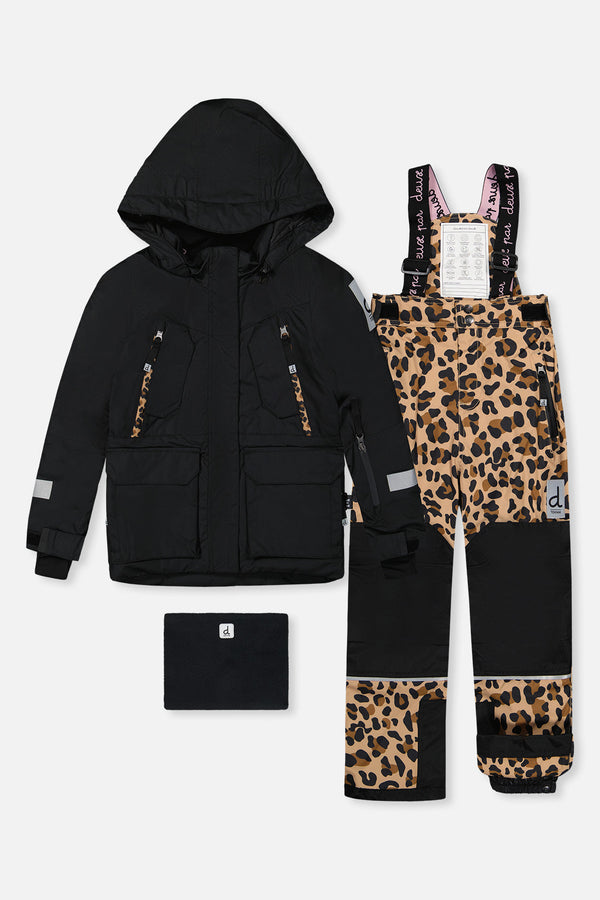
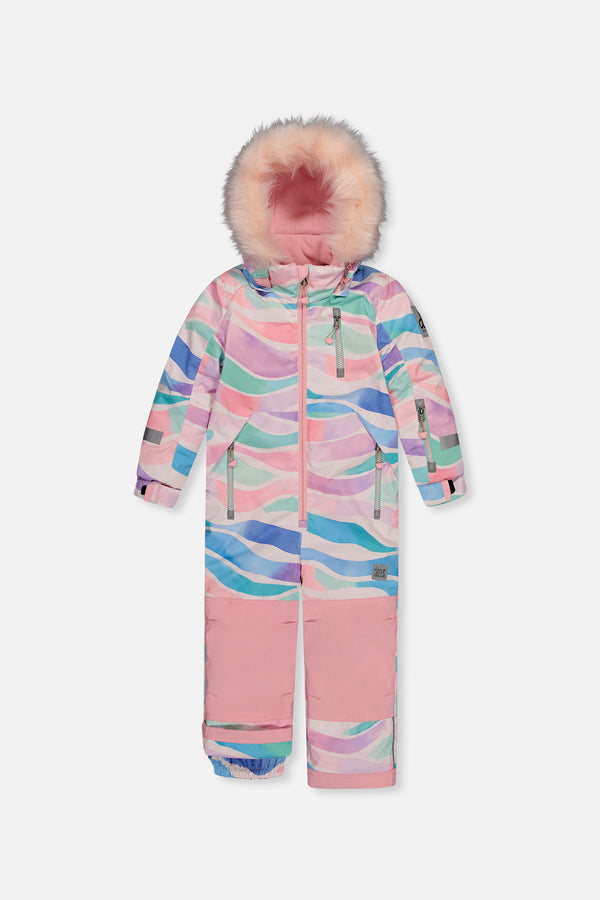
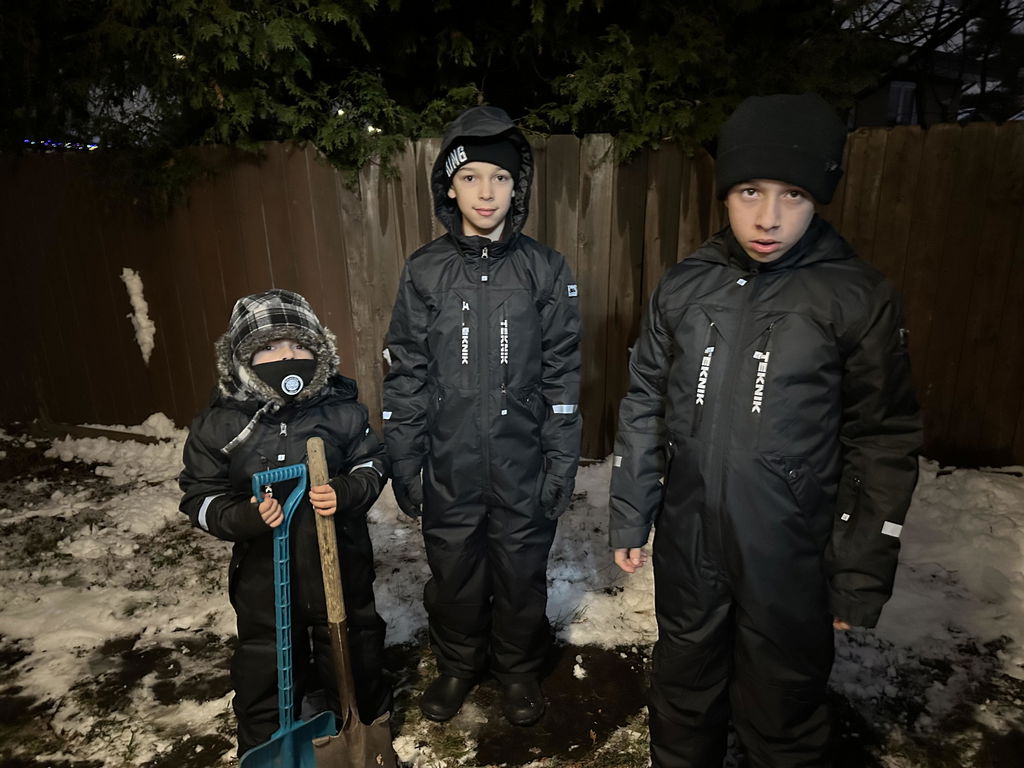
A boys snowsuit has two jobs. It has to survive a school year of recess, kneeling, sliding and scuffing, and it has to be simple enough that a five- or seven-year-old can get into it on his own while his class heads outside. This guide covers both: durability for the schoolyard and the sled hill, and independence at the cubby.
Quick answer: For school and sledding, pick a boys snowsuit that can take a beating and that he can manage alone. Check four things: a temperature rating that covers your coldest recess, a listed waterproof rating with sealed seams, tough fabric on the knees, seat and hems, and zippers and cuffs he can work in mittens. Then buy his measured size.
Shop the suits in this guide: browse boys' snowsuits, including one-piece suits, two-piece snow suits with bib pants and lightweight shells for slushy days, from toddler to big-kid sizes.
Comparing labels first? Our best kids' snowsuit brands in Canada guide puts the main brands side by side, and how to choose the right snowsuit for your child covers kids aged 4 to 14. Everything below is specific to boys who play hard and want to dress themselves.
What makes a boys snowsuit tough enough for school?
A school-tough snowsuit has reinforced fabric where boys wear through gear, a shell that handles rough snow and ice, and seams and closures that keep working after months of daily use. Whether those wear points are protected matters more than the price tag.
Picture a normal recess: he kneels to pack a snowball, slides down the icy bank on his seat, drags his boots through crusty snow and drops to his knees in a game of tag. By February, those same spots have met the ground hundreds of times. A suit that is warm but thin at the knees can start leaking or tearing halfway through the season.
Where do boys wear out a snowsuit first?
| Wear point | What causes it | What to look for |
|---|---|---|
| Knees | Kneeling in snow, crawling through forts, falling on ice | A named reinforcement fabric listed at the knees |
| Seat | Sliding down banks, sitting on sleds and benches | Reinforcement at the seat, plus sealed seams in the crotch area |
| Hems | Boot buckles, kicking, stepping on the pant legs | Reinforced hems and the right pant length over his boots |
| Cuffs | Making snowballs, pulling mittens on and off | Elastic inner cuffs with adjustable tabs |
| Zipper | Daily use, often rushed, with cold hands | A sturdy main zipper with a large pull |
What does reinforcement on a snowsuit actually do?
Reinforcement is a tougher fabric sewn over the spots that wear first, so it works like a patch that was there from day one. Look for the fabric to be named on the product page rather than a vague "durable" label. Deux par Deux lists 500-denier Cordura® at the knees, seat and hems on its PLAY boys suits, and on the legs and seat of its DISCOVER and CHILL boys sets.
Some brands also share test results. Deux par Deux lists the shell of the PLAY one-piece snowsuit in Light and Dark Blue as abrasion-tested to 30,000 cycles. That helps you compare suits on paper, but it does not mean the shell cannot tear, so keep checking the knees and seat as the season goes on.
How warm does a boys snowsuit need to be for recess and sledding?
Choose a suit whose temperature rating covers the coldest mornings he will spend outside at school, then fine-tune with layers. A brand's rating is guidance for that exact style, not a promise for every child or every wind.
The range is wide even within one brand. Deux par Deux rates its PLAY and DISCOVER boys suits to -30°C (-22°F) and its lightweight CHILL sets to -5°C (23°F). One is built for a prairie January, the other for wet, near-freezing days, so check this number first on any product page.
What do wind chill numbers mean for recess?
Wind makes outdoor time colder than the thermometer suggests, so plan around the wind chill in the morning forecast. Environment and Climate Change Canada (ECCC) groups it into risk levels:
| Wind chill | What ECCC says |
|---|---|
| 0 to -9 | Low risk: a slight increase in physical discomfort |
| -10 to -27 | Moderate risk: risk of hypothermia and frostbite if outdoors for long periods without adequate protection |
| -28 to -39 | High risk: exposed skin can freeze in 10 to 30 minutes |
The Canadian Paediatric Society (CPS) suggests parents consider keeping children indoors whenever the temperature or the wind chill is reported to be -27°C (-16°F) or lower. Schools may also set their own indoor-recess rules. A warm snowsuit does not change that advice; it makes the time outdoors on the milder side of the line more comfortable.
Why does a sweaty boy get cold on the sled hill?
Sweat is moisture, and moisture pulls heat away. Climbing a hill ten times with a sled is hard work, and a boy in a deep-cold suit over a thick sweater can soak his base layer on the way up, then shiver on the way down. Health Canada notes that you lose heat faster when you are wet, and suggests removing layers before you start sweating.
The fix is better layering, not a thinner suit. The American Academy of Pediatrics (AAP) says on HealthyChildren.org that wearing several thin layers will help keep kids warm and dry. Breathability helps too; it is listed in g/m²/24h, and a higher number lets more sweat vapour escape. Deux par Deux lists 5,000 g/m²/24h for its PLAY, DISCOVER and CHILL boys suits and 15,000 for TEKNIK. For a full plan, see what to wear under a snowsuit: the no-sweat layering formula.
How waterproof should a boys snowsuit be for sledding?
For sledding and recess, look for a shell with a listed waterproof rating in millimetres and sealed or taped seams. Boys sit, kneel and lie in snow, and body heat melts it into water that presses against the fabric. The millimetre number describes how much water pressure the fabric resisted in a lab test; higher means more resistance. Deux par Deux lists 10,000 mm for its PLAY, DISCOVER and CHILL boys suits and 15,000 mm for TEKNIK.
Why does the seat need sealed seams?
Every stitch is a tiny hole. When a boy sits on a sled, his weight pushes melted snow into the seams around the seat and crotch, and sealed seams cover those holes. Deux par Deux lists its CHILL sets as fully seam-sealed and its TEKNIK sets as critically sealed at the armholes, shoulders, hood and crotch. If a product page does not mention seams, ask before you buy.
Is a lightweight shell enough on slushy days?
Often, yes. Near the freezing mark, a waterproof lightweight set can be more comfortable than a deep-cold suit. The CHILL lightweight snowsuit in Gray and Blue Dinosaur Print is rated to -5°C (23°F), and Deux par Deux lists a 10,000 mm shell, fully sealed seams, and snow pants with suspenders and foot straps. For January cold, step up to a suit rated for your coldest days.

Can he get dressed for recess on his own?
He should be able to, and the snowsuit can make that easier or harder. At school he may not get one-on-one help with every zipper, so look at each closure with his mittens and the school clock in mind.
Which features help a boy dress himself?
- A main zipper with a big pull. If he cannot start it with cold fingers, he will go out unzipped. Deux par Deux lists a YKK® main zipper on the PLAY one-piece, DISCOVER and TEKNIK suits in this guide; let him try it before you buy.
- Cuffs with hook-and-loop tabs. Elastic cuffs with Velcro® tabs let him close the gap over his mittens himself.
- Bibs or suspenders he understands. Bib snow pants cover his lower back when he bends, but straps can twist, so practise at home.
- Ankle snow gaiters. These inner cuffs go over the boot and keep snow out of his socks.
- A hood that comes off. Deux par Deux lists a detachable hood on its PLAY boys suits and the DISCOVER Blue Bear Print set.
- A neckwarmer instead of a scarf. The CPS recommends a neck warmer instead of a scarf, and mitten clips instead of a string, to prevent choking. Both PLAY suits in this guide come with a polar fleece neckwarmer.
How do you teach a school-age boy to suit up fast?
Give him a fixed order and practise it on a weekend, not on a school morning:
- Snow pants first, sitting down, with the bibs or suspenders up.
- Boots on, gaiters over the boots, outer legs over the gaiters.
- Jacket on and zipped, with any snow skirt tucked over the pants.
- Neckwarmer and hat, with the hat covering his ears.
- Mittens last, then the cuff tabs pulled snug over them.
Write his name inside the jacket, the pants and both mittens. Matching snowsuits are common at school, and a label saves a lost-and-found search.
One-piece or two-piece for a school-age boy?
A one-piece leaves no gap at the waist and suits long sledding afternoons and younger boys. A two-piece is usually easier at school because the jacket comes off indoors and bathroom breaks are quicker. Our one-piece vs two-piece snowsuit guide compares both in detail.
How should a boys snowsuit fit?
It should fit his measured size today, with room for a base layer and a light mid layer, and with growing room built into the sleeves and hems rather than extra length everywhere. A suit that is too big lets snow in at the wrists and ankles and catches on boots.
Should you buy a size up so it lasts two winters?
Usually no. Measure his height and chest, compare them with the brand's chart and follow the brand's fit note. Deux par Deux says its PLAY, DISCOVER, TEKNIK and CHILL suits fit generously and that sizing up is not recommended. Instead, use grow-with-me features: Deux par Deux lists sleeves that extend 4 cm (1.5 in) on its PLAY, DISCOVER and TEKNIK boys suits, and hems that add 7.6 cm (3 in) on PLAY and TEKNIK or 5.7 cm (2 1/4 in) on the DISCOVER set. Our snowsuit sizing guide for babies, toddlers and big kids walks through measuring at home.
What is the sled-hill fit test?
Try the suit on with his base layer, mid layer and winter boots, then have him act out a sledding afternoon:
- Carry a sled up the stairs. The knees bend freely and the hems stay off his heels.
- Sit on the floor and lean back. The jacket stays over his lower back and the seat does not pull tight.
- Kneel and push off. The knees do not bind and the pant legs stay over his boots.
- Throw an overhand snowball. His wrists stay covered and the jacket does not ride up.
- Look over each shoulder. The hood turns with him and does not block his side view.
If he fails one move, try the next size before deciding. For car rides, the AAP says bulky clothing, including winter coats and snowsuits, should not be worn under a car seat harness; our winter car seat and snowsuit guide explains what to do instead.
Which boys snowsuit fits his winter routine?
Match the suit to the job he gives it most often. These examples are Deux par Deux boys suits from our shop; details are as the brand lists them on each product page.
| His typical winter | What to prioritize | Example from our shop |
|---|---|---|
| Slush and near-freezing days | Light insulation, sealed seams, a 10,000 mm shell | CHILL Gray and Blue Dinosaur two-piece (rated to -5°C) |
| Daycare and kindergarten yard | Bib pants, ankle gaiters, easy cuffs | DISCOVER Blue Bear Print two-piece (rated to -30°C) |
| Everyday recess in a cold winter | Reinforced knees, seat and hems; jacket comes off indoors | PLAY Colorblock two-piece with dinosaur-print pants (rated to -30°C) |
| Long sledding afternoons | No waist gap, articulated knees, reinforced seat | PLAY Light and Dark Blue one-piece (rated to -30°C) |
| Ski lessons and older boys | Higher waterproof and breathability ratings | TEKNIK Royal Blue and Black two-piece |
What changes from daycare to the big-kid years?
About 2 to 5: an adult still helps, so quick zipping and snow-blocking matter most. Deux par Deux lists the DISCOVER Blue Bear Print set in sizes 2 to 8 (check the product page for sizes available now); Deux par Deux lists bib pants with detachable suspenders, ankle snow gaiters, an adjustable snow skirt and reflective details. For younger boys, see the baby and toddler snowsuit guide and baby boys' snowsuits.
About 5 to 9: independence and durability peak. The PLAY Colorblock set comes in sizes 2 to 14 and lists 500D Cordura® at the knees, seat and hems of the pants and a hood with a built-in snow guard. The PLAY one-piece lists an adjustable interior waist, articulated knees and sleeves, and reflective bands.
About 9 to 14: many older boys ski and have firm style opinions, so let him choose among suits that pass your checks. Deux par Deux lists adjustable ankle gaiters with snap closures, ski-boot cuffs and a sleeve ski-pass pocket on the TEKNIK set. Heading to lessons? Read the snowsuit guide for ski school and sledding, or see ski jackets for kids if he wants a separate jacket.

What should he wear under and with his snowsuit?
Keep it simple: a close-fitting base layer, a fleece only on the coldest days, then the snowsuit, neckwarmer, hat, mittens and insulated boots. The AAP calls insulated boots, mittens or gloves, and a hat essential.
- Base layer: long underwear he is comfortable in all day. Browse boys' base layers.
- Mid layer: a fleece or knit on very cold mornings only, from boys' winter clothing.
- Mittens: the CPS says mittens are better than gloves in really cold temperatures because children can bunch their fingers together. Pack a spare dry pair. Shop kids' gloves and mittens.
- Hat and neckwarmer: the CPS advises a neck warmer and a warm hat that covers the ears; see kids' winter accessories.
- Boots: the CPS recommends warm, waterproof boots roomy enough for an extra pair of socks and for wiggling toes.
Jeans under snow pants are a common school-morning shortcut, but denim can soak up sweat and melted snow. Since Health Canada notes that you lose heat faster when you are wet, a base layer is the better choice.
How do you keep him comfortable on the sled hill?
Dress him for the climb, check on him often and pick the hill with care. The CPS advises checking often that your child is warm and dry, and says younger children should take regular breaks and come inside for a warm drink. Remove wet clothing and boots as soon as he comes in.
What sledding habits do pediatric groups recommend?
The Canadian Paediatric Society and the AAP both publish sledding checklists covering when and where to sled, how to sit on the sled, supervision and head protection. Read the full list in the CPS winter safety advice, and see our snowsuit guide for ski school and sledding for gear and hill-day tips.
How do you spot frostbite early?
Check his cheeks, ears, nose, fingers and toes, the spots the CPS says most commonly get frostbite. The CPS describes skin that first turns red and swollen and stings or burns; frozen skin loses feeling and looks shiny and white. Bring him in, change him into dry, warm clothing and do not rub the skin. The CPS advises seeking medical advice immediately if skin is white, waxy or feels numb. This guide is general information, not medical advice.
Deux par Deux lists reflective details on the DISCOVER Blue Bear Print set and reflective bands on the PLAY Light and Dark Blue one-piece.
How do you make a snowsuit last the whole school year?
Dry it every night, wash it only when needed and check the wear points often. A suit that goes back on damp is a cold suit, and small holes grow fast at recess.
- Dry it overnight, hung open and away from direct heat. Most Deux par Deux care notes in this guide say to keep the suit away from heat sources.
- Wash it by the label. For the Deux par Deux suits here, the care notes say to machine wash cold and tumble dry low with no bleach; most also say to close all zippers and Velcro® first and skip fabric softener and dry cleaning. Remove faux fur trim first where there is one.
- Check monthly for thin spots at the knees, seat and hems, and test the zipper and snaps. Small repairs are easier in December than in March.
For washing, drying and storage tips, see our snowsuit and winter jacket care guide.
Can it be handed down to a younger brother?
Yes, if the shell still sheds water, the reinforcement is intact and every closure works. Check the zippers, snaps and tabs, the knees and seat, and the hood and suspenders. For younger children, the CPS advises removing drawstrings that could catch on climbing or play equipment.
What are the most common mistakes when buying a boys snowsuit?
- Sizing up two sizes. Extra length lets snow in and trips him up; use grow-with-me features instead.
- Ignoring the knees and seat. Without reinforcement, a suit may not last until spring for a boy who slides and kneels daily.
- Buying a lightweight shell for deep cold. A set rated to -5°C is made for slush, not a -20°C recess.
- Choosing closures he cannot work. If he cannot zip it in mittens, he will go out unzipped.
- Over-layering. A thick sweater under a -30°C suit can make him sweat on the hill, then chill.
- Skipping the boot check. Gaiters and hems must fit over his school boots.
Frequently asked questions
What is the most important feature in a boys snowsuit for school?
Reinforced knees, seat and hems, plus closures he can work himself. Boys kneel, slide and scuff those areas every day, and a suit he can zip in mittens gets him outside on time.
What temperature rating should a boys snowsuit have?
Pick a rating that covers the coldest school mornings where you live. Deux par Deux rates its PLAY and DISCOVER boys suits to -30°C (-22°F) and its lightweight CHILL sets to -5°C (23°F).
How waterproof should a boys snowsuit be for sledding?
Look for a listed millimetre rating and sealed seams, especially around the seat. Deux par Deux lists 10,000 mm for its PLAY, DISCOVER and CHILL boys suits and 15,000 mm for TEKNIK.
Should I buy my son's snowsuit a size bigger?
Usually not. Buy his measured size and use grow-with-me sleeves and hems for extra seasons. Deux par Deux says its PLAY, DISCOVER, TEKNIK and CHILL suits fit generously and that sizing up is not recommended.
Is a one-piece or two-piece snowsuit better for a school-age boy?
A two-piece is usually easier at school because the jacket comes off indoors and bathroom breaks are quicker. A one-piece leaves no waist gap and suits long sledding afternoons.
What should my son wear under his snowsuit?
A thin base layer, plus a fleece only on very cold days. The AAP says several thin layers help keep kids warm and dry.
When is it too cold for recess or sledding?
The Canadian Paediatric Society suggests considering keeping children indoors when the temperature or wind chill is -27°C (-16°F) or lower. Check your school's indoor-recess policy as well.
Ready to find his snowsuit?
Start with the rating for your coldest recess, check the knees, seat and seams, and let him test the zipper in his mittens. Then let him pick the colour. Shop boys' snowsuits by size, or browse all kids' snowsuits if you are dressing siblings too. Shopping for a sister? The girls snowsuit buying guide covers warmth, fit and outfit ideas for her.
Sources
- Canadian Paediatric Society, Caring for Kids: Winter safety: Advice for parents and kids
- Canadian Paediatric Society, Caring for Kids: Frostbite
- American Academy of Pediatrics, HealthyChildren.org: Winter Safety Tips from the AAP
- American Academy of Pediatrics, HealthyChildren.org: Winter Car Seat Safety Tips
- Environment and Climate Change Canada: Wind chill and the Wind Chill Index
- Health Canada: Extreme cold
- Product details: Deux par Deux product information as listed on each linked Jenni Kidz product page.