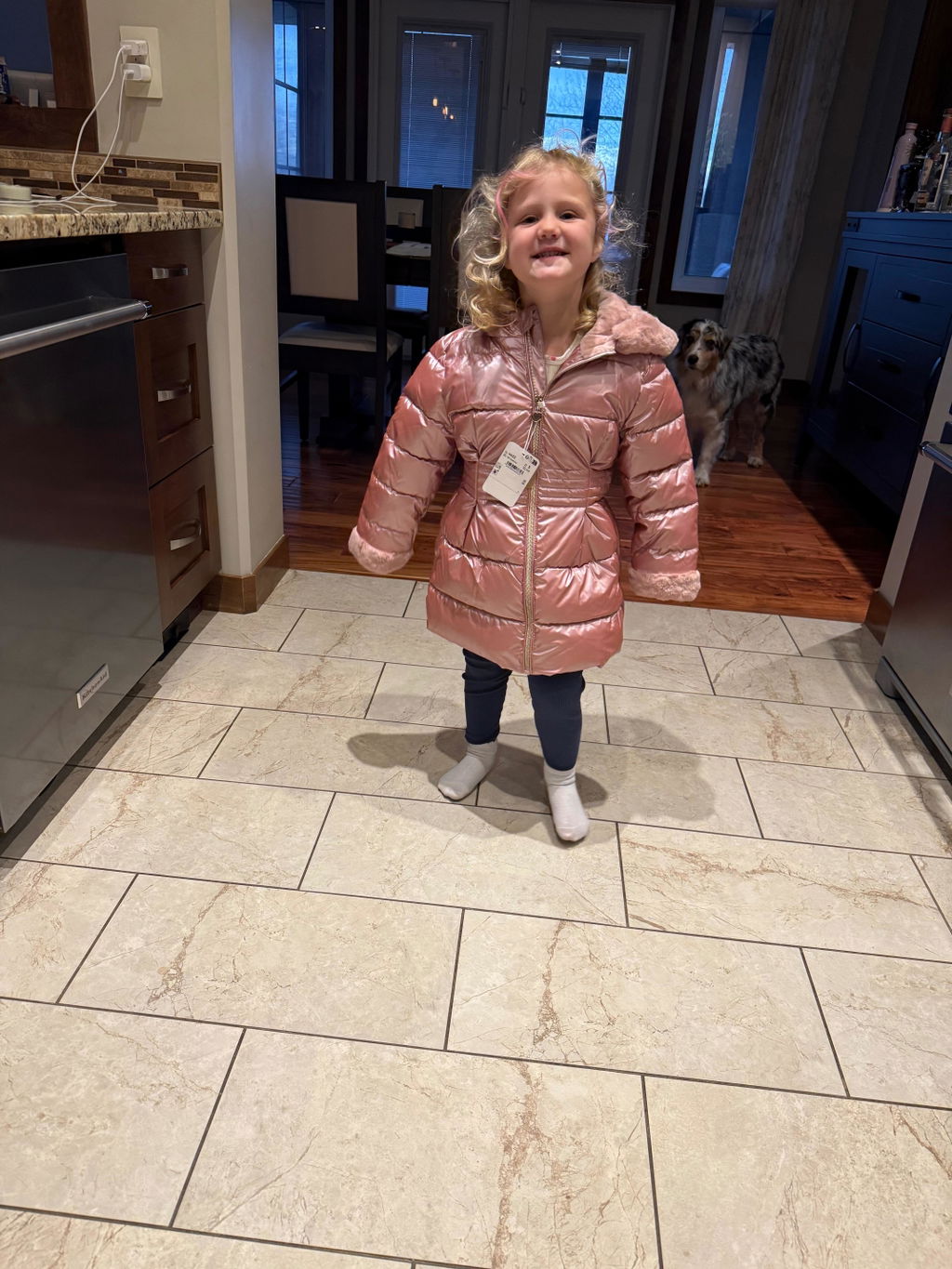
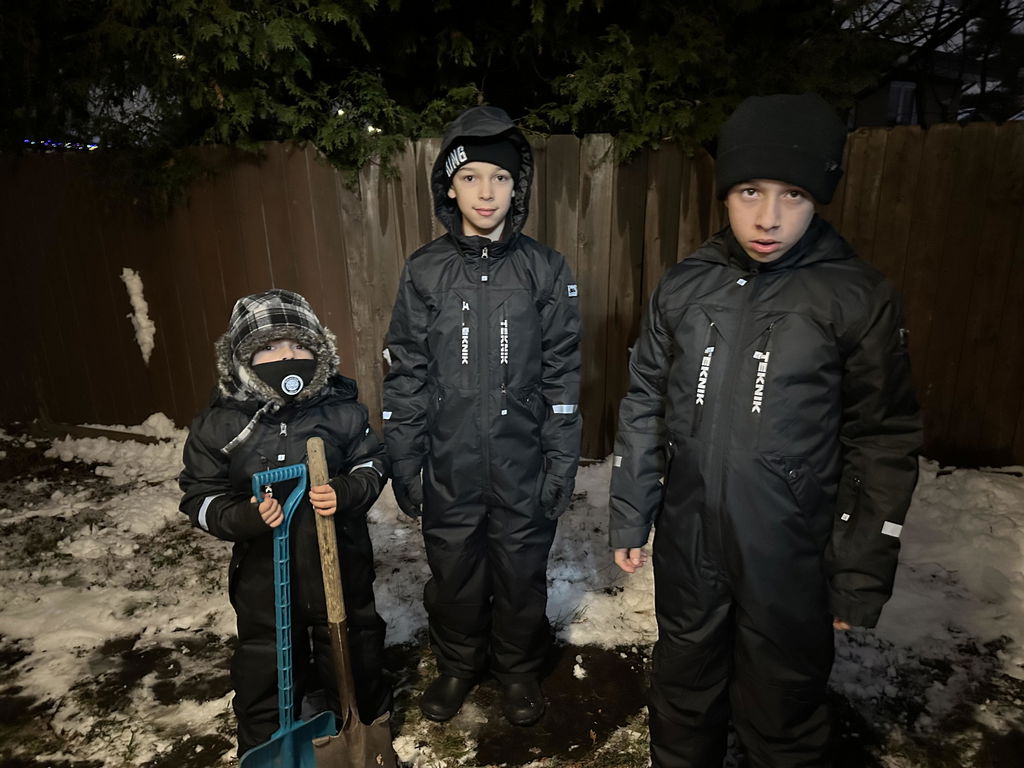
Quick answer: Choose a rain suit for wet days above roughly 5°C, a snowsuit when it is near or below freezing with snow or slush, and a rain suit over warm layers for the in-between days. Base the call on temperature, how wet the ground is, and how long your child will sit, kneel or stand still.
This guide is for parents of kids roughly 1 to 12 who face the messiest weeks of the Canadian year: late fall before the snow sticks, early spring when it melts, and the gray days in between when the forecast says rain at 3°C and the schoolyard turns to slush. The trick is to dress for three questions, not the calendar: how cold, how wet and how active. If your child needs new rain gear, start with our girls' waterproof rain suits and boys' waterproof rain suits. For true winter days, browse kids' snowsuits, or compare labels first in our guide to the kids' snowsuit brands parents buy in Canada.
What is the difference between a rain suit and a snowsuit?
A rain suit is a waterproof shell with little or no insulation, so warmth comes from what your child wears underneath. A snowsuit combines a water-resistant or waterproof shell with built-in insulation, so it is warm on its own but harder to cool down when the day turns mild. Neither one is better; they solve different problems.
| Option | Main job | Warmth comes from | Works well when |
|---|---|---|---|
| Rain suit (one-piece or jacket + rain pants) | Blocking rain, puddles and wet ground | Layers underneath | Wet days that are cool, not cold |
| Rain suit over warm layers | Waterproof shell plus adjustable warmth | Fleece or thermal layers you choose | Cold rain, drizzle near 0°C, shoulder season |
| Lined splash pants + winter jacket | Wet bottom half, warm top half | The jacket and the pant lining | Slush walks, sitting on wet benches |
| Snowsuit | Warmth plus blocking snow and wind | Built-in insulation | Snow play, freezing temperatures, long outdoor time |
Exact features vary by garment, so check the product details before you buy.
What does a rain suit do well?
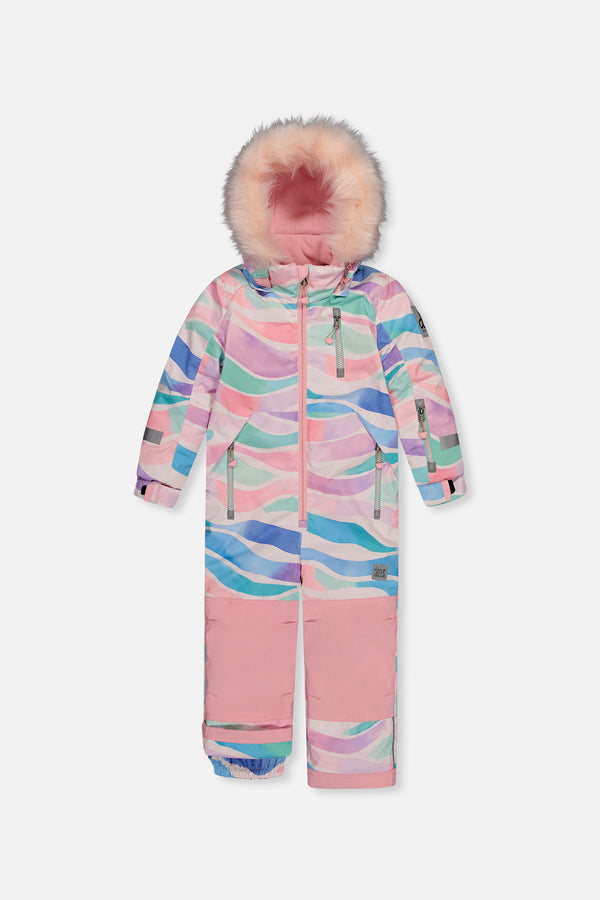
A good rain suit keeps water out at the seams and openings, not just on the fabric. Deux par Deux lists its girls' rain one-piece in pink with a 100% polyurethane shell, welded seams, a 10,000 mm waterproof rating, a zipper behind a storm placket, reflective bands on the raglan sleeves, and sizes 2 to 6. The brand makes the same cut in blue, mauve and sage green.
Because a rain suit has little insulation, you control the warmth: a T-shirt goes underneath on a 12°C drizzly day, and a fleece on a 3°C rainy morning.
What does a snowsuit add?
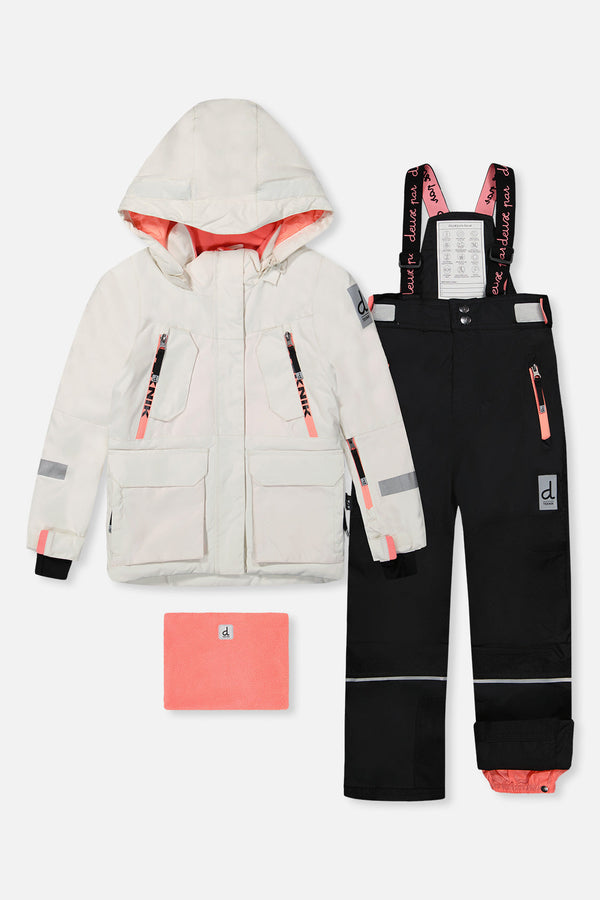
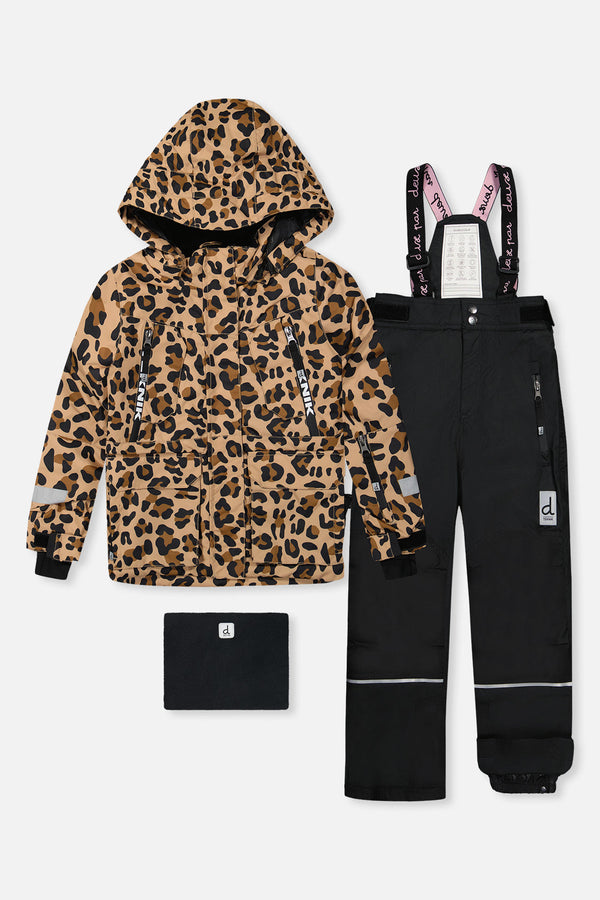
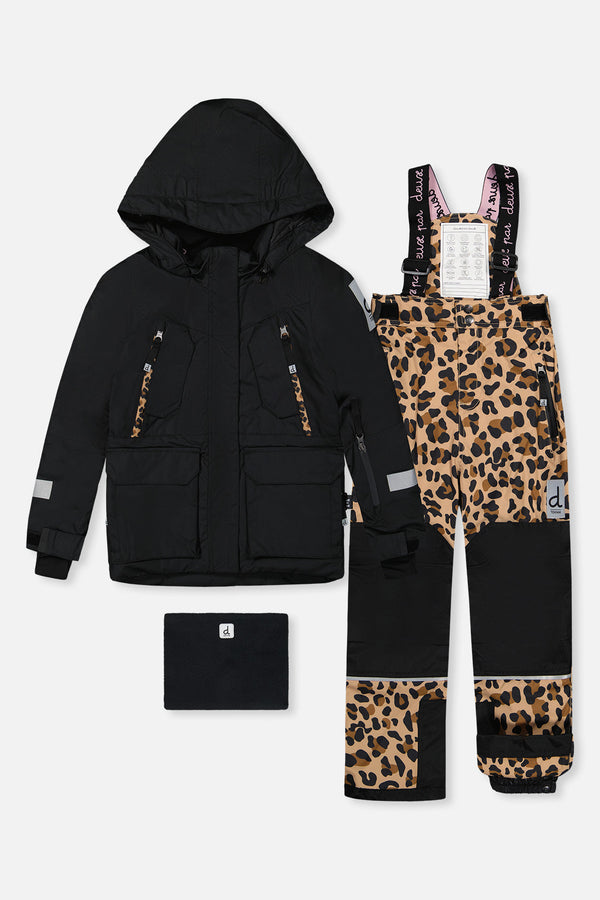
A snowsuit adds insulation, longer coverage at the wrists and ankles, and features built for snow. Deux par Deux lists its girls' PLAY two-piece snowsuit in mauve watercolor floral with polyester fill (170 g in the body), a temperature rating of -30°C (-22°F), a 10,000 mm polyurethane coating, breathability of 5,000 g/m²/24h, snow gaiters on the pants and Cordura® reinforcement at the knees, seat and hems. The boys' PLAY two-piece snowsuit with dinosaur-print pants lists the same fill, rating and waterproofing.
A temperature rating like that is a starting point, not a promise. It assumes a certain amount of activity and layering, and wet snow or long stretches standing still change how warm a child feels. Our explainer on snowsuit temperature ratings and waterproof-breathable numbers shows how to read the mm and g/m² figures.
Why are wet, slushy days so hard to dress for?
Because a damp child can get chilled at temperatures that do not feel cold to an adult. Health Canada's extreme cold guidance puts it simply: you lose heat faster when you are wet, so change into dry clothing as soon as possible. The U.S. Centers for Disease Control and Prevention (CDC), on its preventing hypothermia page, notes that hypothermia can occur even at cool temperatures above 40°F (about 4°C) when a person is wet from rain, sweat or cold water and becomes chilled.
Environment and Climate Change Canada (ECCC) adds a related point on its wind chill page: if your skin is wet, it gets cold even quicker, because there is more moisture to evaporate. That is the shoulder-season problem: a child in a cotton hoodie at 4°C, kneeling in a wet sandbox, can feel colder than the same child at -5°C in dry snow and a snowsuit.
Why is slush its own category?
Slush is partly melted snow and water sitting right around freezing. It soaks knees and seats the moment a child kneels, and it splashes above boot tops. That is why slush needs both waterproofing and some warmth, which neither a light rain suit alone nor an unsealed snow jacket handles well.
Why does sweat matter on mild days?
Sweat makes kids wet from the inside. The Canadian Paediatric Society (CPS) warns in its Caring for Kids winter advice that a child dressed too warmly can sweat and then feel colder when they stop playing. A full snowsuit on a 6°C day is a common way that happens.
Which outer layer should your child wear today?
Pick the outer layer by the temperature and how wet it is, then adjust for activity. The bands below are Jenni Kidz practical suggestions, not medical thresholds; the cold-limit rows come from ECCC and the CPS.
| Temperature (feels like) | Dry | Drizzle or wet ground | Steady rain, puddles or slush |
|---|---|---|---|
| Above 10°C | Light jacket | Rain jacket | Rain suit over regular clothes |
| 5 to 10°C | Fall jacket | Rain jacket + rain pants or splash pants | Rain suit over a fleece layer |
| 0 to 5°C | Winter jacket | Rain suit over fleece and a thermal layer, or lined splash pants + winter jacket | Rain suit over warm layers, or a snowsuit with a waterproof shell |
| 0 to -10°C | Snowsuit | Snowsuit | Snowsuit with a waterproof shell and gaiters; dry spares in the bag |
| -10 to -27°C wind chill | Snowsuit plus hat, mittens and neck warmer. ECCC rates this range a moderate risk, with hypothermia and frostbite possible after long periods outside without adequate protection. | ||
| -27°C or colder | The CPS suggests considering keeping children indoors when the temperature or wind chill is -27°C (-16°F) or lower. | ||
Two adjustments make the grid work in real life. First, use the wind chill or "feels like" value, not just the air temperature. Second, shift one row colder for children who will be mostly still (a stroller ride, a soccer sideline, the bus stop) and one row warmer for kids who will run the whole time.

When is a rain suit the better choice?
A rain suit is the better choice when water, not cold, is the main problem: wet days above freezing, puddle play, muddy trails and drizzly recess. It also suits kids who run hot.
Is a one-piece rain suit or a jacket and rain pants better?
For toddlers and preschoolers who sit in puddles, a one-piece closes the gap at the waist. For school-age kids, a separate jacket and rain pants or bib overalls is often easier, because they can take the pants off indoors. Deux par Deux lists its black rain overalls as bib-style polyurethane overalls with adjustable suspenders, elastic ankle cuffs and reflective strips at the ankles, and suggests the jacket alone for light drizzle. Its boys' rain jacket in yellow and navy lists a polyurethane shell with welded seams, a 10,000 mm rating, an attached hood and a storm placket; the girls' rain jacket in pink lists the same rating and seams.
What should go under a rain suit?
Whatever the temperature calls for, in thin layers. The American Academy of Pediatrics (AAP), on HealthyChildren.org's cold weather page, says several thin layers keep children dry and warm, and that older babies and young children can wear one more layer than an adult would in the same conditions. Health Canada notes that synthetic and wool fabrics insulate better. On a cold, rainy day, that means a synthetic or wool-blend base layer, a fleece and the rain suit on top. For full fabric and temperature detail, see our guide to layering kids' clothes for fall and winter.
Before you rely on layering, check the fit. Have your child put the rain suit on over the fleece they will actually wear, then squat, reach up and climb a step. If it pulls across the back or rides up at the ankles, it is too small for layering.
Can a rain suit replace a snowsuit in winter?
Not for real winter days. Once there is snow on the ground and temperatures stay below freezing, a rain suit over layers cannot match the warmth and coverage of an insulated snowsuit, and extra layers make kids stiff and sweaty. It can stretch into early winter for short, active outings near 0°C.
When does a snowsuit make more sense?
A snowsuit makes more sense once it is at or below freezing, there is snow to play in, or your child will be outside for a long time without much movement. It is also the better pick for slush on days when the temperature is dropping.
Can a snowsuit handle slush and wet snow?
Many can, but check three things on the product page: a stated waterproof rating, how the seams are finished, and whether the pants have snow gaiters or cuffs that close over boots. A snowsuit with a water-repellent finish but no waterproof coating can soak through at the knees and seat in slush. The PLAY suits mentioned above list a 10,000 mm coating, and the girls' version lists snow gaiters with rubberized elastic.
Will a snowsuit be too hot on a mild day?
It can be, for an active child on a 5°C day. With a two-piece, wear the snow pants with a lighter jacket, or open the zipper during play. Health Canada advises removing layers before you start sweating. For what goes under a snowsuit on colder days, see our no-sweat formula for what to wear under a snowsuit.
One-piece or two-piece for shoulder season?
One-piece suits close the waist gap, which matters most for toddlers who sit in slush; two-piece sets let you mix and match pieces as the weather changes. For the full comparison, read our one-piece vs. two-piece snowsuit guide.
When do lined splash pants and a winter jacket work best?
This hybrid covers the weeks when a rain suit alone is too cold and a snowsuit is too warm, especially when the ground is the problem: slush walks, wet benches, sandboxes and playground slides. Deux par Deux lists its fleece-lined splash pants in black with a polyester fleece lining, a 10,000 mm rating, full seam sealing, breathability of 3,000 g/m²/24h, an elastic waist and ankles and reflective side stripes. The brand's taffeta-lined splash pants in black list the same 10,000 mm rating with a polyester taffeta lining instead of fleece. Pair either one with a winter jacket that covers the lower back.
How should you dress kids for daycare, recess, puddles and slush walks?
What should toddlers wear to daycare on wet days?
Toddlers sit and kneel in everything, so full coverage matters most. A one-piece rain suit over a fleece works well on cold, wet days above freezing; switch to a one-piece snowsuit once it freezes. Label every piece and pack spare clothes, socks and mittens, since the CPS advises removing wet clothing and boots immediately after playing. Our kids' rain gear buying guide covers daycare fit and features.
What works best for school recess?
Choose pieces your child can put on, zip and take off alone, because recess is short and the classroom is warm. A rain jacket with rain overalls or splash pants is often easier than a one-piece; on slushy days, swap in snow pants or lined splash pants with a winter jacket. Our guide on winter coat or snowsuit for school covers the trade-offs, and the preschool and elementary snowsuit guide covers recess-ready snowsuit features.
What should kids wear for puddle and mud play?
For deliberate puddle jumping above freezing, a rain suit with cuffs that go over the boots works well. Pull the pant cuffs down over the boot tops, not tucked inside, so water runs off instead of into the boot.
What should kids wear for a long slush walk?
Warmth and dry feet matter most, because walking at a child's pace does not generate much heat. Lined splash pants or a snowsuit with gaiters, waterproof boots and mittens, and a hat that covers the ears make a good baseline. Check the afternoon forecast for the walk home.
Does where you live in Canada change the answer?
Often, yes. Broadly speaking, on the West Coast and in Atlantic Canada, long stretches of cold rain near freezing make a rain suit over layers useful for months. On the Prairies, many families go from a fall jacket almost straight to a snowsuit. Where freeze-thaw cycles bring lots of slush, lined splash pants and waterproof snowsuits earn their keep. For the shell-by-shell breakdown, see our Prairie vs. coastal snowsuit comparison.

What should kids wear on their hands, feet and heads on wet days?
Hands and feet get wet first, so they need their own waterproof layer.
Do kids need rain mittens?
On cold, wet days, yes, because knit gloves soak through quickly. Deux par Deux lists its rain mittens in black with a coated polyurethane shell, a 10,000 mm rating with welded seams, an extended cuff, an adjustable wrist closure and a mitten clip. The CPS recommends mittens over gloves so fingers can bunch together for warmth, and mitten clips instead of strings. Once it is below freezing, switch to insulated winter mittens from our kids' gloves and mittens collection; our mittens vs. gloves guide explains when gloves make sense for older kids.
Are rain boots warm enough for slush?
Rain boots keep water out, but most are not insulated, so warmth depends on the socks. The CPS recommends warm, waterproof boots roomy enough for an extra pair of socks and for wiggling toes. Deux par Deux lists its boys' rain boots in yellow and navy in natural rubber with a polyester lining, in toddler 4 to youth 4, and notes they run large. A Jenni Kidz suggestion: a wool-blend sock in rain boots for short slush walks, and insulated winter boots for anything longer or colder. Compare girls' rain boots and boys' rain boots.
Is a rain hood enough?
Not on cold days. The CPS says to keep ears covered to help prevent frostbite and recommends a neck warmer instead of a scarf, so add a thin hat that covers the ears under the hood.
How can you tell if your child is too cold or too wet?
Check, do not wait to be told. The CPS advises checking often that your child is warm and dry, and younger children should take regular breaks and come inside for a warm drink. AboutKidsHealth, from SickKids, recommends warm-up breaks inside throughout the day on its cold weather injuries page.
- Getting too wet: dark, soaked patches at the knees, seat or cuffs; wet mittens; squishy socks. Swap wet items right away.
- Getting too cold: shivering, pale or red skin on cheeks and ears, cold hands inside mittens, or a child who suddenly turns quiet, clumsy or cranky. The AAP lists shivering, lethargy and clumsiness among signs of hypothermia.
- Too warm: a damp neck or back, or a flushed face. Remove a layer before sweat soaks through.
What are the warning signs that need action?
Health Canada says mild frostbite (frostnip) makes skin look yellowish or white while it is still soft to the touch, and that moderate (stage 2) hypothermia can include strong shivering, slowed movements, mild confusion, pale skin and blue lips, ears, fingers or toes. AboutKidsHealth notes that shivering stops as hypothermia becomes severe, so a cold child who stops shivering is not improving. If you suspect hypothermia, the AAP says to call 911, bring the child indoors, remove any wet clothing and wrap them in blankets or warm clothes. For frostbite, the AAP advises warming the area in warm (not hot) water, not rubbing frozen skin, and calling a doctor if numbness lasts more than a few minutes.
Medical disclaimer: This guide is general information for parents, not medical advice. If you think your child has frostbite or hypothermia, contact a health care provider, or call 911 or your local emergency number in an emergency.
How do you dry and care for rain suits and snowsuits between outings?
Dry gear fully between outings and follow each care label. Deux par Deux lists hand wash cold, do not tumble dry and keep away from fire for its polyurethane rain suits, jackets and overalls, while its PLAY snowsuits list machine wash cold and tumble dry low with no fabric softener. Hang gear in a warm room, away from direct heat, with zippers open. Our guide to caring for snowsuits and winter jackets covers the rest.
What shoulder-season mistakes leave kids cold or soaked?
- Dressing for the morning only. Check the afternoon forecast too.
- A full snowsuit on a mild, active day. Kids sweat, then chill.
- Cuffs tucked into boots. Pull pant cuffs over the boots.
- No spares. One extra pair of mittens and socks in a zip bag solves most wet-day problems.
- Last season's sizes. Outgrown gear leaves gaps at the wrists and ankles. Measure before you buy with our snowsuit sizing guide.
Once the wet weeks turn to freezing ones, compare girls' snowsuits and boys' snowsuits for the freeze. For help choosing a brand, see our guide to kids' snowsuit brands in Canada.
Frequently asked questions about rain suits vs. snowsuits
What is the difference between a rain suit and a snowsuit?
A rain suit is a waterproof shell with little or no insulation, so warmth comes from the layers underneath. A snowsuit adds built-in insulation and snow features such as gaiters and longer cuffs. Rain suits suit wet days above freezing; snowsuits suit snow and freezing temperatures.
At what temperature should my child switch from a rain suit to a snowsuit?
As a Jenni Kidz rule of thumb, switch to a snowsuit once days stay at or below freezing or there is snow to play in. Between about 0 and 5°C, a rain suit over warm layers often works for active play. Always check the wind chill, not just the temperature.
What should kids wear for slush?
Slush needs both waterproofing and warmth. Good options are lined splash pants with a winter jacket, or a snowsuit with a stated waterproof rating and snow gaiters, plus waterproof boots and mittens. Pack dry spares, because the Canadian Paediatric Society advises removing wet clothing and boots right after playing.
What should go under a rain suit on a cold day?
Use several thin layers, as the AAP recommends: a synthetic or wool-blend base layer, a fleece mid layer, then the rain suit. Health Canada notes synthetic and wool fabrics insulate better. Check that the rain suit still lets your child squat, reach and climb over those layers.
Can kids get too cold on a wet day above freezing?
Yes. The CDC notes that hypothermia can occur even at cool temperatures above 40°F (about 4°C) when a person is wet and chilled, and Health Canada says you lose heat faster when you are wet. Change wet clothing quickly and take warm-up breaks.
Are rain boots warm enough for winter?
Most rain boots keep water out but are not insulated, so warmth depends on the socks. For short slush walks, a wool-blend sock in roomy rain boots can work. For long outings or freezing days, insulated winter boots with room for an extra pair of socks are the better choice.
Sources
- Health Canada — Extreme cold
- Canadian Paediatric Society, Caring for Kids — Winter advice for parents
- American Academy of Pediatrics, HealthyChildren.org — Cold weather: preventing frostbite and hypothermia
- Environment and Climate Change Canada — Wind chill and the Wind Chill Index
- U.S. Centers for Disease Control and Prevention — Preventing hypothermia
- AboutKidsHealth (SickKids) — Cold weather injuries