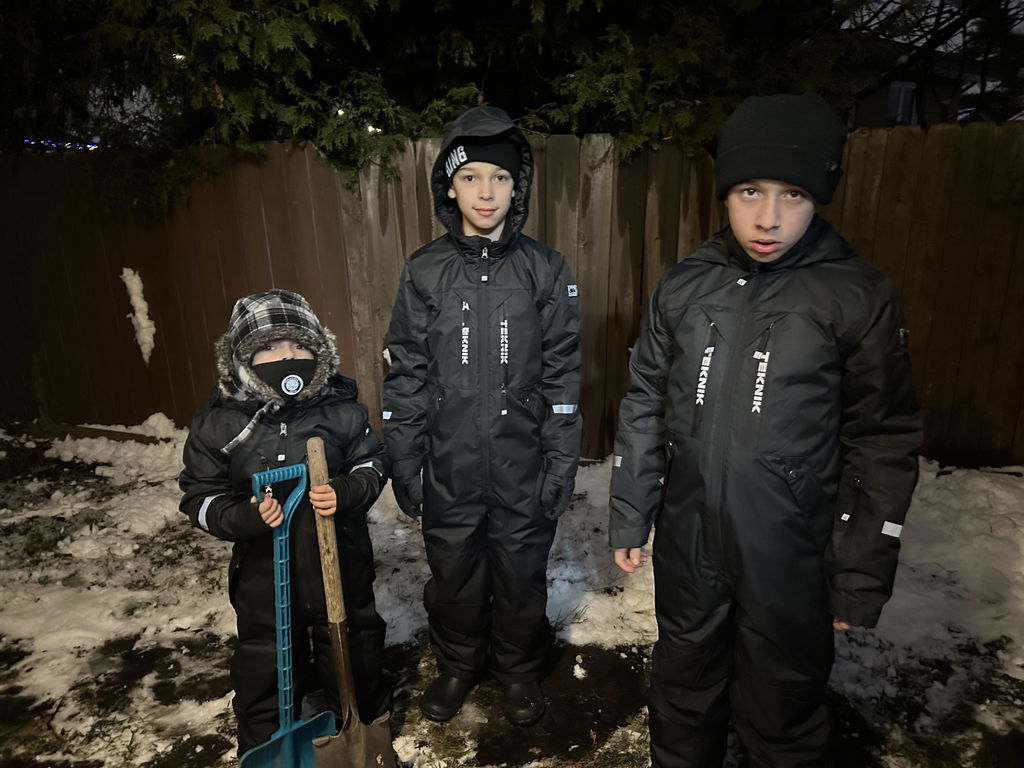
Keeping kids comfortable in Canadian winter weather is less about one extremely thick garment and more about using adjustable layers, staying dry, and choosing an outer layer for the actual wind, snow, moisture, and activity. Health Canada recommends dressing in layers with a wind-resistant outer layer and changing wet clothing promptly.
Shop Kids’ Snowsuits for insulated winter outerwear.
The Simple Winter Layering System
Base Layer
Choose a comfortable layer that helps the child stay dry and does not bunch under other clothing.
Mid Layer
Add insulation when the conditions require it. The layer should keep the child warm while allowing normal movement.
Outer Layer
Use outerwear appropriate for wind, snow, and moisture. Compare the exact garment’s insulation, water protection, wind protection, fit, cuffs, hood, and closures.
Adjust Layers for Activity
Children running, climbing, sledding, or skiing can generate substantial heat. Health Canada advises removing a layer if you become too warm before sweating, then adding warmth again when needed.
Keep Kids Dry
Wet clothing reduces comfort in cold conditions. Change wet garments and boots as soon as practical and make sure winter gear has time to dry before the next outing.
Hands, Head and Feet
Choose weather-appropriate hats, mittens or gloves, socks, and footwear. For hats, browse Kids Hats & Caps.
How Warm Should a Snowsuit Be?
Use manufacturer temperature guidance when it is provided for the exact product, but also consider wind, activity, moisture, layers, and outdoor time.
Read Snowsuit Temperature Ratings.
One-Piece or Two-Piece?
One-piece snowsuits reduce gaps at the waist. Two-piece sets offer flexibility for older children and school routines. Choose by age, activity, and fit.
School and Recess
Choose outerwear children can manage independently and that allows running, climbing, sitting, and bending. Wet-weather protection can be especially important for repeated snow play.
Winter Clothing Checklist
- Check the weather and wind.
- Use adjustable layers.
- Choose a wind-resistant outer layer.
- Keep clothing dry.
- Make sure the child can move freely.
- Check hat, hand, and foot coverage.
- Use product-specific warmth guidance when available.
Shop Kids’ Winter Clothing
Browse Kids’ Snowsuits, compare Deux par Deux winter outerwear, and use our Snowsuit Sizing Guide before ordering.
Source
Health Canada — Extreme Cold and Winter Sports & Recreation Safety.
Canadian Cold-Weather Reference
Health Canada recommends dressing in layers with a wind-resistant outer layer, adjusting layers before sweating, and changing wet clothing promptly. See the Government of Canada’s extreme cold guidance for current cold-weather safety information.
Winter Layering by Activity
School recess
Choose layers and outerwear the child can manage repeatedly. Movement, wet-snow protection and easy closures can matter as much as maximum insulation.
Sledding
Children generate heat climbing hills, then may cool while sitting. Adjustable layers and weather-protective outerwear help handle those changes.
Walking or waiting outdoors
Lower activity can change warmth needs. Consider wind, exposure time and appropriate accessories.
How to Check Whether the Winter Setup Works
Before a long outing, test the full system: base clothing, mid layer, outerwear, hat, hand coverage and boots. Make sure the child can walk, sit, bend and use hands normally.
Common Layering Mistakes
- Adding thick layers without checking mobility.
- Leaving wet clothing on.
- Using one setup for every activity.
- Assuming the warmest-rated outerwear is always best.
Winter Clothing Purchase Checklist
- Current measurements
- Activity level
- Weather and wind
- Outerwear specifications
- Layer room
- Boot/mitt compatibility
- Care instructions