Quick answer: Kids' pajamas are so tight because many are made as snug-fit (tight-fitting) sleepwear. In Canada and the U.S., a close fit is one way children's sleepwear meets flammability rules: Health Canada says it limits contact with ignition sources and the oxygen that feeds a fire. Snug should still feel comfortable, never painful.
If you've ever wrestled a pair of new pajamas over your preschooler's heels, or watched a seven-year-old complain that their PJs "squeeze," you're in good company. Snug-fit pajamas look small on the hanger and can feel different from the roomy joggers and T-shirts kids wear all day. This guide is for parents of toddlers and kids from about age 2 to size 14, with a short note on babies. It explains why the close fit exists, how to tell snug from too small, how to size, how to keep kids warm without adding loose layers, and what to do when a pair truly doesn't fit.
We keep the regulatory part short here. For the full Canada and U.S. rules, labels and fabric comparisons, read our companion guide, Do Kids' Pajamas Have to Be Flame Retardant?
This article is general information, not medical, legal or safety advice. It draws on the government, pediatric and brand sources listed at the end. Always follow the label on your child's sleepwear, and ask your doctor or nurse if you have questions about your child's sleep or health.
Why Are Kids' Pajamas So Tight?
Kids' pajamas are tight because "tight-fitting" is a defined sleepwear category in both Canada and the United States, and close-fitting styles are treated differently from loose ones. The snug cut is part of how the garment is designed to meet children's sleepwear flammability rules, not a sizing mistake or a fashion trend.
What does Health Canada say about tight-fitting sleepwear?
Health Canada's guidelines for the Children's Sleepwear Regulations cover children's sleepwear "in sizes up to and including 14X." The guidelines explain that tight-fitting sleepwear made with tight cuffs at the end of the sleeves and pant legs "is less likely to make contact with an ignition source," and that "The tight fit also limits the amount of oxygen available to feed a fire." That is why, in Health Canada's words, "Less stringent flammability requirements apply to products classified as tight-fitting sleepwear."
The same guidelines describe the fit directly: "Polo pyjamas are designed to fit closely to the body throughout the product's lifespan," and "Sleepers are designed to have a tight fit, close to the body, for the foreseeable life of the product." In other words, a snug pair isn't supposed to loosen into a relaxed fit over time.
What does the U.S. snug-fit hangtag say?
In the U.S., the Consumer Product Safety Commission's children's sleepwear fact sheet says the rules "cover all children's sleepwear above size 9 months and up to size 14." Tight-fitting garments must meet a list of fit and labeling criteria and carry a hangtag alerting buyers that they "are not flame-resistant and should be worn snug fitting because loose-fitting garments are more likely to catch fire."
The federal regulation, 16 CFR part 1615, spells out the hangtag text word for word: "For child's safety, garment should fit snugly." "This garment is not flame resistant." "Loose-fitting garment is more likely to catch fire." If you've seen a yellow tag on a pair of cotton PJs, that's usually what it is. The tag is an instruction about fit, so the practical takeaway is simple: keep snug pajamas snug.
How Can You Tell a Pajama Is Designed to Fit Snugly?
You can usually tell a snug-fit pajama by its shape: narrow sleeves and legs that taper toward the wrists and ankles, cuffs or stretchy rib fabric at the ends, and little or no loose trim. The CPSC fact sheet lists what U.S. tight-fitting sleepwear must have, and those features are easy to spot at home:
- Tapered sleeves: sleeves "that taper from the shoulders to the ends of the sleeves."
- Tapered legs: pant legs "that taper from the thighs to the ends of the pant legs."
- Limited trim: no lace or ribbon trim that extends more than ¼ inch (6.35 mm) from where it's attached.
- Size limits: the garment must "not exceed the maximum dimensions specified in the regulations for the chest, waist, seat, upper arm, thigh, wrist, or ankle."
- Labels: a permanent label stating the size, plus the snug-fit hangtag.
Health Canada describes the Canadian version in similar terms: polo pyjamas "have tight cuffs at the end of the sleeves and pant legs and/or are made of resilient, stretchable fabric."
Product pages can help too. On Jenni Kidz, Hatley lists "Fit: Snug fit" in the product details for the Hatley Vintage Aircrafts pajama set (100% cotton, sizes 2Y to 12Y) and the Hatley Holiday Moose PJs (organic cotton, sizes 3Y to 12Y). When a page doesn't state the fit, look at the cut in the photos and read the hangtag and sewn-in label when the set arrives.
How Snug Is Right, and When Are Pajamas Too Tight?
Snug is right when the pajamas sit close to the body but your child can move, sit and sleep without pinching, pulling or red marks that linger. They're too tight when seams strain, the waistband digs in, or your child can't comfortably raise their arms or bend their knees.
Try this two-minute fit check after a bath, when your child is relaxed:
- Reach: ask your child to reach up as high as they can. The top may ride up a little, but the shoulders shouldn't feel like they're pulling and the cuffs shouldn't slide halfway up the forearm.
- Squat: have them squat or sit cross-legged. The pants shouldn't pull hard at the crotch or seat.
- Roll: let them roll over on the bed. Snug pajamas should move with them, not twist around the body.
- Check the skin: after 10 minutes, look at the waist, wrists and ankles. Faint texture from ribbing is normal; deep or sore marks are not.
- Ask them: kids old enough to explain will tell you whether something "squeezes" or "hurts." Take a clear complaint seriously.
Fit check by body area
| Area | Snug and right | Too tight: check the size |
|---|---|---|
| Neckline | Slips over the head with a gentle stretch | A struggle every night, or leaves a mark around the neck |
| Shoulders and chest | Close to the body, arms move freely | Fabric pulls across the back when your child reaches forward |
| Sleeves and wrist cuffs | Cuffs sit at the wrist | Cuffs sit well above the wrist or press into the skin |
| Waistband | Stays up without digging in when sitting | Rolls down, digs in, or leaves sore marks |
| Seat and crotch | Sits easily on the floor or a chair | Pulls hard when squatting; seams strain |
| Legs and ankle cuffs | Cuffs rest at the ankle | Cuffs stop at mid-calf or squeeze the leg |
| Feet (footed styles) | Toes lie flat with a little room | Toes curl or the torso pulls when your child stands up |
If most rows look right and only the cuffs are getting short, your child is probably close to the next size. Our guide to when your toddler needs the next pajama size walks through that decision in detail.

Why Do New Pajamas Feel Tighter Than Your Child's Other Clothes?
New pajamas often feel tighter than daywear in the same size because snug-fit sleepwear is cut closer to the body, with narrower legs and sleeves and fitted cuffs. A size 6 pajama and a size 6 pair of sweatpants are made to do different jobs, so they won't fit the same way.
Several design details add to that close feeling, and they're worth knowing before you decide a pair is too small:
- Ribbed cuffs: the Petit Lem Race Car pajama set lists "100% organically grown cotton 1×1 rib" with ribbed cuffs, and the Mayoral set below lists ribbed cuffs too. Cuffs hold the sleeves and legs in place at the wrist and ankle.
- Stretch blends: the Mayoral Girls Red Festive pajamas list 99% cotton and 1% elastane, with a stretch waistband and ribbed cuffs, in sizes 3Y to 10Y.
- Fitted bottoms: many snug sets use tapered pants rather than wide pajama pants, which is exactly the shape the CPSC criteria describe.
In short, a new pair that seems small but passes the fit check above is doing what it was designed to do. Give your child a night or two to get used to it before you swap sizes.
How Do You Pick the Right Size for Snug-Fit Pajamas?
Pick the size that matches your child's measurements now, and move up only when the measurements or the fit check say the current size is too small, not to make a snug style looser. Buying two sizes bigger "for growth" turns a close-fitting pajama into a loose one, which works against how it was designed. Health Canada's children's sleepwear safety page advises parents to "dress them in size-appropriate sleepwear" and warns that "sleepwear that's too big can come into contact with an ignition source more easily and may burn more quickly."
How do you use a pajama size chart?
Measure your child, then match the measurements to the brand's chart instead of relying on the age on the label. Hatley's Little Blue House size chart gives these instructions:
- "To get an accurate body measurement, do not measure over clothing."
- Chest: "With your child's arms out, measure around the fullest part of the chest."
- Waist: "Measure around the natural waistline."
- Height: "Measure from the top of the head to the ground, without shoes."
The same chart notes: "When purchasing kid's pajamas, we recommend buying a size up from the age of the child (example: a four-year-old would take a size 5)." That isn't advice to add extra room. It reflects how that brand's sizes line up with age, which is why the measurement rows matter more than the birthday. Size by measurements, not age.
| Hatley size | Chest | Waist | Height |
|---|---|---|---|
| 4 | 23.0" / 58 cm | 21.5" / 55 cm | 41.0" / 104 cm |
| 5 | 24.0" / 61 cm | 22.0" / 56 cm | 43.25" / 110 cm |
| 6 | 25.0" / 64 cm | 22.5" / 57 cm | 45.75" / 116 cm |
| 7 | 26.0" / 66 cm | 23.0" / 58 cm | 48.0" / 122 cm |
| 8 | 27.0" / 69 cm | 23.5" / 60 cm | 50.25" / 128 cm |
Source: Hatley Little Blue House size chart. Other brands use their own charts, so check each one.
What if your child is between two sizes?
If your child sits between two rows, compare the measurement that's pulling. A child who matches size 5 for chest but size 6 for height may find the size 5 sleeves and legs end up short first, while the size 6 stays close-fitting through the body. Since snug-fit styles are meant to stay close, the next size up is usually the reasonable choice when one measurement has clearly moved into it. Skipping two sizes is not.
Are Footed Sleepers Tighter Than Two-Piece Pajamas?
Footed sleepers often feel tighter than two-piece pajamas because one continuous garment runs from the shoulders to the toes, so a growing torso pulls on the whole sleeper at once. With a two-piece set, the top and bottom can shift independently, so a long torso or long legs show up later.
Health Canada notes that "Sleepers with feet have tight cuffs at the end of the sleeves and/or they are made of a resilient stretchable fabric." Watch for these signs that a footed style is getting too short:
- Your child stoops a little when standing in it, or the crotch sits low and pulls.
- Toes press against the end of the feet.
- The zipper strains over the tummy when your child sits.
Toddlers often move from footed one-pieces to two-piece sets as they become more independent at bedtime and in the bathroom. Two-piece sets also let you replace the bottoms or top separately when one outgrows the other.
A note for babies
Babies follow slightly different rules. Health Canada's guidelines classify sleepwear "designed for infants weighing up to 7 kilograms" as tight-fitting, with "a maximum size of 9 months." In the U.S., garments sized 9 months or smaller can be excepted from the children's sleepwear flammability tests if they meet size and labeling limits, according to the CPSC fact sheet. For everyday dressing, the Public Health Agency of Canada's Dressing your baby for sleep says: "Babies are safest in simple, fitted sleepwear, like a sleeper," and warns that "Sleepwear that's too big can ride up and cover your baby's nose and mouth, suffocating them."
For babies, Deux par Deux lists its footed one-piece pajamas, such as the Navy Dinosaur baby pajama and the Pink Tree footed sleeper, as 100% organic cotton interlock with a front zipper, in sizes 3m to 24m. For newborn sizing, see Can Newborns Sleep in Footie Pajamas?
Do Snug Pajamas Keep Kids Warm Enough at Night?
Snug pajamas are about fit, not warmth, so on cold nights you adjust the bedding, the room or the pajama fabric rather than buying a looser size. A thin, close-fitting cotton set can feel cool on its own, especially for kids who kick off their covers.
Here's how to add warmth for toddlers and older kids without undoing the snug fit:
- Keep the base layer real sleepwear. Health Canada's Is Your Child Safe? Sleep Time guide advises, "Dress your children in actual sleepwear when putting them to bed, instead of T-shirts or other day clothes." A hoodie or sweatpants pulled over PJs is still day clothing.
- Change the bedding, not the size. For a child in a bed with covers, add or remove a blanket layer as the season changes.
- Pick a heavier fabric. Compare the fabric listed on each product page; a rib knit or interlock set feels different from a light summer set.
Babies and young toddlers in cribs need a different approach because loose blankets aren't recommended for them. The American Academy of Pediatrics' safe sleep guidance says, "If you're worried about your baby getting cold, you can dress them in layers of clothing or use a wearable blanket," and "In general, you should dress your baby in only one layer more than you're wearing." It also notes that "Overheating can increase the risk of SIDS" and lists signs such as "sweating, a hot chest or flushed skin." The Public Health Agency of Canada adds: "If you use a sleep sack, you don't need a blanket," and "Make sure the sleep sack is appropriate for the temperature of the room (lightweight if the room is warm)." For a full winter setup for babies, see What Baby Pajamas Are Best for Cold Weather?

Can Washing Make Kids' Pajamas Tighter?
Yes, washing and drying hotter than the care label allows can shrink some fabrics and make cotton pajamas feel tighter. Following the label for each set is the easiest way to keep a snug fit from turning into "too small" after a few loads.
Care instructions differ by brand, so read them for each pair:
| Pajama set | Care listed on the product page |
|---|---|
| Petit Lem Race Car (organically grown cotton rib) | Wash before wear · Machine wash cold, inside out, with like colours · Gentle cycle · Do not bleach · Tumble dry low |
| Mayoral Girls Red Festive (99% cotton, 1% elastane) | Machine wash at 30°C (86°F), gentle cycle · Do not bleach · Line dry |
| Deux par Deux Skating Bears (100% organic cotton) | Machine wash cold · Do not bleach · Tumble dry low |
The American Cleaning Institute's Laundry Basics advises, "Follow the fabric care labels on your clothes," and to "Air dry delicates and items prone to shrinking." For more on detergents and fabric softeners with sleepwear, see our washing tips for kids' clothes.
What Should You Do With Pajamas That Are Too Tight?
When pajamas are truly too tight, retire them from your child's rotation rather than trying to loosen them. Stretching, cutting cuffs or removing elastic changes the close fit the garment was designed with.
- Confirm it's the size, not the style. Run the fit check. If only one pair feels tight, compare it with another brand in the same size; the cut may simply differ.
- Measure and compare. Check your child's chest, waist and height against the brand chart for the next size.
- Don't alter the cuffs or waistband. Health Canada describes cuffs and stretch fabric as part of what makes polo pyjamas and sleepers close-fitting.
- Pass them down with the labels intact. A younger sibling or cousin may fit them now. Keep the sewn-in labels, which carry size and care information.
- Inspect hand-me-downs before use. Health Canada recommends checking sleepwear regularly for "loose buttons, snaps, zipper pulls or other small parts, which could become a choking hazard," and for loose threads, which "can become wrapped around your child's arms, legs, fingers, toes or neck and cause injury."
- Buy one set in the new size first. Try it for a few nights before replacing the whole drawer, especially when you switch brands.
What If Your Child Doesn't Like the Snug Feeling?
If your child dislikes snug pajamas, try a different cut or fabric before giving up on close-fitting sleepwear. Some kids object to a tight waistband but are fine with stretchy rib; others mind cuffs but not the body.
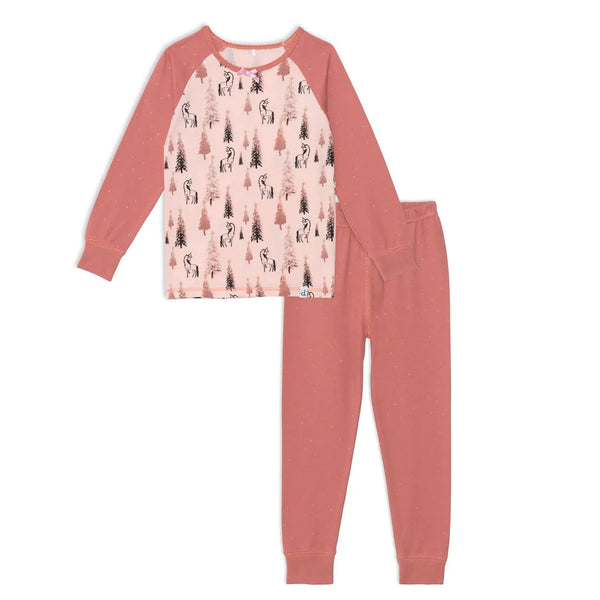
- Try a different cut. Raglan sleeves can feel different through the shoulders from set-in sleeves. The Deux par Deux Unicorn pajama set, for example, is listed with raglan sleeves and elastic waist pants with ribbed ankles, in sizes 3Y to 12Y. Product pages don't always state the fit, so check the cut and the label when it arrives.
- Check tags and seams. A scratchy label or seam can feel like "too tight." Look inside the garment before you size up.
- Talk about the "why." Older kids often accept a snug fit once you explain it in simple terms.
- If you prefer a loose style, buy loose sleepwear. Health Canada says loose styles such as nightgowns and nightshirts fall under "More stringent flammability requirements." Choose them from children's sleepwear, and don't substitute a big T-shirt.
What Should You Check Before Buying Holiday Pajamas?
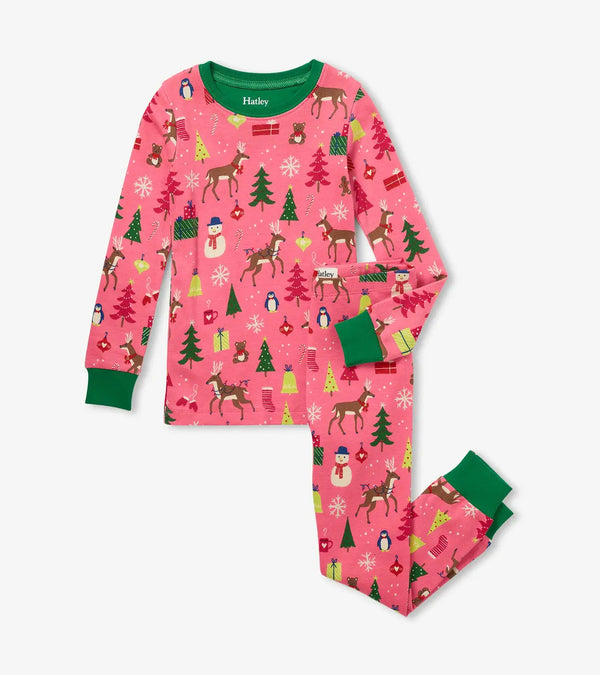
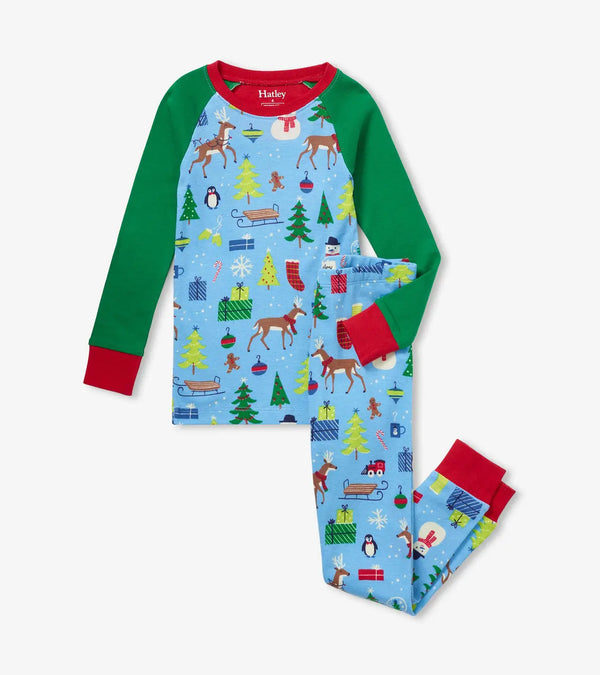
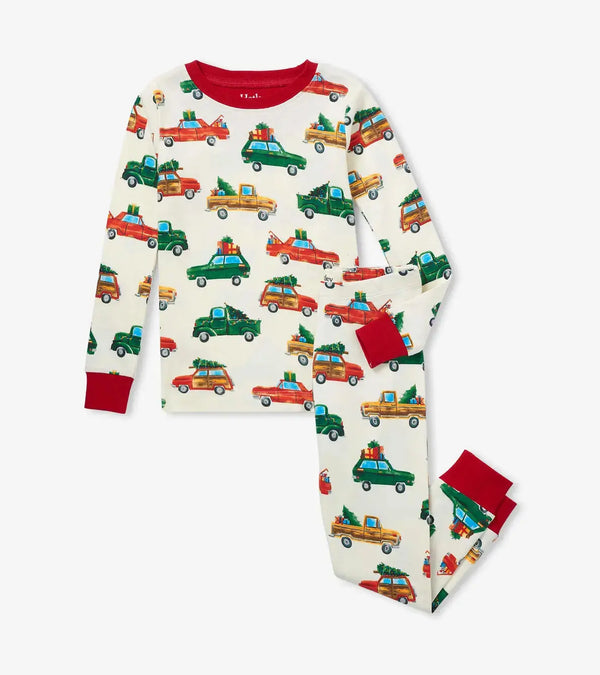
Holiday pajamas follow the same fit rules as any other children's sleepwear, so check the size chart and cut for each child's set before the matching family photo. For sibling sizing and print-matching ideas, see our guide to matching Christmas pajamas for kids. Many Christmas sets in our Christmas pajamas collection are two-piece cotton styles with cuffs, for example:
- The Hatley Blue Christmas raglan pajama set, which Hatley lists as 100% organically grown cotton with raglan sleeves, a red neckline and red cuffs, in sizes 3Y to 12Y.
- The Deux par Deux Skating Bears PJs, listed as 100% organic cotton with striped pants that end in red bands, in sizes 3Y to 12Y.
- The Hatley Holiday Moose set, where Hatley lists "Fit: Snug fit."
When you're ready to compare everyday styles, browse girls' pajamas and boys' pajamas, or baby girls' pajamas and baby boys' pajamas for the youngest sleepers. Check the size details on each product page before you order.
Frequently Asked Questions
Is it normal for new kids' pajamas to feel tight?
Yes. Snug-fit pajamas are cut close to the body, so they often feel tighter than daywear in the same size. They fit well if your child can reach, squat and roll over comfortably and the cuffs sit at the wrists and ankles without leaving sore marks.
Why are kids' pajama pants so tight at the ankles?
The U.S. tight-fitting criteria call for pant legs that taper from the thighs to the ends of the legs, and Health Canada describes polo pyjamas with tight cuffs or stretchable fabric at the ends. Close-fitting ankles keep the legs from hanging loose.
Why do some kids' pajamas run small?
Brands use their own size charts, and snug-fit styles are cut closer than daywear. Hatley's size chart recommends buying kids' pajamas a size up from the child's age, for example a size 5 for a four-year-old. Always compare your child's measurements with the chart.
Do snug-fit pajamas shrink?
Cotton pajamas can feel tighter if they're washed or dried hotter than the care label allows. Follow each label, such as machine wash cold and tumble dry low. The American Cleaning Institute suggests air drying items prone to shrinking.
Can my child wear a sweatshirt over snug pajamas to bed?
Health Canada advises dressing children in actual sleepwear at bedtime instead of T-shirts or other day clothes. On cold nights, adjust the bedding or room temperature, or choose a heavier pajama fabric, instead of adding daywear on top.
Up to what size are kids' pajamas made snug-fit?
Children's sleepwear rules cover sizes up to and including 14X in Canada, according to Health Canada, and above 9 months up to size 14 in the U.S., according to the CPSC. Snug-fit styles are common across that whole range.
Do babies wear snug-fit pajamas too?
Yes. Health Canada classifies sleepwear designed for infants up to 7 kilograms as tight-fitting, and the Public Health Agency of Canada says babies are safest in simple, fitted sleepwear, like a sleeper. Sleepwear that is too big can ride up over a baby's face.
Sources
- Health Canada: Guidelines for the flammability requirements of the Children's Sleepwear Regulations (published January 2026)
- Health Canada: Children's sleepwear safety (modified November 2025)
- Health Canada: Is Your Child Safe? Sleep Time (modified September 2026)
- Public Health Agency of Canada: Dressing your baby for sleep (modified April 2025)
- U.S. Consumer Product Safety Commission: Children's Sleepwear fact sheet (16 CFR 1615 and 1616)
- eCFR: 16 CFR Part 1615, Standard for the Flammability of Children's Sleepwear: Sizes 0 Through 6X
- American Academy of Pediatrics, HealthyChildren.org: How to Keep Your Sleeping Baby Safe: AAP Policy Explained
- American Cleaning Institute: Laundry Basics
- Hatley: Little Blue House Size Chart