Quick answer: When can babies sleep with a blanket? Not until after the first birthday. The American Academy of Pediatrics (AAP) says its sleep recommendations apply up to 1 year of age, and Canadian guidance says babies do not need blankets for sleep. Until then, use fitted sleepwear or a correctly sized sleep sack instead.
A blanket looks cozy, grandparents may remember tucking babies in, and a cold Canadian or northern U.S. winter can make a bare crib feel wrong. Still, the AAP, the Canadian Paediatric Society and the Public Health Agency of Canada give the same answer for the first year: no loose blankets in the sleep space.
This guide explains what the AAP, the Public Health Agency of Canada (PHAC), Health Canada, the Canadian Paediatric Society (CPS), the U.S. Consumer Product Safety Commission (CPSC) and the NIH Safe to Sleep campaign say about blankets. You'll also see how to keep a baby warm without bedding, what changes after 12 months, and how to introduce a first toddler blanket. If you already know you'll use a wearable blanket, our baby sleep sack collection shows the styles and sizes Jenni Kidz carries.
When Can Babies Sleep With a Blanket?
Babies can start sleeping with a blanket after their first birthday at the earliest, and there's no rule that says you have to switch then. The AAP's guide for parents states: "Unless mentioned otherwise, all these recommendations are for babies up to 1 year of age." Those recommendations include no blankets, pillows, stuffed toys or bumper pads in your baby's bed.
What do the AAP and Canadian health agencies say?
Here is what each group says:
- AAP (HealthyChildren.org): "Use a fitted sheet only—nothing else should be in the crib with your baby." The AAP lists blankets, quilts, comforters, pillows and non-fitted sheets among the soft objects and loose bedding to keep out of the crib.
- CPSC: "Bare is Best": nothing but a fitted sheet in a crib, bassinet or play yard.
- NIH Safe to Sleep: "Remove everything from baby's sleep area, except a fitted sheet covering the mattress."
- Canadian Paediatric Society: "Babies do not need blankets when they sleep."
- Public Health Agency of Canada: "If you use a sleep sack, you don't need a blanket."
- Health Canada: "Instead of a blanket, consider dressing your baby in light sleep clothing, like a one-piece sleeper."
What does that look like at each age?
| Age | Loose blanket in the sleep space? | What to use instead |
|---|---|---|
| Newborn to rolling | No | Fitted sleepwear, a sleep sack, or a thin swaddle on the back only until baby shows signs of rolling |
| Rolling to 12 months | No | Fitted sleepwear or an arms-free sleep sack in the right size |
| 12 months and older | Optional, not required | Keep the sleep sack as long as it works, or try a small, lightweight blanket when your child is ready |
| Around age 2 and up | Usually part of the move to a bed | A small blanket, plus a small, firm pillow after age 2 |
The first-birthday line is a minimum, not a deadline. Many toddlers keep sleeping in a sleep sack well past 12 months, and the AAP notes that sleep sacks that do not swaddle and let the baby move freely "can be used as long as you want."
Why Are Loose Blankets a Concern for Babies Under 1?
Loose blankets can cover a baby's face or get tangled around them, and young babies can't always move away. The AAP says soft objects and loose bedding "can increase your baby's risk of entrapment, suffocation or strangulation," and that a baby could roll into these items, which could block their airflow.
The CPSC explains that many young babies cannot lift their heads to pull away from soft objects such as blankets and pillows. The Canadian Paediatric Society adds: "Blankets can cause them to overheat or suffocate."
Does a thin, small or tucked-in blanket count?
Yes. The NIH Safe to Sleep campaign says to keep non-fitted items out of the sleep area "even if lightweight, small, or 'tucked in'," and its examples include loveys, cloths, non-fitted sheets and tucked-in blankets. A light muslin square is still a loose blanket once it's in the crib.
Why does overheating matter?
A blanket adds warmth on top of whatever your baby is already wearing. PHAC states that "Overheating is a risk factor for sudden infant death syndrome (SIDS)," and the NIH explains that babies can get too hot when they wear too many layers of clothes and bedding for the room temperature.
What about loveys, stuffed toys and bumpers?
They follow the same rule. The AAP lists stuffed toys and bumper pads alongside blankets as items that should not be in your baby's bed. The NIH names loveys specifically. If your baby has a favorite lovey, save it for supervised awake time until after the first birthday.
How Can You Keep a Baby Warm Without a Blanket?
Dress your baby for the room, not for the weather outside, and use wearable layers instead of bedding. The AAP says that if you're worried about your baby getting cold, "you can dress them in layers of clothing or use a wearable blanket." The NIH gives the same advice: a wearable blanket or an extra layer of clothing keeps baby warm "without adding items to the sleep area."
How should you dress a baby for sleep?
Use these simple checks from the AAP and Canadian guidance:
- One more layer than you. The AAP says: "In general, you should dress your baby in only one layer more than you're wearing."
- Room comfort. PHAC says: "If the room temperature is comfortable for you, it will be comfortable for your baby too."
- Fitted sleepwear. The CPS recommends properly fitted sleepwear, like a one-piece sleeper.
- No hat indoors. PHAC notes that babies do not need hats indoors, and the NIH says a hat worn indoors can make a baby too hot. Our guide to whether a newborn needs to wear a hat covers the details.
- Remove extras. The CPS advises taking off bibs, necklaces, items with ties or hoods, and hats before sleep.
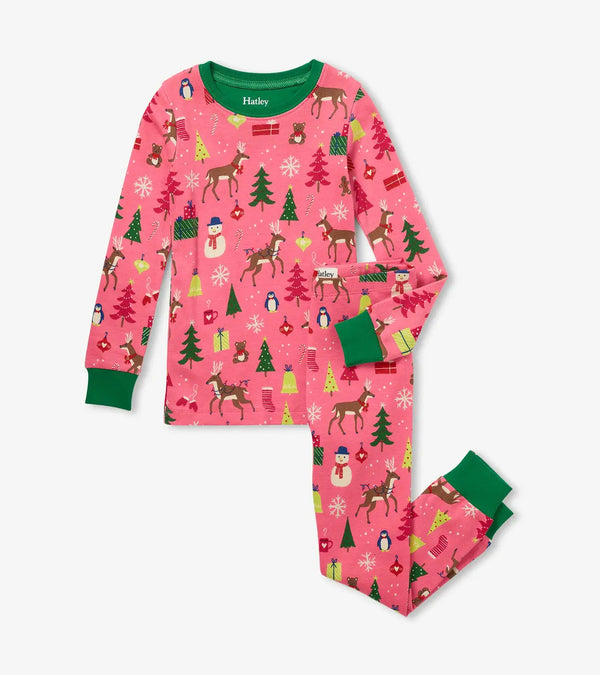
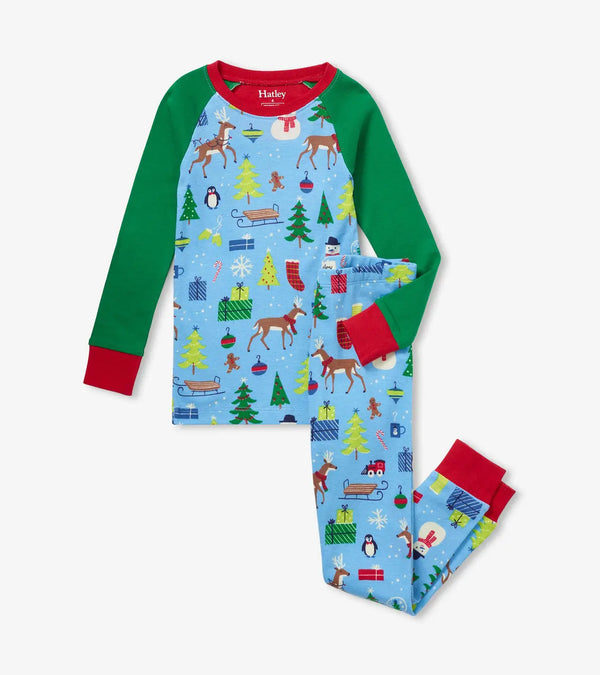
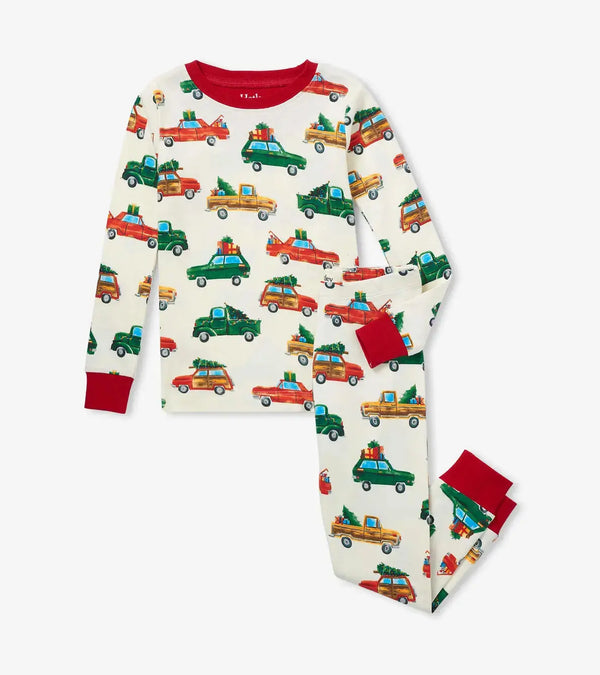
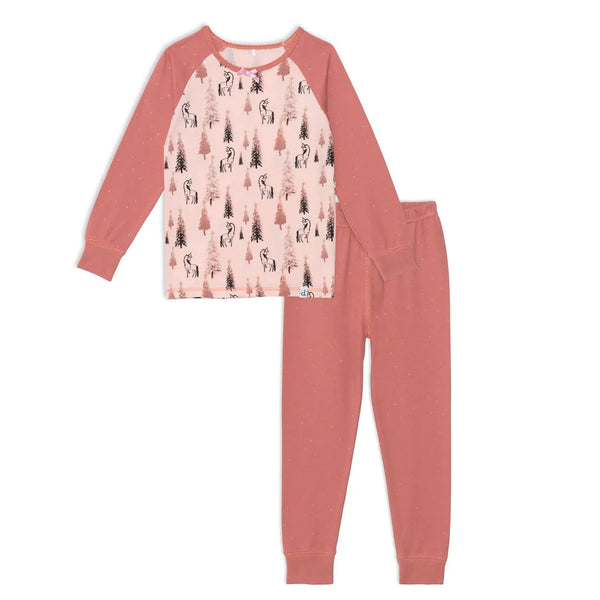
A one-piece footed sleeper makes an easy base layer. For example, the Deux par Deux Baby Organic Cotton One Piece Pajama Pink Floral Print is a footed sleeper with long sleeves and a front zipper, made in sizes 3M to 24M; Deux par Deux lists the fabric as 96% organic cotton and 4% elastane interlock. Browse more sleepers in baby girls pajamas and baby boys pajamas. For footed styles and fit, see can newborns sleep in footie pajamas.

How do you choose a sleep sack?
A sleep sack, also called a wearable blanket, is a sleeveless sack your baby wears over sleepwear. It replaces the blanket rather than adding to it. The AAP's swaddling guide says infant sleep clothing, such as layers of clothing or a wearable blanket or sleep sack, is preferred over blankets. When you shop, focus on three things:
- The right size. PHAC warns that if a sleep sack is too big, "your baby can slip down inside the sack, which can make your baby overheat or suffocate." If it's too small, your baby may not be able to move their hips and legs freely. Follow the size chart on the product you buy.
- The right weight for the room. PHAC says to make sure the sleep sack is appropriate for the temperature of the room, and lightweight if the room is warm.
- No blanket on top. PHAC: "If you use a sleep sack, you don't need a blanket."
Brands list their own fabrics, so compare the label. Deux par Deux lists its Plush Sleep Sack Off-White with a 100% polyester plush outer, a 100% cotton lining and a full-length zipper. Its Organic Cotton Sleep Sack Pink Printed Flowers is listed with an outer of 96% organic cotton and 4% elastane, a 100% cotton lining, shoulder snaps and a full-length zipper. Both are sleeveless and come in 0/6, 6/18 and 18/36 month sizes, which also covers toddlers who aren't ready for a blanket yet. If you're deciding how many to buy, see how many sleeping bags a newborn needs.
Can you use a swaddle blanket instead?
Only for young babies, and only while they're not rolling. A swaddle is a wrapping technique, not loose bedding, but it has its own rules from the AAP:
- "Use only a thin blanket for swaddling."
- Place a swaddled baby only on their back, and monitor them so they don't roll over.
- "Stop swaddling as soon as your baby shows any signs of trying to roll over." The AAP notes some babies start working on rolling as early as 2 months.
- Keep the hips free: the AAP promotes "hip-healthy swaddling" that lets the legs bend up and out.
PHAC also advises stopping swaddling around 2 months of age, before your baby can roll over. A swaddle that comes unwrapped turns into a loose blanket, so check our guide on whether you can swaddle a baby too tight, and browse baby swaddle blankets for the newborn stage.
Are weighted blankets or sleep sacks an option?
No. The AAP says: "Don't use weighted blankets, sleepers, swaddles or other weighted objects on or near your baby." The CPSC gives the same warning, and PHAC adds weighted sleep sacks to the list, stating that weighted swaddles, sleep sacks and blankets "are not safe for your baby."
How do you know if sleepwear and a sleep sack are too warm?
Check your baby's chest and look for warning signs. The AAP's swaddling guide says a baby could be too hot if you notice "sweating, damp hair, flushed cheeks, heat rash and rapid breathing." The NIH lists sweating, flushed or red skin, or a chest that feels hot to the touch.
If you see these signs, remove a layer or switch to a lighter sleep sack. Keep your baby's head and face uncovered during sleep, as the NIH advises. For more on spotting overheating, read how to know if your baby is too hot in a swaddle. Planning for colder months? Our guide on how to dress a newborn for sleep in winter walks through winter nights without loose blankets.
Can Babies Use Blankets During the Day?
Yes, while your baby is awake and an adult is watching. The guidance on loose bedding is about sleep. A blanket on the floor or over a lap during supervised play is a different situation.
Is a blanket OK for tummy time?
Yes. AAP tummy time tips describe playing on "a clean floor, a nap mat or blankets of different textures," with one note: "Blankets should be secured so they don't slide around when baby moves their arms or legs." The NIH describes tummy time as placing baby on their stomach while they are awake and someone is watching them. Tummy time is for awake time. If your baby falls asleep during tummy time, the AAP says to move them to bed and place them on their back to sleep, so use their crib or bassinet.
Can you put a blanket over the stroller?
Avoid draping a blanket over the stroller. Vanderbilt Health warns that "Even the thinnest of cloths or covers over the stroller or carrier can reduce air circulation," and can trap heat inside. Use the stroller canopy instead and check on your child often. Health Canada gives similar advice indoors: "A blanket should not be draped over the bassinet to keep light out."
Strollers are also not a place for long sleep. The CPS says that if your baby falls asleep in a stroller, you should move them to a crib, cradle or bassinet when you arrive at your destination.
What Changes After Your Child's First Birthday?
After 12 months, the AAP's infant sleep recommendations no longer apply, so a blanket becomes a choice rather than something to avoid. That doesn't mean your child needs one right away.
Is 12 months a deadline or a starting point?
It's a starting point. The AAP says sleep sacks that do not swaddle "can be used as long as you want," so you can keep using one as long as it fits and your child sleeps well. Many families switch only when their toddler outgrows the largest sleep sack size, starts to resist wearing one, or moves into a bed. If you're unsure whether your child is ready, ask your child's health care provider.
Should the blanket go in the crib or wait for a toddler bed?
Either can work, but the move to a bed is a natural time to add bedding. Health Canada says a crib should not be used if the child is taller than 90 cm (about 35 inches) or is able to climb out of it; at that point, your child should sleep in a toddler or standard bed. UCLA Health notes that families generally move from a crib to a bed when a child is 18 months to 3 years old, and Monroe Carell Jr. Children's Hospital at Vanderbilt says most children move to a bed by age 2.
While your toddler is still in the crib, keep the space simple. Health Canada notes that pillows and toys should not be placed against the bed rail, and that toddlers can use large stuffed toys or bumper pads as steps to climb out of a crib.
What kind of blanket should a toddler start with?
Start small, thin and simple. A medically reviewed Healthline guide notes that a blanket's size, thickness, fabric type and edging all matter, and that larger blankets can pose hazards "even after your child has turned 1." It suggests:
- Size: a small blanket rather than a large adult throw or comforter.
- Fabric: fabrics like muslin that can be breathed through.
- Edging: no long strings or ribbons on the edges that could wrap around a child.
- Placement: no higher than chest level.
For common dimensions by blanket type, see our baby blanket size guide. Leave weighted blankets out unless your child's health care provider has recommended one for a specific reason.
When is a toddler ready for a pillow?
Later than a blanket. Monroe Carell Jr. Children's Hospital at Vanderbilt advises: "Don't give your child a pillow before age 2." After age 2, it recommends starting with a small, firm pillow. CHOC gives the same advice and adds that if a child moves to a bed before age 2, you should hold off on pillows.

How Do You Move From a Sleep Sack to a Blanket?
Make the switch gradually, once your child is past the first birthday and the timing works for your family. Here's a simple plan built on the guidance above:
- Confirm the timing. Your child is over 12 months, and you've checked with your health care provider if you have questions about their development or sleep.
- Keep the sleep sack until there's a reason to stop. Outgrowing the largest size, climbing, or a move to a toddler bed are common reasons.
- Choose a small, lightweight blanket and keep it low. Skip long fringe, ties and heavy comforters, and place it no higher than chest level.
- Adjust pajamas at the same time. Without the sleep sack, check that your child's pajamas suit the room temperature. The AAP's rule of thumb for young children is one more layer than an adult would wear in the same conditions, so avoid stacking extra layers under the new blanket.
- Check for overheating. Watch for sweating, damp hair or flushed cheeks in the first few weeks.
- Go back if it isn't working. Healthline notes that if your child rolls around a lot at night, a sleep sack or footed pajamas may be a better choice until they are older.
If your toddler kicks the blanket off during the night, warm, fitted pajamas are still doing most of the work, so keep them as the main layer rather than relying on the blanket alone.
What Are the Most Common Blanket Mistakes?
Most mistakes bring warmth or comfort back into the crib in the form of bedding. Watch for these:
- A blanket over a sleep sack. PHAC says you don't need one.
- A thin blanket tucked in before age 1. The NIH still counts it as a loose item.
- A sleep sack to grow into. PHAC and the CPS both warn that a sack that's too big lets a baby slip down inside.
- Extra layers or a hat indoors. Both raise the chance of overheating.
- Swaddling past rolling, or weighted products at any stage of infancy.
- A blanket draped over the stroller or bassinet.
- Rushing the switch. Turning 1 makes a blanket an option, not a requirement.
Shop Sleep Sacks, Sleepers and Blankets by Stage
For the first year, build bedtime around fitted sleepwear and a correctly sized wearable blanket. Compare options in baby sleep sacks, including the Deux par Deux Plush Sleep Sack Sky Blue with car embroidery and the Organic Cotton Sleep Sack Beige Animal Print. Its woodland print also appears on the Deux par Deux Baby Organic Cotton One Piece Pajama Beige Animal Print, a footed sleeper in sizes 3M to 24M. For newborns who are still being swaddled, see swaddle blankets. When your toddler is ready for a first blanket or you want one for supervised floor play, browse baby and toddler blankets, and explore more sleepwear from Deux par Deux.
Frequently Asked Questions
Can a newborn sleep with a blanket?
No. The AAP says nothing but a fitted sheet should be in the crib, and the Canadian Paediatric Society says babies do not need blankets when they sleep. Use fitted sleepwear, a correctly sized sleep sack, or a thin swaddle on the back until your baby shows signs of rolling.
Can a 6-month-old sleep with a blanket?
No. The AAP's sleep recommendations apply up to 1 year of age, and they include keeping blankets out of the crib. A 6-month-old who is cold can wear an extra layer or an arms-free sleep sack instead.
Can a 1-year-old sleep with a blanket?
A child over 12 months can start using a small, lightweight blanket, but there's no need to rush. The AAP says sleep sacks that do not swaddle can be used as long as you want. Ask your child's health care provider if you're unsure.
Is a tucked-in blanket OK for a baby under 1?
No. The NIH Safe to Sleep campaign lists tucked-in, lightweight and small blankets among the items to keep out of a baby's sleep area. Use a wearable blanket or an extra layer of clothing instead.
Do you need a blanket with a sleep sack?
No. The Public Health Agency of Canada says that if you use a sleep sack, you don't need a blanket. Choose a sleep sack that fits your baby and suits the room temperature.
How do I know if my baby is too warm at night?
Look for sweating, damp hair, flushed cheeks, heat rash and rapid breathing, the signs the AAP lists. The NIH adds a chest that feels hot to the touch. Remove a layer or use a lighter sleep sack.
When can a toddler have a pillow?
Monroe Carell Jr. Children's Hospital at Vanderbilt advises waiting until age 2, then starting with a small, firm pillow. A blanket usually comes first, after the first birthday.
This article is general information, not medical advice. Guidance can change, so follow your child's health care provider's advice for your family, especially if your baby was born early or has a health condition.
Sources
- American Academy of Pediatrics, HealthyChildren.org: A Parent's Guide to Safe Sleep (Rachel Y. Moon, MD, FAAP; updated September 2026)
- American Academy of Pediatrics, HealthyChildren.org: Swaddling: Is It Safe for Your Baby? (updated July 2022)
- American Academy of Pediatrics, HealthyChildren.org: 3 Tummy Time Activities to Try With Your Baby (updated July 2023)
- Public Health Agency of Canada: Dressing your baby for sleep (modified April 2025)
- Health Canada: Is Your Child Safe? Sleep Time (modified September 2026)
- Canadian Paediatric Society, Caring for Kids: Safe sleep for babies (updated October 2021)
- NIH, Safe to Sleep campaign: Ways to Reduce Baby's Risk
- U.S. Consumer Product Safety Commission: Safe Sleep - Cribs and Infant Products
- Monroe Carell Jr. Children's Hospital at Vanderbilt: Moving Your Toddler From Crib to Bed (reviewed September 2025)
- CHOC: When should I move my toddler into a big bed?
- UCLA Health: Safe Sleep Habits for Infants and Young Toddlers (July 2022)
- Vanderbilt Health News: Prevent heat-related injuries, deaths in children with these important tips (July 2025)
- American Academy of Pediatrics, HealthyChildren.org: Cold Weather Safety for Children (last updated January 2023)
- Healthline: When Can Baby Sleep with a Blanket? (medically reviewed by Carissa Stephens, RN; 2019)